
Do yellow sticky traps help with fungus gnats?
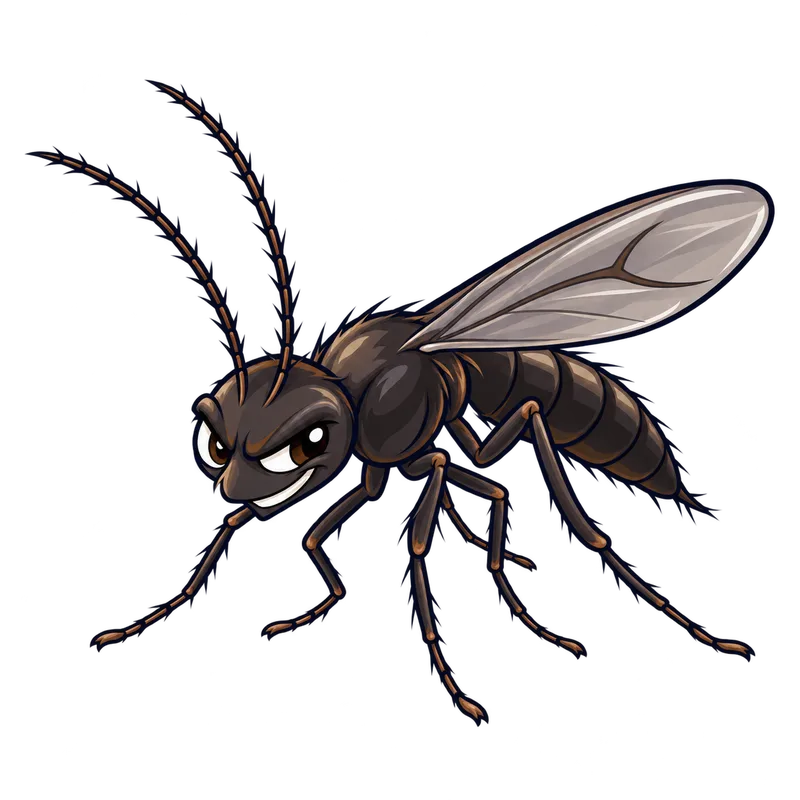
Yes, yellow sticky traps help with fungus gnats, but they will not solve the problem on their own. Adult fungus gnats are drawn to the bright color, meaning every insect caught is one fewer egg layer. However, the sticky cards cannot touch the eggs and larvae living in the potting soil.
What is actually going on
You water the monstera, sit down with a coffee, and within minutes one of those tiny black flies is doing laps around your face. So you poke a yellow card into the pot, and by the next day it is covered in little bodies. Satisfying. Also slightly misleading, because the honest answer to your question is: yes, yellow sticky traps help with fungus gnats, but they will not solve the problem on their own. Think of them as a useful assistant, not the whole crew.
Here is why they work at all. Adult fungus gnats are drawn to bright yellow because, to a gnat's eyes, it reads as fresh, sunlit foliage, exactly the kind of place they want to be. They fly in expecting a plant and land on glue. That part is genuinely effective, and it is not a gimmick. The trouble is what you cannot see. A fungus gnat infestation works like an iceberg: the annoying adults drifting around your screen are the small fraction above the surface, while the eggs, larvae and pupae, the real bulk of the population, are sitting in the top couple of inches of your potting soil. The larvae are the ones actually living down there, feeding on fungi, decaying matter and, when their numbers climb, the tender roots of your plants. A sticky card cannot touch any of that.
Adults only live about a week, and their entire job in that time is to mate and lay eggs back into damp soil. So every gnat stuck to your trap is one fewer egg-layer, which is real progress and worth having. But as long as the soil stays moist, new adults keep hatching out to replace the ones you caught, typically on a cycle of two to three weeks at normal room temperature. That is why so many people end up saying "my traps are full and I still have gnats." Both things are true at once, and neither one contradicts the other.
So where does that leave you? With a tool that is genuinely useful for two jobs, catching adults and measuring the problem, and genuinely useless for the third job everyone secretly wants it to do, which is ending the infestation by itself.
How to tell for sure
Before you commit to a war on fungus gnats, make sure that is actually what you have. Small indoor flies look alike at a glance, and the wrong identification sends you treating the wrong thing for weeks.
Fungus gnats are tiny, slender, mosquito-looking flies, roughly an eighth of an inch long, with long legs and a delicate, drifting flight. They are weak fliers, so you usually see them hovering near the plants, walking on the soil surface or drifting toward windows and screens. They do not bite, by the way. They have no mouthparts for it. They are pure nuisance, which is either comforting or insulting depending on your mood.
The sticky trap doubles as your identification tool, which is a nice bonus. If the card at soil level fills up with small dark flies, that points strongly at fungus gnats breeding in the potting mix. If you want confirmation of the source, check the soil itself: the larvae are about a quarter of an inch long, whitish or grayish and legless, with a shiny black head, usually an inch or two down in damp mix. You may need to disturb the surface gently to spot them.
Now the useful exception. If your flies ignore the yellow cards entirely and instead hang around the kitchen sink, the bathroom drain or the fruit bowl, you are probably dealing with something else. Drain flies look fuzzy and moth-like, with wings held like a little roof over the body, and they breed in the slimy film inside drains. Phorid flies have a humpbacked look and a habit of scuttling across surfaces before they fly. Fruit flies are tan with noticeably red eyes and care about your bananas, not your pothos. This matters because drying out houseplant soil does nothing at all for a drain problem, and vice versa. Usually the location of the flies tells you more than their appearance does, so watch where they gather before you treat anything.
What usually comes next
Once you are reasonably confident about the ID, the practical move is simple: keep the traps, but stop asking them to do the whole job. Use them the way a grower does, as a gauge. Cut the cards into small squares, set them on little stakes right at soil level in each pot, and watch the catch over the next couple of weeks. If the daily count keeps dropping, whatever else you are doing is working. If the cards keep filling up like a commuter lot at rush hour, the soil is still producing gnats.
The real fix is deeply unglamorous: let the soil dry. Fungus gnat larvae need constant moisture, and the eggs dry out and die in dry mix. Letting the top two or three inches of potting soil dry out between waterings breaks the cycle at the source, which is the only place breaking it actually counts. Empty the saucers under your pots within half an hour of watering too, because a saucer of standing water is a nursery you installed yourself, free of charge. I know "water less" sounds suspiciously simple, like being told the cure for a noisy fridge is to unplug it. But constantly damp soil is basically a bed-and-breakfast for these insects, and most infestations trace straight back to it.
If drying alone is not cutting it, or you have seedlings and delicate plants you do not want to stress, the next step goes after the larvae where they live. The standard option is a soil drench with Bacillus thuringiensis var. israelensis, usually shortened to Bti: a naturally occurring bacterium whose proteins are toxic to fly and gnat larvae when they eat it, and harmless to plants, people and pets. Here is the warning that saves real money: not every Bt product works for this. The strains sold for caterpillars on vegetables are a different variety and do nothing to gnat larvae, so check the label for the israelensis variety and follow its directions exactly. Beneficial nematodes watered into the soil are another biological route. Skip the aerosol foggers entirely. They knock down the adults you can see, the soil keeps producing, and a week later you are back where you started, except now your living room smells faintly like a hardware store.
One more thing worth a look: the source. A brand-new plant or a freshly opened bag of potting mix can arrive already carrying eggs or larvae, which is why gnats sometimes show up right after a repotting spree, as if they came with the loyalty program. Quarantining new plants for a couple of weeks, with a sticky card nearby, catches this early. It feels overly cautious right up until the first time it saves your whole shelf.
When to get help
For a typical houseplant collection, this is a do-it-yourself problem, and patience plus drier soil usually wins. But there are situations where handing it off is the smart move rather than a defeat.
Call in help if your plants are declining despite your efforts. Widespread yellowing, wilting even though the soil is moist, or stunted growth can mean larvae are heavily damaging the roots, and young seedlings can actually be killed by a severe infestation. A licensed pest control professional or a good garden center can assess whether the plants can be saved and which treatment fits the situation.
Get a proper identification if the flies persist after weeks of correct treatment, or if they seem tied to plumbing rather than plants. Small flies breeding in a cracked drain line or a hidden leak under a slab are a building problem, not a plant problem, and no quantity of sticky cards will fix a broken pipe. Your local cooperative extension office can often identify a specimen from a photo or a trapped sample, which beats guessing by a wide margin.
And if anyone in the house has a reaction to any product you apply, or you are unsure about using a soil treatment around kids, pets or edible plants, the product label is your first stop and poison control or your local extension service is the second. The gnats themselves, at least, are harmless to you. Annoying beyond reason, but harmless.