
Do fungus gnats bite people?
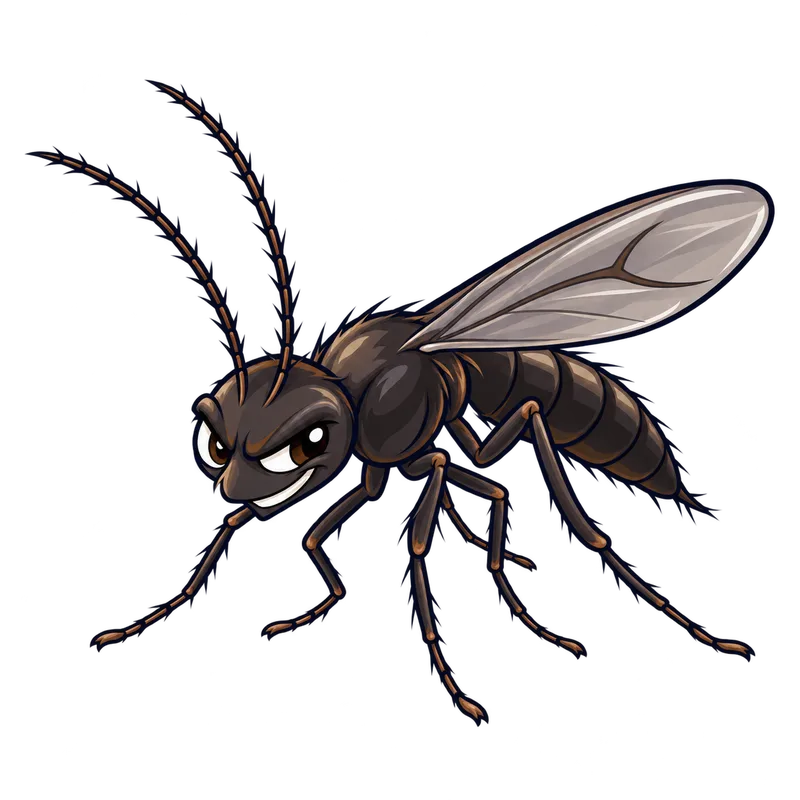
Adult fungus gnats do not bite humans or pets. These delicate little flies lack the physical hardware required to puncture human skin because their mouthparts are soft and reduced. People usually confuse them with genuine biting pests like biting midges that slipped through window screens.
What is actually going on
You are sitting on the living room sofa on a rainy Tuesday evening, scrolling through your phone, when you notice a tiny, dark bug crawling across your laptop screen. You swat at it, glance over at your prized fiddle-leaf fig in the corner, and spot half a dozen more of the little specks hovering lazily above the potting soil. Later that night, you wake up with an itch on your ankle and immediately suspect those little indoor gnats are using you as a midnight snack.
Fortunately, you can rest easy on that score because adult fungus gnats do not bite humans or pets. It is a common reflex to blame whatever bug is currently bothering our field of vision, but these delicate little flies lack the physical hardware required to puncture human skin or draw blood. Their mouthparts are soft and reduced. They spend their brief lives hovering around damp soil and feeding minimally on flower nectar or organic liquids, not on you.
So why do people often become convinced that fungus gnats are biting them? The confusion usually comes down to mistaken identity in the indoor ecosystem. While your potted plant is hosting completely harmless fungus gnats, a much smaller, genuine biting pest like a biting midge might have slipped through your window screen earlier in the day. Because true biting insects are often nearly invisible and their bites can take hours to start itching, you end up pinning the crime on the clumsy little gnat taking a scenic tour of your houseplant.
How to tell for sure
Figuring out what is actually flying around your rooms usually starts with a close look at how the insect moves and where it hangs out. Fungus gnats are tiny, measuring roughly one-sixteenth to one-eighth of an inch, and they usually have fragile bodies with long legs and bead-like antennae. They are weak fliers, so you will usually see them drifting slowly near the surface of potted plant soil, scurrying across leaves, or occasionally getting stuck on a glowing television screen.
Other small indoor flies share similar spaces, but they behave differently. Phorid flies are tan or dark with a distinct humpbacked thorax and have a habit of running rapidly across surfaces in a jerky pattern before they finally take flight. Drain flies have fuzzy, moth-like bodies with broad wings held in a roof-like shape over their backs, and you will usually find them resting on bathroom or kitchen walls near plumbing fixtures. Fruit flies have prominent eyes and hover eagerly around your fruit bowl or recycling bin.
Regarding actual biters, the visual cues change entirely. Biting midges, black flies, and stable flies possess specialized piercing and cutting mouthparts designed to slice skin capillaries. However, seeing these biting pests without magnification is usually difficult because they are exceptionally small or hide well. If you want to confirm a fungus gnat specifically, checking the soil of your houseplants for tiny, translucent, legless larvae with shiny dark head capsules is usually the giveaway. Without a close look to check wing veins, though, pinpointing exact species beyond these general behavioral traits usually requires a professional entomologist.
What usually comes next
Once you realize those tiny indoor visitors are just harmless fungus gnats and not tiny vampires, your strategy shifts to a very simple task: tackle the moisture problem in your flower pots. Most gnat trouble indoors comes down to soil that stays wet all the time, combined with decaying organic matter. If you are watering your potted plants on a strict calendar rather than checking if the dirt is actually dry, you are basically running a luxury hotel for gnat larvae to feed on fungi and tender roots.
The most practical step is simply letting the top layer of your potting soil dry out fully before you water again. This easy change dries up the environment and breaks the breeding cycle without needing any harsh treatments. If drying out the dirt fails to dent the population, or if every plant in your house seems overrun, you might try a biological soil drench, but always read and follow the product label instructions carefully.
When to get help
Even though fungus gnats cannot hurt you, certain situations still call for outside assistance. If anyone in your home develops severe swelling, redness that keeps spreading, a secondary infection from scratching, or signs of a serious allergic reaction like trouble breathing, forget about bugs for a moment and call a doctor or head to urgent care right away. Skin reactions alone never prove what bit you, and medical professionals are the only ones who can properly treat health symptoms.
As for the house itself, you might need a pro if those flying bugs turn out to be something else entirely, or if the swarm refuses to go away even after you dry out the dirt. If actual biting insects keep getting inside, or if you suspect phorid flies linked to a hidden trouble spot, bringing in a pest control operator is a smart choice. Large numbers of phorid or drain flies can sometimes point to a broken sewer pipe under the floor or a leaky drain inside a wall, meaning you will need a plumber to fix the building instead of just spraying for bugs.