
What causes a sudden increase in flies indoors?
A sudden increase in flies indoors is caused either by active breeding in localized moist organic substrates like decaying food and drain biofilms, or by the seasonal emergence of overwintering adult flies exiting structural voids during warm weather. The reason depends on whether you have small insects hatching from something nearby or larger flies waking up from a cold sleep.
What is actually going on
You walk into your upstairs spare bedroom on an unusually warm winter afternoon, expecting quiet, and instead find dozens of large, dark, clumsy flies buzzing sluggishly against the glass or spinning helplessly on their backs on the window sill. Or maybe you have a kitchen that is scrubbed spotless every night, yet you wake up to a cloud of tiny insects hovering stubbornly around the sink. It is annoying, it is sudden, and it makes you wonder where an entire army of bugs managed to materialize overnight.
A sudden indoor fly increase is caused either by active indoor breeding in localized moist organic substrates, such as decaying food, drain biofilms, pet waste, or potted plant soil, or by the seasonal emergence of overwintering adult flies exiting structural voids during warm weather. There is no mystical generation happening in your walls. These insects are either hatching from something rotting nearby or waking up from a long, cold sleep because your heating or the outdoor sun tricked their biology.
When you are dealing with small insects, you are usually looking at a population explosion born right inside the house. Under favorable indoor temperatures, life cycles from egg to adult happen remarkably fast. If a high-moisture organic mess is left sitting, such as overripe fruit, spilled juice under the refrigerator, or gelatinous scum clinging to the inside of a drain pipe, adult insects arrive, lay hundreds of eggs, and hatch a new generation all at once. Larger flies appearing in rooms, however, usually point to a different mechanism entirely. They are either wandering in from the outside world through an open door or emerging from a hidden animal carcass tucked away in a chimney, attic, or wall void, like a mouse that wandered in months ago and did not make it out.
How to tell for sure
Identification comes before control, and you usually cannot figure out what you are fighting by squinting at a blur on the wall. You need to look at size, shape, and behavior. Small flies generally measure between one-sixteenth and one-eighth of an inch long, while larger nuisance and filth flies measure a quarter-inch to a half-inch.
If the tiny flies are hovering around your fruit bowl or recycling bin and have bright red eyes, they are usually fruit flies. If they run rapidly in short, jerky bursts across a counter before taking flight, they are phorid flies, which can breed in anything from dirty mop heads to cracked concrete slabs over leaking sewer lines. If they look like miniature, hairy moths and hang out around the bathroom drain, they are drain flies. If they have slender, mosquito-like bodies and long legs, and your houseplants are soggy, they are usually fungus gnats.
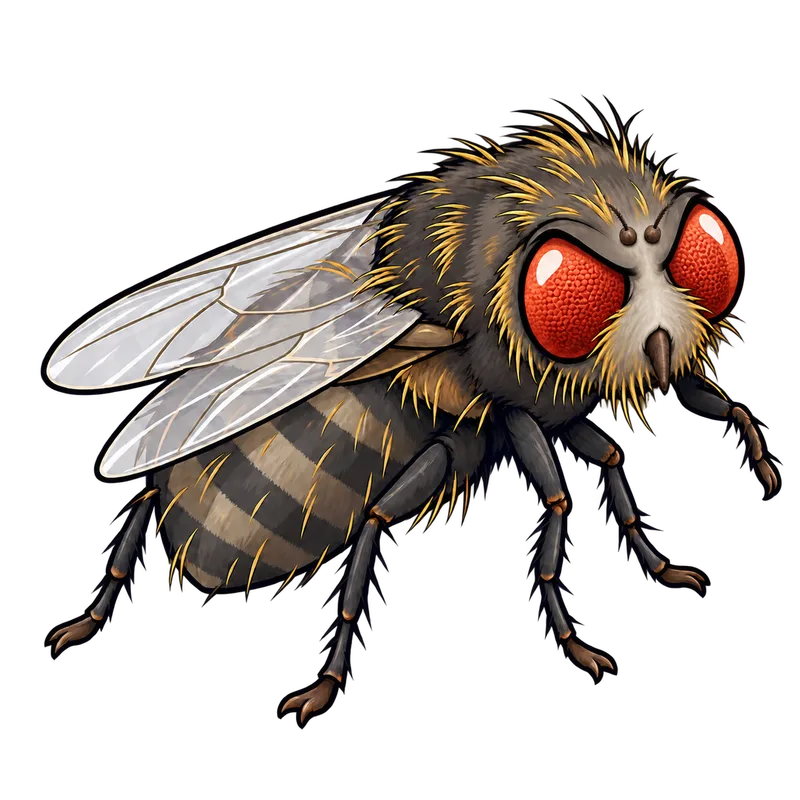
When the intruders are larger, the rules change completely. If they have a dull grayish-brown body with golden-yellow hairs on the back, and move around with clumsy slowness on sunny winter windows, they are usually cluster flies. They do not breed indoors, do not touch your food, and do not care about your garbage. Their larvae live outdoors as parasites of earthworms. But if you see bright metallic green or blue flies buzzing loudly, or large gray flies with checkered abdomens, you are usually dealing with blow flies or flesh flies. Those ones usually mean something has died out of sight, or an outdoor garbage can is left wide open.
What usually comes next
Your first instinct might be to grab a chemical fogger or dump a bottle of household bleach down every drain in the house, but that usually accomplishes nothing or makes things worse. If you have small drain flies, pouring boiling water or liquid bleach down the sink fails because the liquid rushes straight down the middle of the pipes, leaving the thick, protective film along the pipe walls completely intact. You need to physically scrub the inside of the pipe using a stiff brush, then follow up with a specialized enzymatic cleaner that actually digests that organic scum. Never pour chemical insecticides into plumbing drains.
If your problem is a sudden swarm of large cluster flies waking up in the winter, setting off aerosol foggers in the attic or spraying insecticides inside wall voids is a bad idea. Killing thousands of dormant insects inside inaccessible spaces leaves behind massive piles of dead organic matter that will quickly draw in secondary scavengers like rodents and carpet beetles. Instead, physical exclusion is the only real fix. You have to seal window casings, exterior siding gaps, and soffit cracks, but you have to do that work in late summer or early fall before the flies look for a place to sit out the winter. Spraying the outside walls in the spring or treating your lawn with pesticides will not stop them.
When to get help
Blow flies, house flies, and flesh flies are mechanical vectors of bacterial pathogens, meaning they carry filth from animal waste and garbage straight onto kitchen counters. If you run a commercial kitchen or have a heavy surge of large filth flies around a home food preparation area, that is an immediate sanitation hazard that calls for rapid containment.
Sometimes, persistent drain fly or phorid fly outbreaks refuse to go away no matter how much you scrub, clean, and sanitize. When that happens, the breeding source is often a hidden structural break in a cracked main sewer line or an under-slab drain pipe, which means you need a licensed plumber with a diagnostic camera to find and fix it.
Do not try to diagnose skin bites, lesions, or suspected larval tissue infestations on your own body. If you or anyone in your household experiences unexplained skin irritation, painful bites, or suspected wound contamination, consult an urgent care facility, a qualified physician, or a regional poison control center right away. If a sudden fly surge traces back to a dead animal carcass in a wall void or chimney that involves nesting birds, bats, or protected wildlife, reach out to a licensed wildlife control specialist or local wildlife management agencies to handle the removal safely and legally.