
How can you reduce horse fly encounters around horses and people?
You can reduce horse fly encounters around horses and people by using physical barriers like fly masks and light clothing, applying EPA-registered repellents, and stabling horses during peak sunny hours. Because female horse flies mature in distant wetlands and hunt by sight and heat, standard sprays and manure cleanup will not stop them.
What is actually going on
Picture walking out to the paddock on a bright, blistering July afternoon. The horses are frantically bunching together, tails whipping in every direction, while massive dark flies circle them like tiny helicopters before dropping down to inflict a sudden, painful slash. If you have ever wondered why standard bug sprays or clearing out the manure pile never seems to put a dent in these pests, you are running into the brick wall that is horse fly biology.
Reducing horse fly encounters around humans and horses is less about wiping out the local population and more about managing your defenses. You cannot easily spray your way to victory here because horse flies do not live where you think they do. Their larvae mature in saturated soil, marshy edges, and muddy woodlands over a sprawling one to three year period. When the adults finally emerge for their brief summer flight, they can travel miles from those wetlands to find a host. Because their breeding grounds are massive and inaccessible, area wide pesticide treatments simply do not work.
Instead of trying to eradicate an insect that refuses to stay put, your strategy has to focus on layering personal protection. Female horse flies hunt visually. They look for movement, dark silhouettes, exhaled carbon dioxide, and body heat. When they land, they do not slide a delicate needle into a vein like a mosquito does. They use heavy, scissor-like mouthparts to cut a deep, open wound in the skin and lap up the pooling blood. That brutal feeding style is why the bite hurts instantly and why horses panic. Keeping encounters to a minimum requires understanding how they hunt and putting up physical, chemical, and temporal barriers between them and their targets.
How to tell for sure
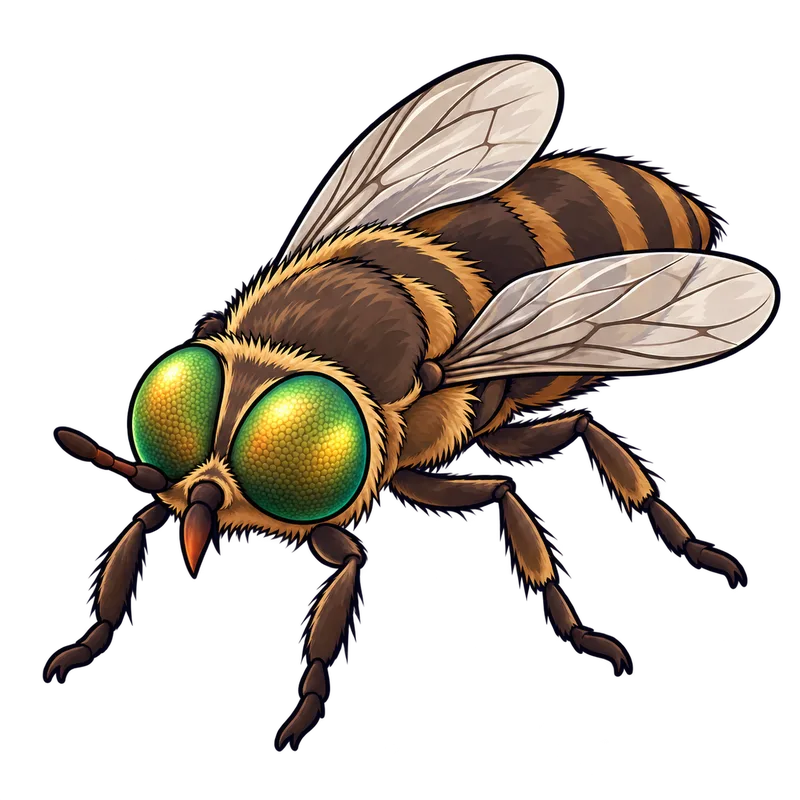
Horse flies belong to the family Tabanidae, and you usually recognize them by their sheer size and aggressive flight habits. True horse flies are large, measuring anywhere from three-quarters of an inch to an inch and a quarter long, with brilliant, iridescent eyes and clear or solidly shaded wings. Deer flies are their smaller cousins, usually measuring a quarter to a half inch long, and you can usually spot them by the dark, smoky bands splashed across their wings. If you are in the United Kingdom or Ireland, you might hear people call them clegs or gad flies.
Only the females bite because they need the protein from a blood meal to mature their eggs. Males stay entirely out of the fray, hanging out in wooded areas or on hilltops to feed peacefully on nectar and pollen. If you spot a fly hovering around a sunlit patch of skin or a horse's flank, it is almost always a female tracking heat and motion.
People often wonder if horse flies are simply oversized house flies that somehow drifted over from the barn. They are not. If you clean stalls religiously and keep the barn spotless, you will knock down house fly and stable fly numbers, but it will usually have zero effect on horse flies. Horse flies refuse to breed in animal manure or dry barn waste, meaning their presence has nothing to do with your cleaning schedule and everything to do with whether there is a damp ditch, pond edge, or wet woodland nearby.
What usually comes next
When you want to stop getting chewed up while working around the property, you have to change what you wear and when you go outside. Light-colored, loose-fitting clothing usually makes a noticeable difference because dark fabrics act like a beacon for horse flies hunting by sight. Treating your outerwear with a permethrin spray creates a barrier that repels and kills landing insects on contact, but remember that permethrin belongs strictly on clothing and gear rather than human skin. For your skin, EPA-registered repellents containing DEET, picaridin, oil of lemon eucalyptus, or IR3535 provide reliable hours of protection against biting flies.
Protecting horses requires a similar physical approach since topical sprays alone rarely stop a determined tabanid. Equipping horses with full-coverage fly masks, lightweight fly sheets, and mesh leg wraps during turnout turns down the visual attraction and blocks their mouthparts. Beyond gear, timing is everything. Horse flies generally peak during warm, sunny daytime hours. Stabling horses in dark, enclosed barns during the brightest part of the afternoon usually brings immediate relief, as horse flies are naturally reluctant to fly into dark indoor spaces. If you need to apply large-scale property treatments or set up commercial barriers near water buffers, consult a licensed professional pesticide applicator to keep things legal and safe for local pollinators.
When to get help
Most horse fly bites result in localized pain, swelling, and itching that clear up on their own, but sometimes things cross a line. If a human develops extensive swelling, severe local inflammation, fever, dizziness, or signs of a secondary bacterial infection like pus or spreading red streaks, seek immediate medical evaluation from a physician, urgent care clinic, or poison control center.
Horses can also suffer badly from the stress and blood loss of heavy infestations, or from the diseases these flies can mechanically vector during interrupted feedings. If a horse exhibits persistent fever, extreme lethargy, severe weight loss, pale mucous membranes indicating anemia, or signs of Equine Infectious Anemia, call your veterinarian promptly for proper diagnosis and blood testing.