
Why are cluster flies in a house during winter?
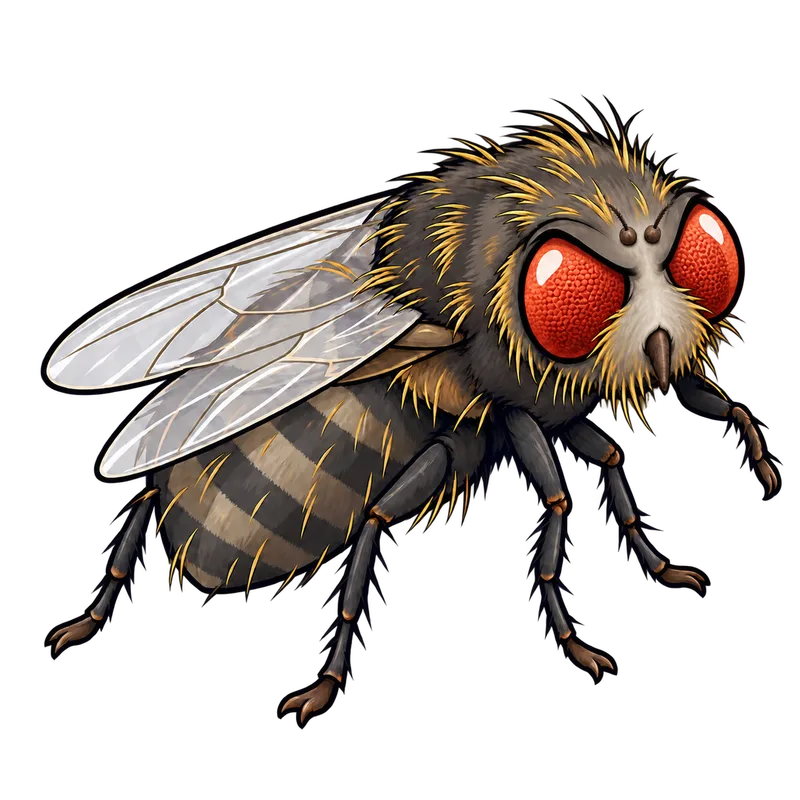
Cluster flies are in a house during winter because they entered the building back in late summer to sleep through the cold months in deep hibernation. They wake up prematurely when your furnace heats up the wall framing, and they crawl out through gaps to end up on your windows.
What is actually going on
You walk into the living room on a bright afternoon in January, and there they are. Big, dull gray flies are crawling sluggishly across the window glass, tumbling onto the sill like they have forgotten how gravity works. It is the middle of winter, so the immediate question is why they are here at all, let alone why they seem so thoroughly confused.
The short answer is that your house is serving as a very reluctant winter hotel. These insects are cluster flies, and they did not hatch in your basement, crawl out of your drains, or breed in your garbage. Back in late summer and early autumn, they were living outdoors as parasites of earthworms in the soil. When the days grew shorter and the air turned crisp, a biological switch flipped inside them, driving them to seek out dry, protected shelter to sleep through the cold months in a state of deep hibernation called diapause.
They arrived at your home months ago, drawn to the exterior walls that caught the afternoon sun like a solar panel. Slipping through tiny cracks around siding, soffits, and window trim, they crawled deep into your wall voids and attic spaces to cluster together by the thousands. They do not eat, mate, or lay eggs all winter, and they certainly do not care about your household cleanliness. They just want a dark, quiet place to stay frozen in time until spring.
So why are you seeing them now? That hibernation is fragile. When your central furnace kicks on and warms up the interior framing, or when a strong winter sun bakes the outside of your house, the trapped air in those wall cavities heats up. That warmth plays a cruel trick on the sleeping flies, waking them from their dormancy prematurely. Groggy and disoriented like a sleepwalker pulled out of bed at three in the morning, they crawl out through gaps around baseboards and light fixtures, blindly following the light right onto your living room windows.
How to tell for sure
Before you decide what to do about them, you usually need to figure out what you are actually looking at. Ordinary house flies and drain flies are common household nuisances, but cluster flies have a completely different origin story, and their physical markers usually give them away once you look closely.
Adult cluster flies typically measure roughly half an inch long, making them noticeably larger and bulkier than a standard house fly. Their bodies are usually a dark, dull grayish-brown, and their abdomens feature a distinct dark-and-silver checkered pattern. When they land and fold their wings at rest, their wings overlap flat over their back like a pair of closed scissors, rather than diverging outward the way house fly wings do.
If you happen to squash one by accident, you will likely notice a distinct, sickly sweet odor often compared to buckwheat honey. That scent serves as a reliable field cue for this specific group of insects. Should you pick up a magnifying glass and examine the middle section of the body, you usually spot a dense cluster of short, crinkled golden-yellow hairs. Those golden hairs tend to wear off on older flies, but when they are present, they separate cluster flies from almost every other lookalike buzzing around a winter window.
You usually will not find them buzzing around your kitchen pantry or inspecting your dinner leftovers. They ignore human food entirely. Their sluggish flight and stubborn habit of piling up on window panes in January usually point straight to overwintering cluster flies rather than an active breeding population indoors.
What usually comes next
The most common mistake people make when winter flies appear is trying to treat the symptom rather than addressing the cause. When you see dozens of sluggish insects on a sunny window, reaching for an aerosol spray or a bug bomb to blast into the wall voids is usually a counterproductive move.
Killing thousands of flies hidden deep inside your walls creates a massive reservoir of decaying organic matter. That hidden pile of dead insects serves as an ideal food source for secondary pests like larder beetles and carpet beetles, which will happily chew through the wall voids and eventually migrate into your living space to damage woolens, stored fabrics, and pantry goods. Spraying insecticides onto your lawn in an effort to kill the earthworm-dwelling larvae is equally pointless, as adult flies easily travel hundreds of yards from neighboring properties.
For indoor management right now, the practical approach is strictly mechanical. Vacuum up active or sluggish flies using a hose attachment, and empty the vacuum bag or canister promptly so they do not crawl back out. A standard fly swatter works fine for individuals on the glass.
The only permanent fix happens long before winter arrives. Physical exclusion is the main defense, which involves sealing up exterior gaps, cracks, and vents around upper eaves and sun-exposed walls using a quality exterior caulk before late summer ends.
When to get help
Most of the time, dealing with winter cluster flies is merely an exercise in patience and vacuuming. However, certain situations call for professional intervention or a change in tactics.
If you notice a sudden surge of brown, oval beetles crawling around your baseboards, attic, or upper rooms in early spring, that is a reliable warning sign. It usually indicates that a massive accumulation of dead cluster flies is sitting inside your wall cavities and feeding a secondary infestation of larder beetles.
For multi-story homes or complex architectural structures where safely reaching upper eaves, soffits, and high windows for caulking is physically difficult or dangerous, hiring a licensed pest control operator makes sense. A professional can apply targeted exterior residual treatments to upper building surfaces during the late summer arrival window, or safely deploy specialized desiccant dusts and high-capacity light traps into difficult-to-reach attic cavities without creating secondary pest problems inside your walls.