
Biting vs non-biting midges: which signs differ?
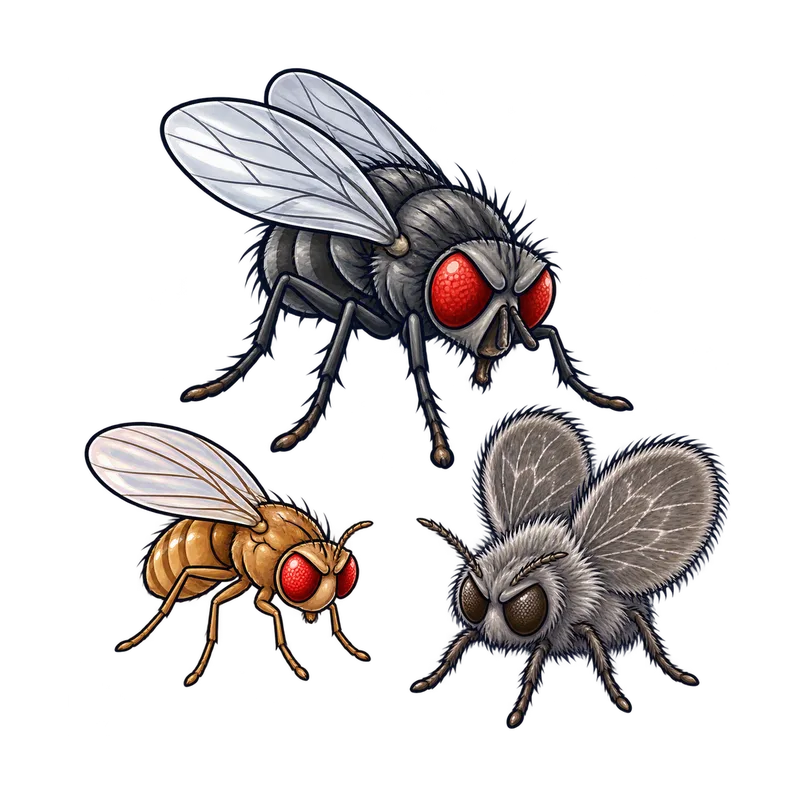
Biting and non-biting midges differ in their anatomy, habits, and the physical signs they leave behind. Biting midges are minute insects that fold their broad wings flat over their abdomen and possess mouthparts that cause itchy red welts. Non-biting midges are larger, slender flies with feathery antennae that cannot bite humans under any circumstances.
What is actually going on
Picture sitting on the back porch just as the sun dips below the tree line. The air is warm, your drink has condensation dripping down the glass, and suddenly you feel a sharp pinch on your ankle, like someone dropped a hot spark. You reach down to swat it away, but whatever bit you is entirely invisible until you squint at a speck of what looks like coarse black pepper sitting right on your skin. That is the classic introduction to the biting midge, and it usually leaves people wondering how something so small can cause such an outsized annoyance.
The confusion starts because these tiny insects share yard space with plenty of other small flies that look roughly similar at a glance. You might have a massive cloud of bugs hovering over the driveway at sunset, looking like a terrifying phantom swarm, only to walk right through it and never feel a single nip. On the other hand, you might sit indoors with all the windows shut, wake up the next morning covered in itchy red welts, and wonder how anything got past your screens.
The root of the difference comes down to an evolutionary divide between two completely separate insect families. Biting midges belong to one biological family, while their harmless look-alikes, the non-biting midges, belong to another. They live in different places as larvae, possess entirely different mouthparts, and interact with humans in completely opposite ways. Understanding what you are dealing with saves you from wasting time chasing the wrong problem, whether that means spraying a harmless cloud of gnats or wondering why your standard window screens are letting pests march right inside.
How to tell for sure
Telling these two families apart usually comes down to looking closely at their anatomy, posture, and habits. Biting midges are minute, usually measuring just a millimeter or two in length. When they land on a surface or your skin, they typically hold their broad wings folded flat over the top of their abdomen. Female biting midges possess short, blade-like cutting mouthparts. They use these mouthparts to lacerate skin capillaries and pool blood, which they then lap up. Males do not bite at all and feed only on plant nectar.
Non-biting midges are larger, slender flies that resemble mosquitoes in general shape, but they completely lack a feeding snout and their wings do not have scales. If you look at a male non-biting midge under good light, you will usually notice large, feathery antennae that look like tiny plumes, which they use to detect females in flight. When resting, non-biting midges often lift their long front legs off the surface, mimicking antennae. They have reduced, non-functional mouthparts and cannot bite humans under any circumstances.
The differences extend to their early life stages as well. Biting midge larvae are translucent, worm-like organisms that usually develop in damp soil, muddy pond edges, or decaying leaf litter, requiring moisture but drowning if submerged under too much standing water. Non-biting midge larvae, by contrast, are fully aquatic scavengers living in lake and river beds. Many of these are the famous bright red bloodworms, which contain a specialized pigment allowing them to survive in severely low-oxygen mud.
The physical signs they leave behind are also entirely different. A biting midge attack often goes unnoticed at first due to salivary anesthetics, but hours later it usually triggers intense itching, red swollen welts, or blisters that persist for days. Biting midges are small enough to crawl straight through standard window screen mesh, treating it like a wide garden trellis rather than a barrier. Non-biting midges leave no bites or skin lesions at all, though their massive seasonal swarms can coat building facades, stain walls, and trigger airborne allergies when dead bodies dry out into dust.
What usually comes next
Once you figure out which insect is visiting your yard, you can make a practical decision about how to handle them. If you are dealing with biting midges, standard residential window screening will usually not keep them out, so upgrading your porch and window coverings to fine-mesh micro-screening is often the most effective structural fix. Biting midges are also notoriously weak fliers, meaning they cannot easily navigate air movement over a moderate breeze. Running a ceiling fan or a portable fan on your porch can clear them away instantly.
For personal protection when heading outdoors during their peak activity at dawn, dusk, or on calm, overcast days, wear light-colored, long-sleeved shirts and long trousers. Applying an insect repellent containing DEET or picaridin to exposed skin helps deter them. Keep in mind a strict safety rule for children: never apply chemical insect repellents to infants under 12 months of age. Protect babies instead by using fine-mesh netting over strollers and carriers alongside protective clothing. For older children, choose appropriate formulations and apply them carefully.
If bites do occur, apply cold compresses or ice packs to reduce localized swelling and pain. Topical antiseptic creams or oral antihistamines can help manage the severe itching. Avoid scratching the bite lesions to prevent secondary bacterial skin infections from taking hold. If you notice small flies breeding inside your house around houseplants or kitchen sinks, remember that these are virtually never biting midges. Indoor small flies are almost universally fungus gnats or drain flies, which require entirely different control methods centered on soil moisture management or cleaning organic drain scum.
When to get help
While biting midges generally do not transmit human viral or bacterial pathogens in most regions, their bites carry a real risk of secondary bacterial infection if you scratch them open. You should direct a reader to a clinician, urgent care facility, or poison control if bite sites show clear signs of a secondary infection, such as yellow pus, spreading red streaks, localized heat, or increasing pain. Seek medical evaluation immediately if severe systemic allergic reactions occur or if bites happen to affect infants.
Professional pest management services can be brought in when adult biting midges become unmanageable around outdoor living spaces. Licensed technicians can apply registered barrier or residual surface sprays to exterior building walls, shade cloth, and resting vegetation to suppress adult populations. All pesticide applications must strictly adhere to product label directions, which govern legal and safe use. When chemical control of larval breeding sites in vast outdoor mud flats or marshes is considered, remember that it is generally impractical and often unregistered in most jurisdictions, leaving professional barrier treatments and personal protective measures as your most reliable path forward.