
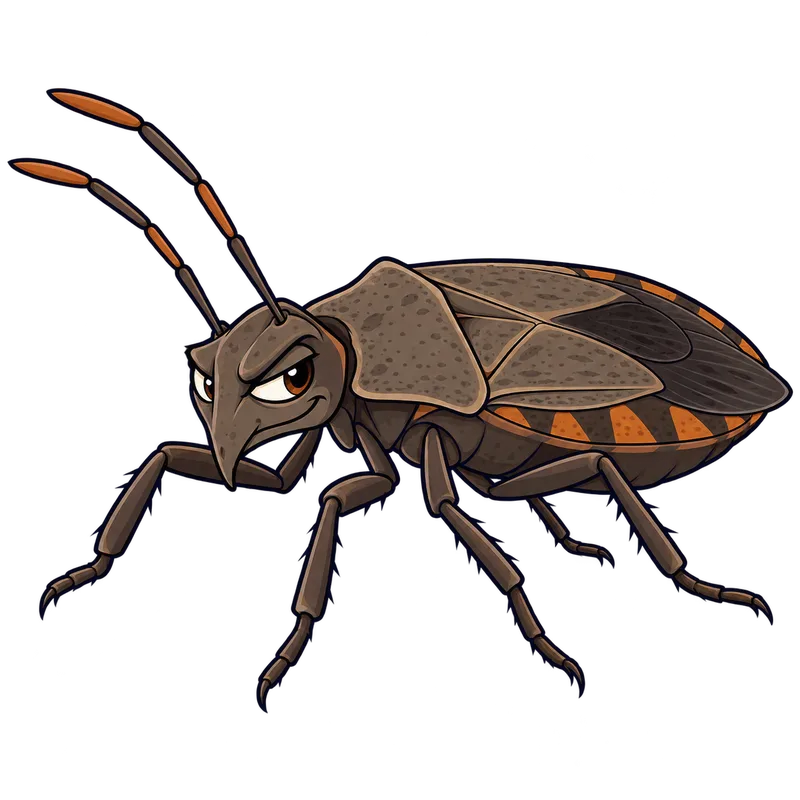
Squash bug
Anasa tristis
- Size
- Adults measure about 16 mm in length
- Color
- Mottled gray, dark brown, or black
- Habitat
- On cucurbit crops and around plant debris
- Diet
- Sap from squashes, pumpkins, and melons
- Life cycle
- Egg, five nymphal instars, and adult
The squash bug is a garden regular that makes its presence known long before you spot the insect itself. You usually notice the damage first, a sudden, inexplicable wilting in a prize zucchini or pumpkin vine that refuses to bounce back after watering. When you flip the broad leaves over, you find the culprit hiding in plain sight along the leaf veins. Adults are dark brown to black and feature an elongate, flattened body contour typical of coreid true bugs, complete with fully developed wings folded flat over the abdomen and overlapping at rest.
Identity
Eggs are just as distinct, laid in neat, tightly grouped clusters tucked into the angles where leaf veins intersect. Freshly laid eggs are lighter, but they turn a rich coppery brown just before hatching. You can spot adults, nymphs, and egg clusters easily with the naked eye or a simple 10x hand lens. You do not need a laboratory microscope unless you are trying to separate this garden resident from obscure wild cousins that do not care about your vegetables.
Gardeners often confuse squash bugs with other insects sharing the same patch of dirt. Cucumber beetles are chewing beetles with yellow and black stripes or spots on their wing covers, completely different from the solid dark brown body of a squash bug. Stink bugs possess a characteristic five-sided shield shape and measure about five-eighths of an inch long when fully grown, laying barrel-shaped eggs in loose clusters. Squash vine borers are moth caterpillars that bore straight inside the stems rather than feeding on the surface, leaving behind moist frass at their entry holes.
Habitat & behaviour
Squash bugs live wherever cucurbit crops grow, showing a clear preference for squashes while happily moving on to pumpkins, cantaloupes, cucumbers, and watermelons. They spend their time lingering on the undersides of leaves, around the sheltered bases of vines, and tucked against developing fruit where shade and moisture offer protection from the midday sun.
Activity begins in the spring as soon as young plants go into the ground. Adults and nymphs alike use piercing and sucking mouthparts, much like a tiny straw, to tap directly into the plant vascular system. They feed on foliage, stems, and fruit surfaces, extracting sap and leaving behind damaged tissue that disrupts water transport.
Floating row covers offer a reliable way to keep them away from young plants, but you have to time their removal carefully. While the covers must be put in place right at planting to exclude overwintering adults, they must come off as soon as the vines begin to flower. If you leave them on, bees and other pollinators cannot reach the blossoms, and you end up with plenty of healthy vines and zero squash.
Visual variations
Squash bugs move through three distinct life stages, and every single one wears a completely different look. There are no workers or complex colonies here, just a straightforward population where every individual follows the same repetitive path.
Newly hatched nymphs look almost nothing like the adults you expect. They are entirely wingless, surprisingly round, and bright pale green the moment they pop out of those copper egg clusters. As they feed and grow through their various growth stages, their bodies stretch out and their color shifts from green to a dusty gray.
Adults represent the final chapter of this transformation. They settle into a solid dark brown or black shade and sport fully formed wings that lie flat over the back. You will also spot long, jointed antennae sticking out from a narrow head, which helps them find their way through the thick jungle of your garden.
Soft, green early-stage nymphs are rather fragile and sluggish, making them easy targets for simple garden interventions. By the time they turn into tough, dark brown adults with hard outer shells, they are far more stubborn, which explains why catching them early in the spring saves you a massive headache later.
Why it matters
An unchecked squash bug population can turn a thriving vegetable patch into a withered ruin in a matter of weeks. The continuous loss of plant fluids causes leaves to droop, turn crisp and brown, and eventually die. Heavy feeding on developing fruit leaves behind sunken scars, warped shapes, and rot before harvest time.
Despite the dramatic damage they cause to your prize vegetables, these bugs pose zero threat to people or pets. They do not bite, they do not sting, and they do not carry human pathogens.
You might hear gardeners panic about bacterial wilt when they see their squash leaves collapsing, but that specific disease is carried by cucumber beetles, not squash bugs. Squash bug wilt is strictly the result of physical sap depletion. If you catch the infestation early, hand-crushing those distinctive egg clusters on the leaf undersides or applying registered home garden products like insecticidal soap, pyrethrins, permethrin, or kaolin clay keeps the numbers manageable. For large commercial operations or severe outbreaks, consultation with a local agricultural extension agent or licensed applicator ensures proper management.
Similar species
 False chinch bugNysius raphanus
 Brown marmorated stink bugHalyomorpha halys
 Boxelder bugBoisea trivittata
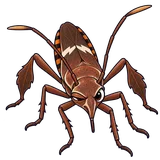 Western conifer seed bugLeptoglossus occidentalis
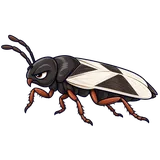 Southern chinch bugBlissus insularis
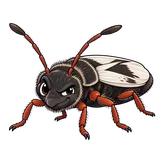 Hairy chinch bugBlissus leucopterus hirtus