
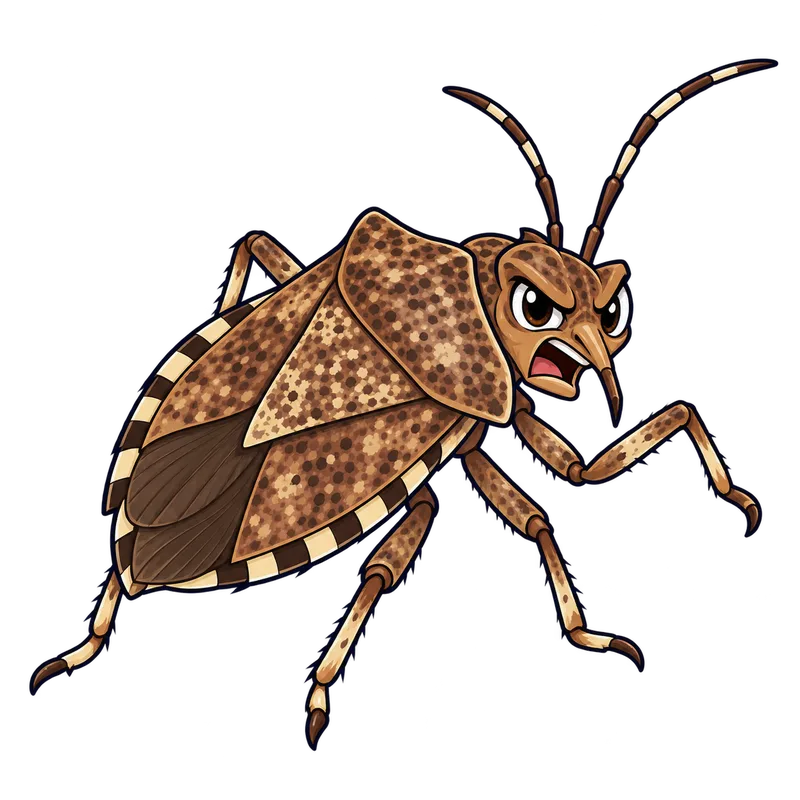
Brown marmorated stink bug
Halyomorpha halys
- Size
- About 5/8 inch long
- Color
- Mottled brown or marbled with pale antenna bands
- Habitat
- Wild plants, orchards, and indoor structures in winter
- Diet
- Plant sap from fruits, vegetables, and ornamentals
- Life cycle
- Eggs, nymphs through several instars, winged adults
The brown marmorated stink bug is an invasive true bug measuring about 5/8 inch long with a distinct five-sided shield shape. Its body features a mottled brown or marbled color pattern across the back, formed by a dense mix of dark and light specks. Fully grown adults have working wings that fold flat over their abdomen, and they are capable of strong, sustained flight.
Identity
People frequently confuse this invader with native brown stink bugs or the dusky stink bug, which share a similar shield shape and brownish hue. You will also find plant bugs and leaffooted bugs drawing similar suspicion in the garden. The leaffooted bug gives away its identity with flattened, leaf-like expansions on its hind legs, while smaller plant bugs lack the broad, five-sided shield entirely. When you are trying to separate the invasive marmorated bug from native species, look closely at the antennae. The brown marmorated stink bug features distinct white or pale banding on its dark antennae, a subtle detail that sets it apart from many of its native cousins.
Habitat & behaviour
You will find these bugs moving back and forth between wild areas and cultivated crops depending on the calendar. From May through mid-October, active populations feed and reproduce across orchards, gardens, and landscape plants. They are exceptionally mobile, drifting freely from wild alternate hosts over to commercial fields and backyard fruit trees.
As the calendar turns toward autumn, their behavior shifts entirely. The first cool day in September triggers a major change, sending adults scurrying off crops and toward man-made structures. They are hunting for a dry, frost-free place to wait out the winter. You will spot them gathering by the dozens on sun-baked exterior walls, looking for tiny gaps around windows, siding, and vents to slip inside your living space, attic, or wall voids.
Visual variations
The life cycle moves through gradual metamorphosis, meaning the insect transforms through distinct nymph stages instead of spinning a cocoon. Adult females deposit their eggs on the undersides of host leaves in neat, compact clusters of 20 to 70 eggs. These eggs are distinctly barrel-shaped and line up side by side.
When the eggs hatch, the emerging nymphs look quite different from their parents. Nymphs are smaller than the 5/8 inch adult, completely wingless, and display striking, contrasting color patterns across their body segments rather than a uniform marbled brown. As they molt and grow through their various instars, they develop wing pads before finally transforming into fully winged adults. If you are hoping to tell males apart from females by looking at them, you are out of luck, as the sexes look identical to the naked eye.
Why it matters
An encounter with these bugs usually leaves an impression on your plants or your nose, but thankfully never on your skin. They do not bite or sting humans or pets, so you do not need to worry about medical threats. However, bringing one indoors or disturbing it creates an immediate sensory problem. If you crush one, handle it roughly, or suck it up through a household vacuum cleaner, the bug releases a strong, foul defensive odor that will linger stubbornly in the machine and the room air.
Out in the garden and orchard, the damage is strictly agricultural and economic. Using their piercing-sucking mouthparts, they puncture developing fruit and vegetables to extract sap. On peaches and nectarines, this feeding results in discolored, sunken areas accompanied by thin streams of whitish, jelly-like ooze known as gummosis, while the flesh underneath turns into dead, corky tissue. It also causes a severely distorted surface condition called cat-facing on tree fruit, white halo-like spots on tomatoes and peppers, and raised, wart-like pimples on okra and bean pods. Precise identification matters when commercial crops are at stake, because managing these invaders requires careful timing that avoids spraying near active pollinators or running afoul of laws prohibiting chemical applications on concrete surfaces where runoff threatens local water.
Similar species
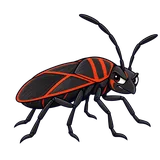 Boxelder bugBoisea trivittata
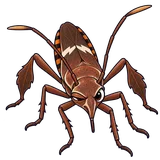 Western conifer seed bugLeptoglossus occidentalis
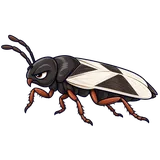 Southern chinch bugBlissus insularis
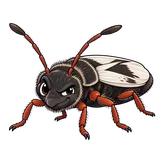 Hairy chinch bugBlissus leucopterus hirtus
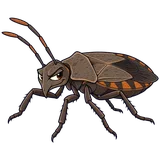 Squash bugAnasa tristis
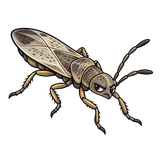 False chinch bugNysius raphanus