
Can stink bugs fly?
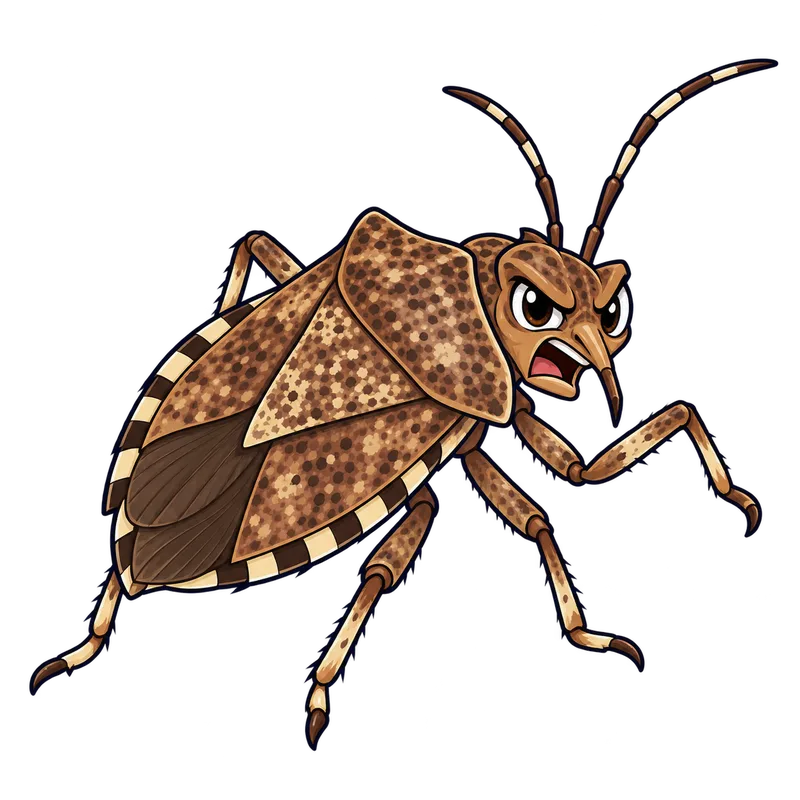
Yes, adult stink bugs can fly. They use two pairs of wings to move around, though their flight is heavy and wobbly like a tiny delivery truck. The ability to fly depends on their age, because young immature nymphs have no wings at all and can only crawl.
What is actually going on
Picture a mild February afternoon. The sun has been on the living room window all day, and you hear a low, clumsy thump against the glass, then a buzz, then another thump. You look up and there it is: a flat, shield-shaped insect bumbling along the pane like a tiny cargo plane that lost its flight plan. So yes, stink bugs can fly. The adults have two full pairs of wings and they use them regularly. That awkward indoor flight is usually a disoriented bug that woke up from its winter nap, got confused by the warmth, and headed for the light.
The part that surprises people is that the wings are invisible when the bug is sitting still. The front pair, called hemelytra, are leathery and lie flat over the back like a closed case, hiding a pair of thin, membranous hindwings underneath. When the bug decides to go somewhere, the front wings lift and the hindwings unfold and do the actual flying. The result is heavy, direct and slightly wobbly, nothing like the darting of a housefly. Think less fighter jet, more delivery truck with wings.
One honest exception: the young ones cannot fly at all. Stink bugs grow through gradual stages, and the immature nymphs that hatch from eggs on plant leaves have no wings whatsoever. They crawl. Only after the final molt into adulthood do the wings appear. So if you spot a small, roundish, wingless stink bug marching along a tomato plant in June, it is not refusing to fly out of principle. It physically cannot.
And the flying has a purpose, which is why you notice it in certain seasons and not others. Through spring and summer, adults fly between plants to feed and reproduce. Then, from about mid-August into October, the shortening days flip a switch: they start flying toward warm, sunlit walls, usually the south and west sides of buildings, looking for cracks to squeeze into for the winter. They are not coming in for your food or to raise a family in your attic. They want a quiet, dry place to sleep, nothing more.
How to tell for sure
If you want to confirm that the window-bumper really is a stink bug, and specifically the brown marmorated kind behind most of the fuss in the United States, you can do it from a normal viewing distance. The body is the first giveaway: shaped like a small medieval shield, broader across the shoulders and tapering toward the rear, roughly half an inch long. The color is a mottled brown or grayish brown. Nothing flashy, which fits a bug whose whole survival strategy is smelling bad.
Look closer and two details usually settle it. The antennae have alternating light and dark bands, like tiny striped straws, and the edge of the abdomen peeking out around the folded wings shows an alternating black and white pattern. If you have a magnifying glass, the shoulders of the brown marmorated stink bug are smooth, without spines or jagged teeth, which separates it from some similar native species.
A few honest caveats, because confident identification from across the room is how myths get started. People often mix up stink bugs with boxelder bugs, which are flatter, darker and marked with red or orange lines, or with squash bugs, which are longer and narrower. Lookalikes are common enough that a sure identification usually needs the whole insect in decent condition. If your specimen is crushed, weathered or missing antennae, even a good photo may not be enough, and that is when a university extension diagnostic service earns its keep.
One thing you should never do is try to identify any insect from a mark or bump on your skin. Stink bugs do not bite or sting people, so a mystery welt is a separate question entirely, and no amount of comparing it to pictures on the internet will answer it.
What usually comes next
Once you accept that the thing can fly, the useful question is how to keep the flyers from turning into winter lodgers. The answer is pleasantly unglamorous: your house matters more than any spray. They show up by air in late summer and fall, then settle on warm walls, so the best move is to shut the place up before they come knocking. In August or September, walk the south and west sides and close the gaps: cracks around window frames, holes where cables and pipes enter, loose siding joints, openings at the soffits. Anything wider than about 1/16 inch is basically a welcome mat. Fix torn screens, put sweeps on doors, and make sure attic and gable vents are properly screened.
You might wonder whether one skinny crack is really worth an afternoon with a caulk gun. It is, and the reason is plain: these bugs do not need a doorway, they need a seam, and they like to gather on the same sun-warmed wall day after day. A tight house gets a few lost wanderers. A house with open soffits gets the regional meeting.
For the ones already indoors, fight the two urges that feel most satisfying. Do not crush them, because the smell is not folklore: the defensive chemicals can linger on surfaces and fabrics, and squashing one into the curtains is a choice you may relive every sunny afternoon. Do not run your regular household vacuum over them either, unless you want the filter to keep bringing up the subject for months. A wet/dry shop vacuum with a nylon stocking stretched inside the hose and held with a rubber band works better, because the bugs collect in a little pouch you can tie off and throw away outside. For one bug, a tissue and a jar of soapy water are enough.
Leave the bug bombs and indoor foggers on the shelf. They do not reach into the wall voids where the bugs actually spend the winter, and they can leave you with something worse: dead insects piled inside the walls, which is lunch for carpet beetles, larder beetles and other scavengers. That is trading a harmless sleeper for a pest that can genuinely ruin your stuff.
When to get help
Most stink bug trouble is annoying, not dangerous. They do not bite, sting, spread disease or chew the house. Still, there are moments when calling in help is the grown-up move, and none of them require you to become more heroic with a broom.
If sealing the house means working along a second-story roofline, high gables or a chimney, you are in ladder and scaffolding territory, and a professional with the right equipment is the sensible call. Gravity is not impressed by motivation. If carpet beetles or larder beetles start showing up along baseboards after a big die-off in the walls, that secondary problem needs a pest management professional who can find and treat the voids properly. And if stink bugs are a crop issue on an orchard or commercial planting, product choice and application belong to a licensed applicator following the current label, not to guesswork.
On health, the bugs themselves are harmless, but heavy buildups of dried, crumbled bodies in an attic can irritate airways in sensitive people and set off sneezing or coughing. If someone in the house gets persistent skin irritation or breathing trouble, take that to a clinician, not to a blog post, including this one.
Keep this much in your pocket: adults fly, nymphs crawl, fall is when they come knocking, and a tube of caulk in September beats a vacuum full of regret in February.