
Are boxelder bugs harmful?
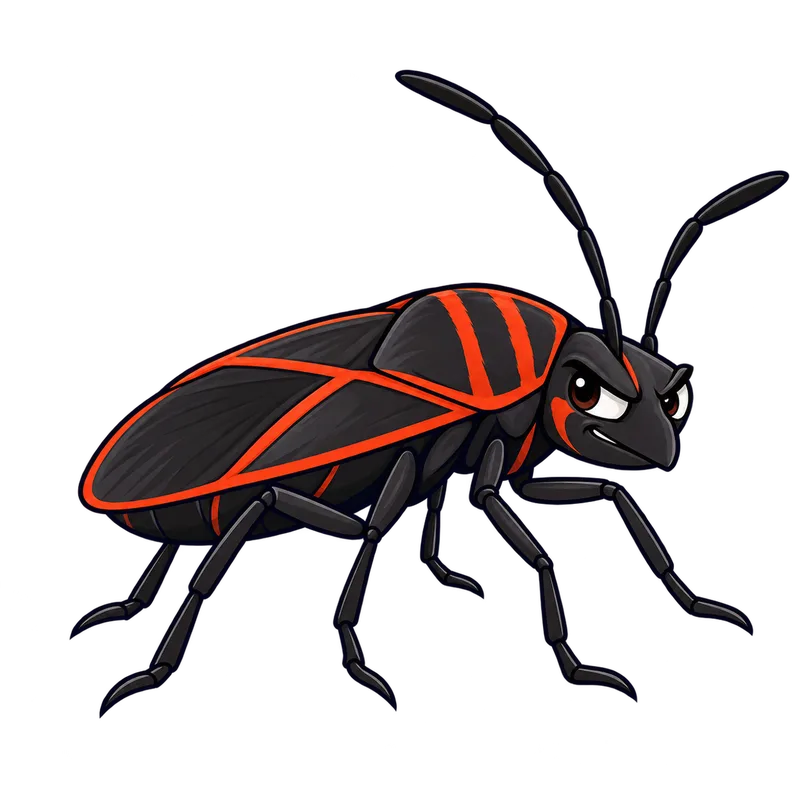
No, boxelder bugs are not harmful to human health, and they will not chew through your drywall or damage shade trees. These flat, oval insects measure roughly half an inch long with dark bodies outlined in red stripes. They are strictly nuisance pests that only seek warm shelter indoors during winter.
What is actually going on
You walk out to your back porch on a crisp October morning, coffee mug in hand, and notice what looks like a rust-colored blanket moving slowly across the siding. Hundreds of flat, oval insects with striking red and black markings are sunbathing on the bricks, soaking up the last reliable warmth of the season before winter settles in. Naturally, you might wonder if your house is about to be chewed to pieces or if these uninvited guests pose a threat to your family.
The short answer is no. Boxelder bugs are not harmful to human health, they will not chew through your drywall or structural framing, and they do not cause any significant damage to your shade trees. They are strictly nuisance pests. Their only real crime is showing up unannounced in large numbers and occasionally wandering into your living room when they lose their way inside the wall voids.
People often worry because these bugs possess piercing-sucking mouthparts, which sounds alarming if you picture them going after your skin or your furniture. In reality, those mouthparts are specialized for feeding on the sap of seed-bearing female boxelder trees and the fallen seeds collecting in the flower beds below. Once the weather turns cold, their main goal shifts entirely from eating to finding a cozy, protected place to wait out the winter. Your sunny, south-facing exterior walls just happen to look like the best resort in town.
Boxelder bugs spend the warmer months dispersed across host trees, particularly seed-bearing female boxelder trees and maples. Their feeding habits target developing seeds and foliage, but the sap extraction causes negligible physiological stress to mature shade trees. You are unlikely to notice any decline in tree health even when populations are present.
The shift happens as summer turns to autumn. When outdoor temperatures drop, these insects experience a natural drive to seek protected environments where they can survive freezing weather. They are drawn to thermal radiation, which explains why they blanket sunny southern and western exposures of houses, sheds, and commercial buildings. They are simply trying to stay warm, and residential structures offer countless tiny openings that lead to dark, insulated wall voids.
Once inside these structural gaps, the bugs enter a state of sluggish dormancy. They do not reproduce indoors during the winter months, nor do they feed on household items or stored pantry goods. However, on unusually warm winter days, indoor heating can trick them into thinking spring has arrived, causing them to wander out of wall voids and buzz clumsily around windows and living spaces.
How to tell for sure
Spotting these insects usually comes down to noticing their distinct color pattern and their seasonal habits. Adult boxelder bugs measure roughly half an inch long with a flattened, dark body outlined in bright red or orange stripes along the edges. Their wings fold flat across their backs, forming a distinct shape when closed. Younger nymphs look a bit different because they lack full wings and are usually a brighter, solid reddish-orange color as they crawl around the yard during the summer months.
You will usually find them congregating in specific spots rather than wandering aimlessly through the entire garden. They tend to prefer the sunny sides of buildings, masonry foundations, and windowsills during late summer and autumn. If you have a female boxelder tree or a nearby maple tree dropping seeds into your mulch, you will usually see much heavier activity right around that area compared to yards with only male shade trees.
One common point of confusion is mistaking them for other harmless garden insects or stink bugs, especially since boxelder bugs can release a mild, unpleasant odor if you squash them. However, their bright red markings and preference for sun-warmed walls usually set them apart from standard garden bugs. If you find bugs crawling indoors during the colder months, they are almost always adults that slipped through a gap in the structure while looking for shelter.
What usually comes next
When you find hundreds of these bugs massing on your siding or wandering across your carpet, the most practical decision you face is choosing between a mechanical cleanup and structural exclusion, rather than reaching for heavy indoor chemical treatments. Spraying aerosols inside your living room is usually messy, unnecessary, and fails to solve the root problem. Instead, focus on keeping them out of the building envelope in the first place by sealing up their entry points.
If they are already inside, the easiest approach is simply to sweep them up with a broom and dustpan or vacuum them gently. Avoid crushing them against light-colored curtains, walls, or upholstery, because their bodily fluids can leave a permanent cosmetic stain. To prevent a repeat performance next year, take an afternoon in late summer to inspect your window sashes, foundation cracks, and utility penetrations, then seal those gaps with exterior caulk before the autumn chill arrives.
If your property features mature, seed-bearing boxelder trees that generate massive annual invasions, you can also consider long-term landscape adjustments. Replacing those specific female trees with male shade trees or non-host species removes the primary local food source that attracts the bugs to your yard in the first place, greatly reducing the population pressure on your exterior walls year after year.
When to get help
There are times when a do-it-yourself approach simply is not enough, particularly if you are dealing with a massive multi-story infestation where the bugs are tucked deep inside inaccessible structural voids or high architectural soffits. In those situations, home exterior sealing and simple vacuuming become impractical, and you should bring in a licensed commercial pest control applicator who has the right high-reach equipment and experience to manage large-scale structural exclusion safely.
Outdoor chemical treatments require a careful approach and professional oversight if you decide to go beyond basic physical sealing. If you use preventative perimeter sprays, they must be strictly timed for mid-to-late August before the bugs migrate indoors, and they are subject to strict environmental laws. You must never apply pesticides along concrete or paved surfaces where there is a risk of storm runoff entering local waterways, and you must never spray when pollinators are actively foraging on nearby flowering plants.
Finally, if anyone in your household experiences an unexpected skin reaction, bite, or health concern, remember that an insect or a mark on the skin cannot be diagnosed from a photograph or a verbal description alone. If you have any worries about unexplained symptoms or potential exposure to pests and treatments, reach out immediately to a licensed clinician, an urgent care provider, or your regional poison control center for professional medical guidance.