
What are boxelder bugs good for?
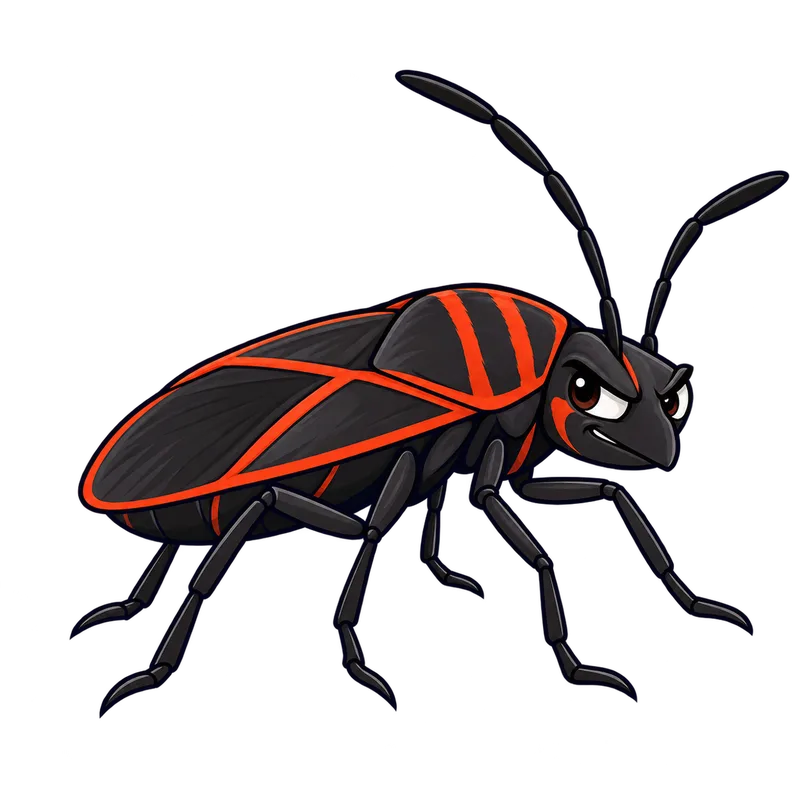
Boxelder bugs provide zero recognized biological control benefits and do not act as predators for other garden pests. These half-inch-long slate-gray insects with bright red markings spend their lives feeding on plant sap from female boxelder trees. They are good for almost nothing in the garden, but they are far less dangerous than they appear.
What is actually going on
You walk out to your back patio on a crisp October afternoon, coffee cup in hand, and notice the warm, south-facing brick wall of your house is completely alive. Hundreds of slate-gray bugs with bright red stripes are sunbathing in a dense, undulating crowd, treating your siding like a resort pool. It is easy to assume they are plotting something destructive, perhaps preparing to chew through your prized hydrangeas or gnaw holes in your drywall.
So what are boxelder bugs good for, anyway? To answer plainly, they are good for almost nothing in the grand scheme of your garden, but they are also far less dangerous than their menacing appearance suggests. If you were hoping they act as diligent predators that hunt down aphids, Japanese beetles, or other destructive garden pests, you will be disappointed. University extension entomologists confirm that boxelder bugs provide zero recognized biological control benefits. They do not eat other insects, and they certainly do not earn their keep by cleaning up your yard.
Instead, their entire life centers around finding seed-bearing female boxelder trees, sipping plant sap, and waiting for the calendar to turn. During the spring and summer, they stay quietly outdoors. They feed on the developing seeds, leaves, and flowers of those female trees, rarely causing enough damage to harm the health of the plant.
The trouble, if you can call it that, begins when the weather cools down in late summer. They shift from minor plant feeders to seasonal nuisance guests. They abandon the trees and congregate on warm, sun-drenched exterior walls, looking for tiny gaps around window sashes or siding to squeeze through for winter hibernation. Once they are inside your walls, they simply wait out the cold. They do not chew on your furniture, they do not reproduce in the dark, and they certainly do not eat your food. They are simply living rent-free until spring gives them the green light to head back outside.
Spotting a boxelder bug usually comes down to a very specific color combination and a distinctive silhouette. Adults generally measure about half an inch long, featuring an elongated, flattened body that is dark slate gray or brownish black. The dead giveaway is the bright red or orange markings running down the sides of their thorax, which is the middle section just behind the head, along with three thin red lines across the back.
You will usually find them clustered in bright, sunlit spots outdoors from mid to late August through the autumn months. If you are inspecting your yard, check the trunks and fallen seed pods beneath seed-bearing female boxelder trees, or scan the south and west sides of your home where the afternoon sun beats down hardest.
It helps to know what they are not. People often mistake them for stink bugs because both share a penchant for sneaking indoors when the weather turns chilly. Stink bugs tend to be broader, shield-shaped, and uniformly green or mottled brown without those sharp red racing stripes. Seed bugs and various plant bugs also look similar at a quick glance, but they usually lack the striking red perimeter accents that make boxelder bugs instantly recognizable. If you spot a dark bug with bold red piping basking on your brickwork in the autumn sun, you have your culprit.
How to tell for sure
When you find a few dozen of these bugs crowding your window frames or waking up on a warm winter afternoon to wander across your living room ceiling, you face a straightforward choice. You can either wage a chemical war across your interior living spaces, or you can grab a vacuum cleaner and practice some basic physics.
Choosing the vacuum cleaner is almost always the better decision. Reaching for an aerosol can of broad-spectrum insecticide to spray your baseboards is a waste of time and money, because the bugs hiding inside your wall voids are too insulated for indoor sprays to reach them effectively. Furthermore, crushing them by hand or with a swatter is a mistake you will only make once, as they can release a foul-smelling liquid that stains light-colored carpets, curtains, and upholstery.
Instead, snap the crevice tool onto your vacuum and gently suck them up as you find them. If you want to keep them from returning next year, the real work happens outside before they ever get inside. Take a tube of exterior caulk and a putty knife in late August, and seal up every crack around your foundation, utility penetrations, and loose window sashes. Stopping them at the perimeter with physical exclusion beats trying to manage them after they have already moved into your guest room.
What usually comes next
Boxelder bugs do not bite, they do not sting, and they do not carry human diseases. They pose zero medical threat to you, your children, or your household pets, meaning you will never need a clinician or poison control center for a run-in with them.
However, situations involving outdoor chemical applications require strict adherence to safety rules and occasionally professional muscle. If you are tempted to spray your outdoor perimeter with a pesticide, remember that applications are strictly prohibited on concrete surfaces, driveways, or patios where rain can wash the product directly into storm drains and local waterways. You must also avoid spraying any blooming plants where bees and other pollinators are actively foraging.
When to get help
If your property features massive, towering shade trees that host heavy infestations, or if your home is structurally complex and requires sealing at dangerous heights, do not attempt a DIY ladder marathon. Call an experienced commercial arborist or a licensed custom spray applicator who has the right safety gear and technical training to handle large-scale property treatments without risking environmental contamination or personal injury.