
What attracts boxelder bugs to a house?
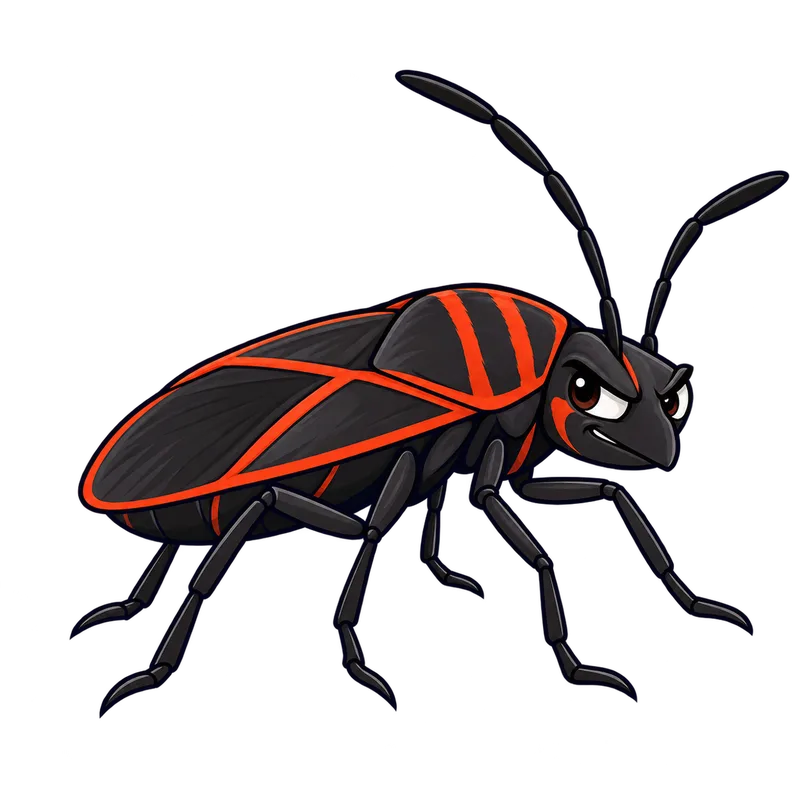
Boxelder bugs are attracted to houses because exterior walls offer vital thermal mass and protective shelter as autumn temperatures plummet. Your home acts as a giant heat sink that absorbs the afternoon sun, drawing the insects toward warm vertical structures.
What is actually going on
You step outside on a crisp October morning to grab the mail, and you notice something odd. The warm, sunlit side of your garage is completely peppered with flat, dark insects marked with striking red or orange lines. A few days later, you spot a couple of them crawling sluggishly across your living room rug, wondering how on earth they got inside a sealed house.
What is actually going on here is not an invasion driven by a hunger for your drywall or your furniture. Boxelder bugs are attracted to houses because exterior walls offer vital thermal mass and protective shelter as autumn temperatures plummet. Your home acts as a giant heat sink, absorbing and holding the afternoon sun. When late summer arrives, adult bugs experience a strong biological shift that drives them away from their summer feeding grounds and toward vertical, sun-exposed structures. They gather en masse on exterior siding, stone foundations, and window frames to soak up that lingering warmth.
Once they congregate on these outer surfaces, they simply crawl along structural lines until they find an unsealed gap, a loose window sash, or a gap in the siding, using these tiny openings to slip into wall voids and attics where they can pass the winter in a dormant state. This whole cycle starts much earlier in the year, usually back in spring and summer, through food availability rather than shelter. Boxelder bugs feed primarily on the developing seeds, leaves, and soft tissues of seed-bearing female boxelder trees. If you have one of these trees in your yard, or if a neighbor does, your property becomes a natural magnet for them. When those seeds mature and drop into flower beds or turf, the bugs gather on the ground to feed on the debris. Once the weather turns, that local population simply relocates from the tree canopy straight to the nearest warm vertical wall.
How to tell for sure
Spotting a boxelder bug usually comes down to recognizing a very distinct color pattern and shape. Adult insects measure about half an inch long, featuring an elongated, flattened body that is mostly dark gray or black. Their backs are accented by bright red or orange lines running down the margins and center of the thorax, which is the middle segment behind the head. You will also notice distinctive red eyes that stand out against their dark frames. Nymphs, which are the immature stages you might see earlier in the season, look a bit different because they lack full wings. They are usually brighter red and more rounded, feeding right alongside the adults on fallen seeds and low vegetation.
You usually do not need any special magnification or tools to identify them, as their bold red-and-black markings make them quite distinct from other common household bugs. People sometimes confuse them with stink bugs or various plant bugs, but boxelder bugs lack the broad, shield-shaped body of a typical stink bug. They are also entirely harmless to your home's structural integrity. They do not chew wood, eat fabric, or gnaw on electrical wiring. Their main offense is simply showing up in large numbers where you do not want them, and occasionally leaving a reddish stain on light-colored fabrics if they get squished.
What usually comes next
Once you understand that these bugs are looking for heat and entry points, your best practical decision is to tackle the problem before they ever cross your threshold by focusing entirely on exclusion and landscape management. Waiting until late autumn to deal with indoor stragglers is an uphill battle because the bugs are already hidden deep inside your wall voids. Instead, the smartest move is to inspect your home's exterior in mid-to-late summer, sealing up cracks around window sashes, caulking gaps in siding joints, and making sure door sweeps and window screens fit tightly.
If you have a chronic boxelder bug issue every single year, take a hard look at the trees on your property. Planting a female boxelder tree is essentially setting up an endless buffet and shelter invitation for these insects, so replacing it with a non-host shade tree often solves the root cause of the infestation for good. If you choose to use exterior perimeter treatments or professional applications to manage heavy populations, those actions must be timed for late summer before the migration begins, and you must avoid spraying impervious surfaces like concrete driveways where rain runoff can wash chemicals into storm drains or groundwater.
When bugs do manage to make it indoors during a warm winter day, resist the urge to spray insecticides inside your living areas. Indoor chemical treatments in winter rarely work because the insects are emerging from inaccessible wall voids. The cleanest, most effective response indoors is simply to sweep them up with a broom and dustpan or vacuum them away, disposing of the bag or canister immediately.
When to get help
Boxelder bugs are classified as nuisance pests because they do not bite, sting, or transmit diseases to humans. However, situations occasionally arise where you need to bring in outside help. If your home features high-reach, multi-story rooflines or complex architectural soffits where massive aggregations gather far beyond the reach of a safe DIY ladder, trying to manage the exclusion work yourself creates an unnecessary fall risk. In those cases, hiring a pest management professional with the right equipment to treat high exterior zones is the safest path forward.
Medical attention is rarely needed for boxelder bug encounters, but if an individual experiences a rare skin irritation, an allergic reaction from handling crushed insects, or accidental ingestion by a small child or pet, you should consult a qualified clinician, an urgent care facility, or your local poison control center immediately. Similarly, if you plan to use commercial insecticides around your property, always follow the product label instructions to the letter, ensuring that any treatments remain entirely inaccessible to children and pets, and never apply products when active pollinators are visiting blooming plants in your yard.