
What do stink bugs eat inside a house?
Stink bugs eat absolutely nothing inside a house. When these insects pack themselves into attics and wall voids for the winter, they rely entirely on stored body fat and survive without any food or water. Because they have specialized mouthparts that only consume plant sap, dry household items and fabrics are completely indigestible to them.
What is actually going on
You walk into the living room on a crisp October morning and spot a chunky, brownish bug slowly crawling across the baseboard toward the sunlight. It looks like a tiny medieval shield with legs. You grab a piece of paper and a glass, trap it, and wonder what on earth it has been snacking on behind your drywall. Has it been chewing through your spare blankets, grazing on the dry cereal in the pantry, or gnawing on the structural framing of the house?
The short answer is that stink bugs eat absolutely nothing inside a house. When these insects pack themselves into your attic, wall voids, and window frames in the autumn, they are not looking for a midnight snack. They are checking into a winter hotel where the only item on the agenda is sleep, relying entirely on stored body fat to get through the colder months.
Their presence indoors is driven by a seasonal survival routine known as diapause, which is basically an insect version of hibernation. As the days grow shorter and the first cold September snap hits, adults crawl out of orchards and gardens to find dark, sheltered crevices. Because they are not feeding, they do not touch your pantry goods, chew on indoor fabrics, or damage your woodwork. But why can they not just eat what humans eat anyway? Stink bugs belong to a group of insects equipped with specialized mouthparts called stylets, which act like a built-in miniature juice straw. They can only consume liquids by piercing living plant tissues, such as stems, seedpods, or ripening fruit, to draw out the sap. A dry box of crackers or a wool sweater is about as appetizing and digestible to a stink bug as a concrete block. They stay dormant until the spring warmth tells them it is time to head back outside to the garden.
When autumn temperatures drop and days shorten, adult stink bugs experience a hormonal shift that triggers diapause. Think of this as a deep metabolic pause, not ordinary sleep, which lets them coast for months without a single drop of water or bite of food. They never mate, lay eggs, or build nests inside residential structures. Instead, they pack themselves tightly into wall voids, attics, and behind siding to ride out the freeze. When winter brings a rare warm spell or furnace heat seeps into the framing, a few of these bugs wake up early and stumble into your living space. They are not hunting for crumbs on the kitchen counter or looking for a potted fern to nibble on, but are simply confused and trying to follow the light toward the outdoors. Once they hit cooler indoor air or spring finally arrives, their instincts tell them to head outside and start feeding on garden plants and crops all over again. This routine happens every single year, driven entirely by the weather outside rather than anything happening in your pantry.
How to tell for sure
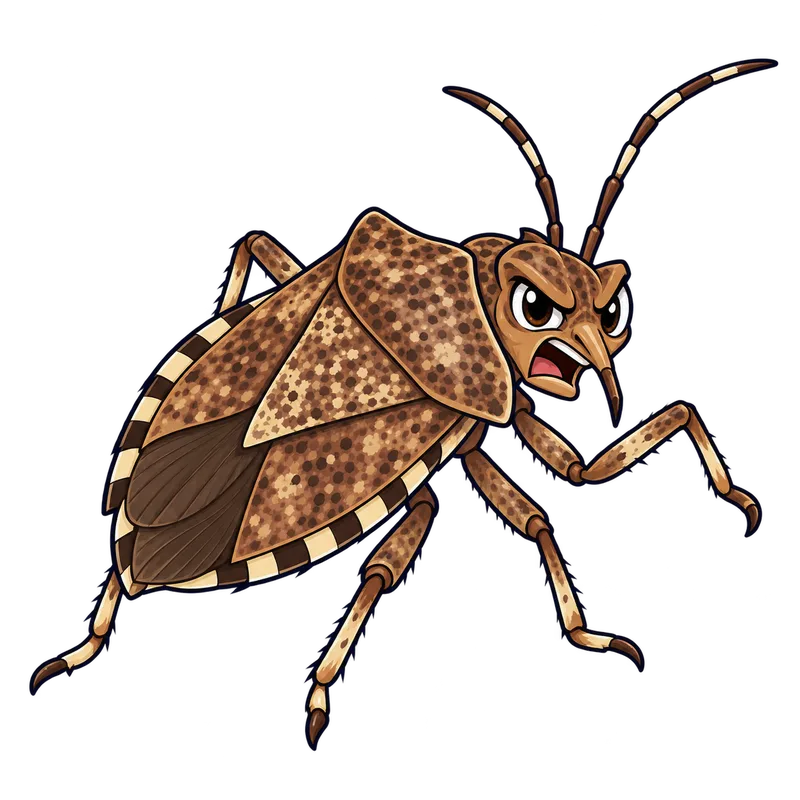
Spotting one of these uninvited guests usually comes down to recognizing their distinct silhouette and a few subtle markings. Adult stink bugs measure about 5/8 inch long and usually have a rigid, five-sided body shaped like a small shield. If you are dealing with the most common indoor nuisance, the brown marmorated stink bug, you can usually spot a few telltale details. Look closely at their antennae, and you will usually see distinct white or light-colored bands. Their outer abdominal edges also feature alternating dark and light square markings. People often confuse them with other insects that also like to sneak indoors when the weather turns chilly. Boxelder bugs are flat, dark insects marked with bright red lines on their backs, while leaffooted bugs look somewhat similar in size and color but have noticeable, flattened expansions on their hind legs that resemble tiny leaves. Neither of these look-alikes is interested in your pantry food either, but telling them apart helps you understand what is wandering around your living space. You will usually find them crawling slowly near windows, sliding glass doors, or overhead light fixtures, especially on sunny afternoons when the winter sun warms up the exterior walls. Because their metabolism is slowed to a crawl, they are sluggish. If you try to handle them roughly or sweep them up carelessly, they usually release a pungent, defensive odor from glands on their thorax. That chemical defense is their only real trick while they are stuck indoors.
What usually comes next
Since these bugs are not snacking on your food or chewing up your trim, your only real job is deciding how to handle the ones that slip past your doors. You can easily nudge one onto a piece of paper and carry it outside, or sweep it into a dustpan. Some folks grab the vacuum cleaner, but that trick usually comes with an immediate penalty. When a live stink bug gets pulled through the hose and beaten up by the airflow, it panics and sprays its signature odor right inside the machine. Within seconds, your vacuum turns into an unwanted room freshener, pumping a skunk-like smell through the whole house. If you do use a vacuum, emptying the bag or canister right away usually keeps the scent from lingering. Stopping them before they get inside is always the cleaner path. Walk the exterior of your house before September arrives and seal up cracks around window frames, soffits, and utility lines with caulk or weatherstripping. Keeping fine mesh screens in good shape on your windows also blocks their entry. If you think about spraying an exterior barrier treatment in the autumn, remember that local rules usually forbid applying insecticides to concrete or driveways where rain can wash the chemicals straight into storm drains or groundwater.
When to get help
Stink bugs are a household nuisance rather than a medical emergency or a structural threat. They do not bite or sting people, they do not carry human diseases, and they do not eat wood, which means your framing and furniture are entirely safe. You never need to call a doctor or rush to poison control if you spot one crawling across your rug. Still, there are times when handling the problem yourself turns into an endless chore. If your house sits near fields, orchards, or heavy woodland, you might face massive, recurring swarms every autumn that laugh at simple caulking and window screens. When thousands of bugs manage to pack into your wall voids year after year, calling in a licensed pest management professional is usually the most practical choice. A trained applicator has the gear to put down targeted exterior barrier treatments at the right time of year. Because local pesticide laws, environmental rules, and product labels vary based on your region and how close you live to water sources, letting a pro handle the chemical side keeps things safe and legal while protecting local pollinators and water supplies.