
Why are chinch bugs in the house?
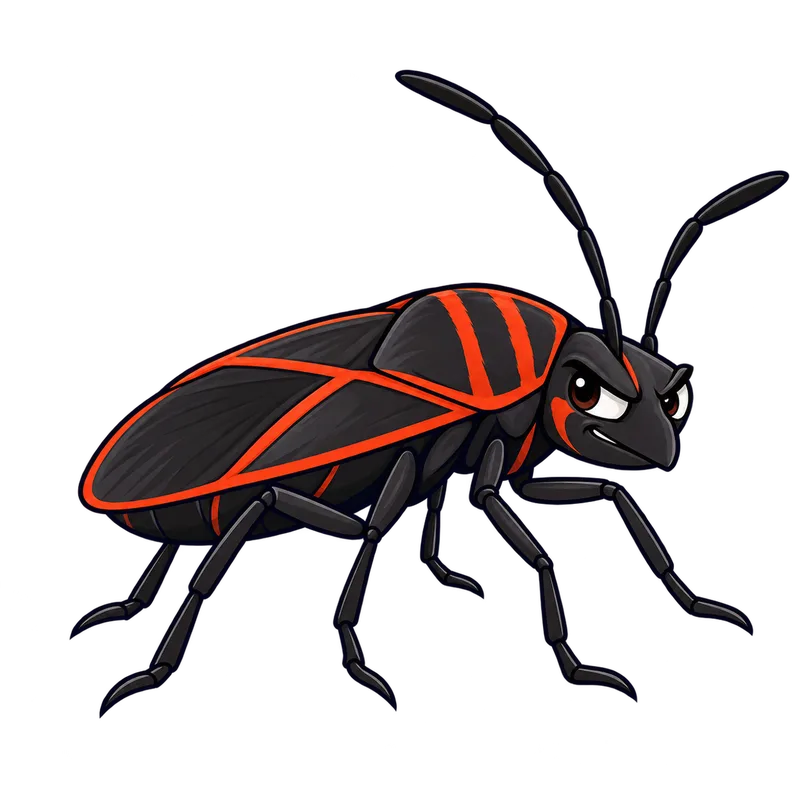
Chinch bugs are inside your house completely by accident as lost travelers that crawled through a gap or crack while fleeing a lawn that dried out under extreme summer heat. They need living grass juice and cannot survive indoors, usually dying of starvation and dehydration within a short time.
What is actually going on
You are walking across your living room floor in late summer, wearing socks, and you step on something crunchy. You crouch down to look at the tiny speck on the rug, and you realize it is a small insect that definitely does not belong indoors. Naturally, you wonder how on earth a lawn pest managed to wander past your front door and end up keeping you company by the baseboards.
The short answer is that chinch bugs do not want to live in your house any more than you want them there. They are sap-feeding turf pests, which is a formal way of saying they need living grass juice to survive. When you find them indoors, it is an accident. They are lost travelers that crawled in through a gap under a door or a crack in the foundation while fleeing a lawn that dried out or baked under extreme summer heat.
Think of it like a lost hiker stumbling into a concrete bunker with no food and no water. Domestic indoor environments lack the living host grass sap and suitable humidity that chinch bugs need to draw breath. They cannot feed on your houseplants, your furniture, your carpets, or your food pantry. Once they cross your threshold, they are on a one-way trip to desiccation, and they usually die of starvation and dehydration within a short time.
The migration usually starts when outdoor populations explode in full sun. As their numbers surge, they inject a toxic saliva into the grass blades that clogs the plant tissue, much like kinking a garden hose. The turf turns yellow, purples, and dies in matted brown patches. Once that microclimate collapses and the grass dies, the surviving bugs march outward in search of fresh green growth, occasionally taking a wrong turn right through your cellar vents or door thresholds.
How to tell for sure
Before you start worrying about what to do, you need to make sure you are actually looking at a chinch bug and not some other wandering insect like a clover mite or a boxelder bug. Adult chinch bugs are tiny, measuring about one-fifth to one-sixth of an inch long. They usually have a black or grayish-black body with distinctive white wings folded flat over their back, marked by a small black triangular patch on the edge of each wing.
If you happen to find younger ones outdoors in the thatch, they look a bit different. Nymphs are wingless and go through an obvious color progression as they grow. Newly hatched nymphs are bright yellow or pinkish with a prominent white band wrapped across their middle, gradually darkening through orange and brown to black as they mature. You can usually inspect these details with a basic tenfold hand lens.
It helps to know what they are not. If the bug is reddish-green and has eight legs, it is likely a clover mite coming off the foundation. If it is half an inch long and flat with red line markings, you have a boxelder bug. True chinch bugs are strictly grass specialists, and distinguishing them from close relatives usually stops at the back door because any tiny black and white bug found wandering alone on an indoor carpet is almost certainly an accidental straggler.
If you are trying to figure out if your lawn damage is actually caused by chinch bugs rather than a simple lack of water, there is an easy field test. You can drive an open-ended metal cylinder or an old coffee can a few inches deep into the soil right on the border between the brown dead grass and the green living grass. Fill that can with water and wait about five to ten minutes. Any chinch bugs hiding in the thatch will float right to the top like tiny corks, giving you a clear count.
What usually comes next
Your most practical decision right now is to skip any thought of treating your living room with indoor chemical sprays. Because these bugs cannot survive inside your home, an indoor pesticide application is completely unnecessary and misses the point entirely. Instead, your best move is a simple two-step physical cleanup combined with basic outdoor observation.
For the bugs already inside, your broom and dustpan or a household vacuum cleaner will do the job perfectly. Just sweep them up and empty the contents into an outdoor trash receptacle. To stop more of them from wandering in, take a walk around your home exterior and seal up the obvious gaps, such as cracks in the foundation, loose door sweeps, or torn window screens.
Once the indoor stragglers are dealt with, your attention should shift outside to the lawn where the migration started. Instead of guessing whether your turf needs a chemical treatment, use that water-filled coffee can test to check the population density in the sunny patches of your yard. Compare your counts against local extension thresholds, which generally call for intervention only if you find fifteen to twenty-five bugs per square foot. Treating a lawn blindly without checking first is a waste of time and money, especially since some regional populations have developed resistance to common lawn chemicals and require careful rotation of active ingredients managed by someone who reads the product label carefully.
When to get help
Chinch bugs are entirely harmless to humans and pets. They do not bite, they do not sting, and they do not carry human pathogens or cause structural damage to your home. If you or someone in your household experiences skin rashes, mysterious bites, or allergic reactions, do not try to blame the chinch bugs. You should consult a licensed clinician, an urgent care facility, or your local poison control center to identify the actual source of the skin irritation.
There are also times when handling the outdoor side of the problem calls for outside help. If you manage a commercial turf site, a large athletic field, or a golf course, broadcast applications require specialized equipment and restricted-use products that fall outside typical homeowner maintenance.
You might also want to bring in a licensed professional pest control operator when structural exclusion becomes too complex, such as when sealing up a tricky crawlspace, treating extensive wall voids, or applying perimeter barrier treatments with professional-grade microencapsulated products. Similarly, if you live in a region where southern chinch bugs have grown resistant to standard pyrethroid insecticides, a professional can set up a targeted mode of action rotation using alternative chemistry to break the resistance cycle safely.