
Where do boxelder bugs nest?
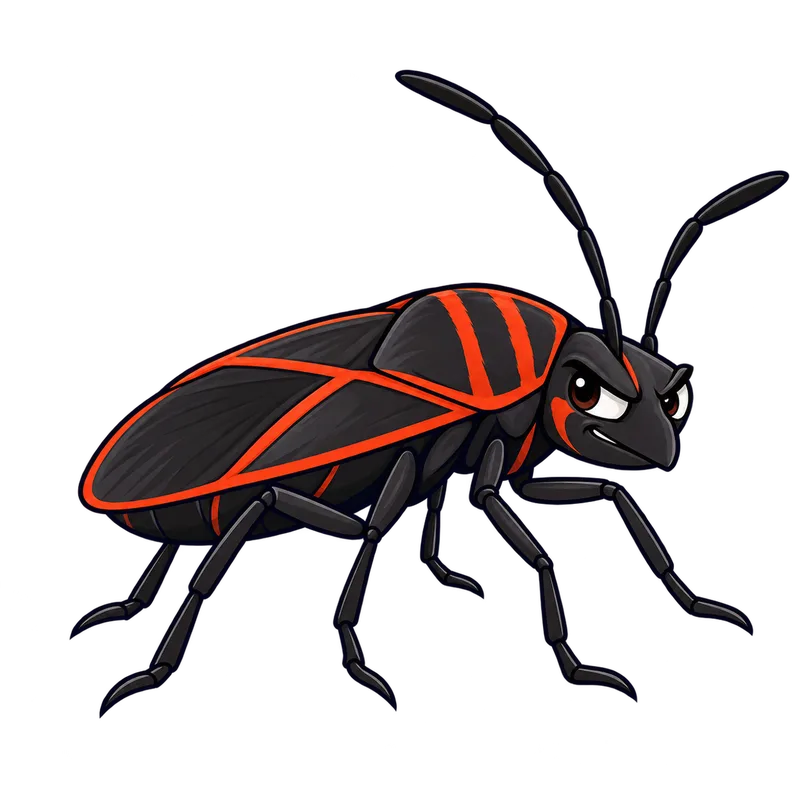
Boxelder bugs do not actually build nests at all. During the warm months, females lay eggs on the bark of host trees like boxelders, maples, and ashes. When temperatures drop in the autumn, these solitary wanderers crowd together in natural crevices, under loose bark, or inside wall voids to sleep through the winter.
What is actually going on
Imagine walking out to your back porch on a crisp October afternoon. You notice dozens of flat, dark gray bugs with red outlines clustered densely on the sun-baked brick siding, soaking up the warmth like tiny solar panels. If you have ever wondered where these boxelder bugs nest, you are probably picturing a hidden paper comb or a muddy chamber tucked away inside your walls, much like a colony of wasps.
The truth is much simpler and a bit less industrious. Boxelder bugs do not actually build nests at all. Unlike social insects that chew wood into paper or shape mud into complex nurseries to rear their young, boxelder bugs are solitary wanderers. When people ask about their nests, they are usually talking about one of two things. In the warm months, females lay eggs on the bark of host trees such as boxelders, maples, and ashes. In the autumn, when the temperature drops, these insects shift into a survival mode called diapause. They look for thermal shelter to ride out the cold months, crowding together by the hundreds in natural crevices, under loose bark, or inside wall voids of nearby houses.
They are essentially looking for a draft-free place to sleep through the winter without chewing your framing, damaging your insulation, or reproducing indoors. They are couch surfers of the insect world, taking advantage of a convenient nook rather than building anything of their own. Why would they bother building a nursery when a cozy gap behind your siding works just fine?
How to tell for sure
Before you try any kind of control measure, you usually need to make sure you are dealing with the right creature. Positive identification requires an actual specimen or a clear, well-lit photograph, rather than a guess based on a glance from across the yard. Do not try to guess based on a skin mark or a bite, because these bugs do not bite people.
Boxelder bugs have a distinct look. Adult insects are about half an inch long, with a dark brown or slate-gray body marked by bright red or orange lines along the edges of their wings and thorax. Nymphs, which are the younger, wingless versions, tend to be much redder overall and lack fully formed wings.
People often confuse them with various seed bugs, leaf-footed bugs, or even certain beetles because they all show up in large numbers on sunny exterior walls during autumn. If you notice insects gathering in high numbers around windows or doorways when the weather turns cold, take a close look at the markings on their backs. Having a positive confirmation prevents you from treating the wrong pest or using an inappropriate method.
What usually comes next
When these bugs gather on your siding and try to slip indoors, your first instinct might be to reach for a heavy-duty chemical spray. Under standard pest management principles, however, chemical applications are usually the wrong place to start.
Instead, the most effective approach relies on physical exclusion. You want to treat your home the way you would treat a leaky winter coat. Seal up the gaps where these insects can wander inside. Run a bead of high-grade exterior caulk along cracks in your foundation, around utility penetrations, and across gaps in window frames. Install tight-fitting door sweeps that actually press against the threshold, and replace worn weatherstripping around doors. Check your window screens for small tears or loose mesh.
If you find them crawling around inside your living room, skip the indoor aerosol cans and reach for a broom or a vacuum cleaner. Vacuuming them up physically removes them from the space without introducing unnecessary chemical residues indoors. Just remember to empty or seal the vacuum bag immediately so they cannot simply crawl back out. If you do consider using any pesticide product, always read and follow the label instructions carefully. The pesticide label is a legal document, and applying products outside of their approved directions violates federal and state laws.
When to get help
Most encounters with overwintering nuisance bugs require nothing more than a vacuum and a tube of caulk. There are times, however, when calling in outside support makes the most sense.
If you are dealing with a massive invasion packed deep inside multi-story wall voids or high attics that require professional ladders or lifts, a pest control technician has the gear and experience to handle the height safely. You should also reach out to a professional if you cannot confidently identify the insect on your walls, as misidentifying a pest can lead to wasted effort or the mishandling of regulated species.
Boxelder bugs themselves are low-risk nuisance pests that do not possess venom or structural teeth, but knowing what you are looking at keeps your home secure and your family safe. If you ever suspect a different, medically significant pest or a regulated invasive insect, consult a local extension office or a licensed professional to get an accurate diagnosis.