
Why are boxelder bugs in the house during winter?
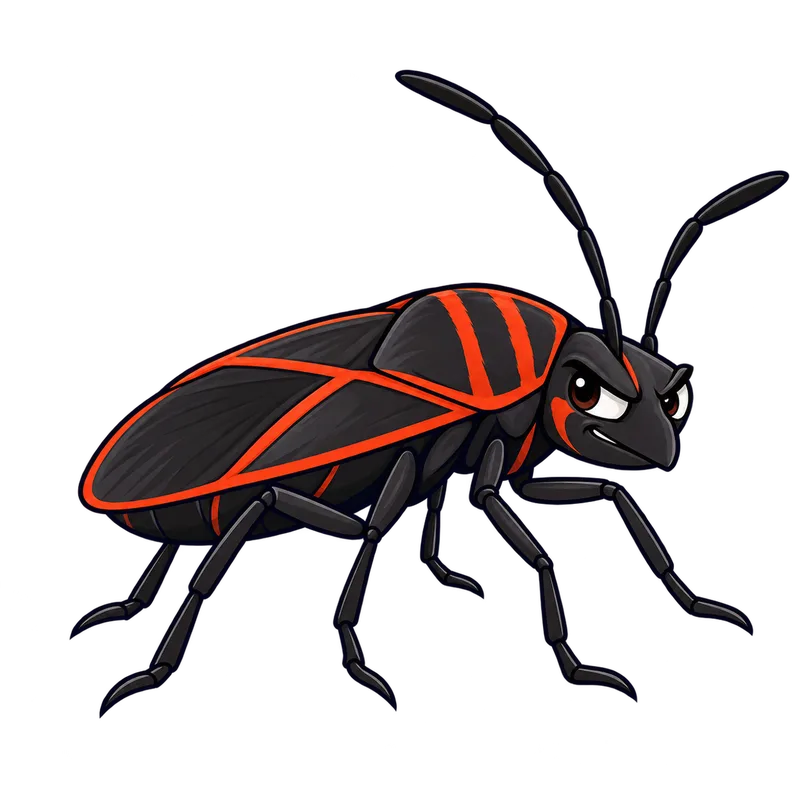
Boxelder bugs enter houses during winter to use indoor wall cavities as a heated sleeping porch to survive the freezing months. When indoor heating warms these structural voids, it tricks the dormant bugs into thinking spring has arrived, causing them to emerge into living spaces.
What is actually going on
You walk into the living room on a surprisingly crisp January afternoon, glance toward the sunny bay window, and notice a handful of flat, dark slate-gray insects with striking red or orange markings lazily crawling across the sill. You might wonder how anything is alive and moving around out there in the dead of winter, let alone hanging out on your curtains. It feels like an invasion, but the reality is much more mundane. Those boxelder bugs are simply crashing your house to use it as a giant, heated sleeping porch until spring arrives.
They do not want to eat your drywall, they have no interest in your pantry staples, and they certainly are not throwing parties or laying eggs inside your wall voids. During the warm months, these insects live an entirely outdoor lifestyle, hanging out on seed-bearing female boxelder trees and neighboring flower beds where fallen seeds accumulate. They spend their summer feeding on plant sap using piercing-sucking mouthparts. Life is good and uncomplicated until autumn arrives with its plummeting night temperatures and shorter days.
At that exact turning point, their biology triggers an urge to find a safe place to ride out the freezing months. They flock to the sun-warmed exterior walls of buildings, particularly those facing south and west, soaking up every last bit of radiant solar heat like tiny sunbathers before a cold snap. As the chill deepens, they start crawling into every tiny crack, gap, and unsealed siding crevice they can find. Once they slip past your building envelope, they tuck themselves away into dark wall cavities or attics and enter a sluggish, dormant state.
So why do you see them wandering around your living room in the middle of January? The answer usually comes down to your furnace. When indoor heating warms up those structural voids, it tricks the dormant bugs into thinking spring has finally arrived. Confused by the artificial warmth, they wake up early, follow the heat gradients or light cues, and accidentally emerge through gaps around baseboards, electrical outlets, or window sashes straight into your living space.
Boxelder bugs belong to the order of true bugs and possess piercing-sucking mouthparts. Throughout spring and summer, adults and nymphs feed on sap from developing seeds, leaves, and twigs of female boxelder trees, alongside seeds resting in nearby flower beds. In midsummer, population densities peak. As sunny autumn days cool down into crisp nights, adults seek exposed, sun-warmed vertical surfaces, predominantly south- and west-facing exterior building walls, to absorb radiant solar heat.
As ambient temperatures drop further, the bugs move into nearby gaps around siding, window frames, soffits, and door thresholds. Once inside wall cavities or attic spaces, they remain dormant until heated indoor temperatures or warm winter days temporarily reactivate them. Reactivated bugs follow heat gradients or light cues, emerging through baseboards, window sashes, electrical outlets, or recessed lighting fixtures into living areas.
How to tell for sure
Pinpointing a boxelder bug is usually straightforward because they wear a paint job that sets them apart from the usual indoor wanderers. A grown-up measures about half an inch from tip to tail, sporting an elongated, flat back colored in a dark slate shade or straight black. The real giveaway is the bright red or orange trim tracing the outer edges of their shell, paired with three distinct red lines running across the upper back right behind the head.
You might run into younger nymphs outside during the late summer or early fall, and they look a bit different. Those youngsters are smaller, lack fully formed wings, and tend to show off a much brighter, solid reddish-orange appearance before darkening into their adult tones. Still, if you find them crawling around inside your house when it is freezing outside, you are looking at fully grown adults that snuck indoors months ago.
People often mix them up with brown marmorated stink bugs or seed bugs since all these critters share a family tree and a fondness for indoor winter lodging. Stink bugs tend to be wider, shaped like a tiny shield, and uniformly brown or green without those flashy red racing stripes. If your winter visitor sports that unmistakable dark shell outlined in fiery orange, you have a boxelder bug on your hands.
What usually comes next
Spotting a few of these sleepy insects trekking across your living room rug in January usually leaves you wondering how to handle them without creating a chore. The smartest move is simply to sweep them up with a standard broom and dustpan or vacuum them gently through a hose attachment.
Reaching for a heavy shoe or a rolled-up magazine is tempting, but squashing a boxelder bug is generally a mistake. They release a defensive liquid that can leave stubborn, yellowish-red stains on light-colored carpets, curtains, and painted walls. Vacuuming avoids that headache entirely, clearing them away without marking up your interior finishes.
Resist the urge to blast your baseboards with indoor aerosol sprays when you see them wandering around in the cold months. Those indoor mists are mostly pointless because the bulk of the population sits tucked away deep inside your wall cavities where store-bought cans cannot reach. Chasing individual bugs as they stumble into the open is a losing game. Accept that a few stragglers will keep waking up until spring arrives, pick them up mechanically as they show up, and save your real defense work for sealing outdoor gaps next autumn before the migration begins anew.
When to get help
Boxelder bugs do not bite people, they do not sting, they do not carry diseases, and they will not chew through your woodwork. Despite their irritating habit of marching across your walls while you watch television, they pose no health risk. You do not need to call a doctor or seek medical attention after encountering them, as they carry no venom and have no interest in human blood.
Certain situations, however, make calling in outside assistance a smart choice. If your house faces massive, multi-story gatherings every single autumn that threaten to take over your living areas, or if you want an exterior preventive treatment applied around the perimeter and lack the tall ladders or gear to do it safely, bring in a licensed pest control professional.
Tackling large or complex structures yourself can easily lead to mistakes with chemical products, which carries real hazards. Environmental rules strictly forbid spraying outdoor pesticides onto concrete, driveways, or hard surfaces where rain can wash the runoff straight into storm drains or local waterways. Professional applicators have the commercial training, specialized equipment, and legal know-how to apply treatments only where allowed, keeping local water clean, avoiding chemical drift, and protecting pollinators.