
Are boxelder bugs invasive?
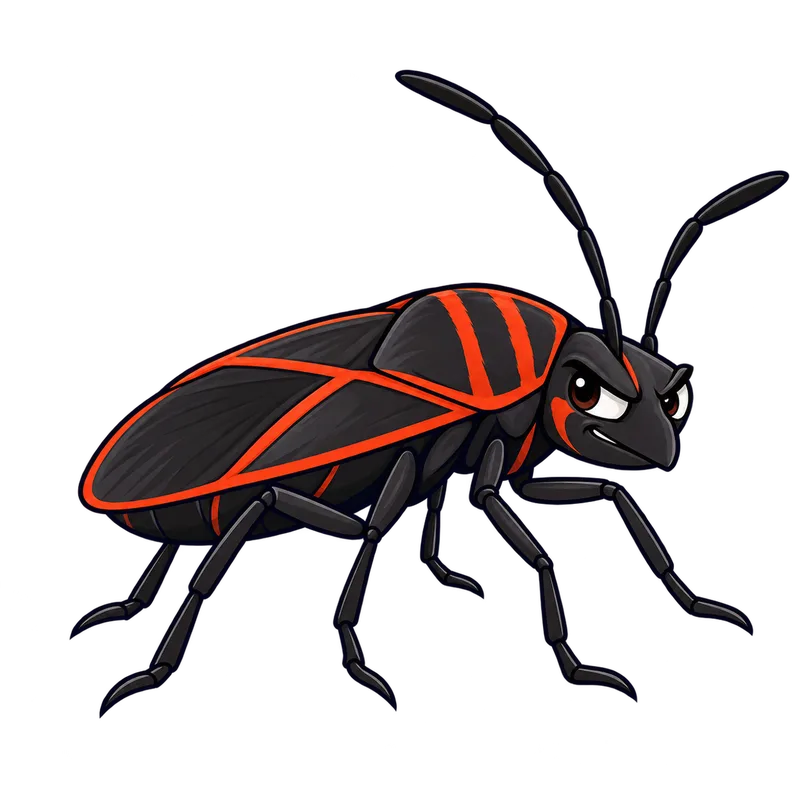
No, boxelder bugs are not invasive pests because they are native North American insects. These seasonal nuisance bugs are about half an inch long with dark brown bodies and bright red lines. They do not damage trees or bite humans, but they can stain surfaces if crushed.
What is actually going on
You walk out to your driveway on a crisp autumn afternoon, coffee mug in hand, and notice what looks like a living blanket of dark red and black crawling across the sunny brick wall by your front porch. Naturally, your mind jumps to the worst-case scenario. You picture an aggressive foreign plague descending on your property, chewing through your siding, and threatening your landscaping.
To answer the question right away: no, boxelder bugs are not invasive. They are native North American insects that have co-evolved right alongside us and our local trees for generations.
An invasive species is an exotic organism plucked from its home range and dropped into a new ecosystem where it lacks natural predators, running wild and causing severe ecological or agricultural damage. Think of the emerald ash borer or the spotted lanternfly, which actively kill trees and devastate native forests. Boxelder bugs do not share that destructive pedigree. They do not bore into wood, strip tree canopies bare, or carry lethal plant diseases.
Instead, they are classified as seasonal nuisance pests. Their life revolves around simple desires, mostly feeding on the seeds of female boxelder trees during the warmer months and looking for a warm place to sleep when the temperature drops. When autumn arrives, they use your sun-warmed exterior walls as a giant solar radiator, gathering in massive groups before slipping through tiny gaps into your wall voids to spend the winter. They are harmless locals with terrible boundary issues, not foreign invaders.
How to tell for sure
Adult boxelder bugs are usually about half an inch long, featuring a flattened, oval body of dark brown or dull black. The easiest way to spot them is by the bright red or orange-red lines tracing the outer edges of their wings and the three distinct red lines running across the upper part of their chest just behind the head.
Younger bugs, or nymphs, look a bit different. They usually lack fully developed wings and display a much brighter red or orange abdomen, making them stand out sharply against green foliage or grey bark. You can typically identify both adults and older nymphs with the naked eye because that high-contrast color scheme is hard to miss.
You usually do not need any special tools, but a simple hand lens helps if you are squinting at very small early-stage nymphs. You also want to make sure you are not misidentifying them. People sometimes confuse boxelder bugs with red-shouldered bugs, small milkweed bugs, or immature stink bugs.
If you are trying to confirm an odd bug you found indoors, remember that a confident identification cannot be made from a vague description or an unexplained mark on your skin. Boxelder bugs do not bite humans, so if you are dealing with a mysterious skin irritation, you will need to look elsewhere for the cause.
What usually comes next
The single most practical decision you can make when dealing with these bugs is to reach for a vacuum cleaner instead of a flyswatter.
When homeowners see a dozen bugs crawling across a living room rug, the instinct is often to stomp on them or swat them with a rolled-up magazine. That is usually a mistake. Crushing a boxelder bug ruptures its defensive scent glands and internal fluids, leaving a foul odor and a permanent reddish-orange stain on your carpets, curtains, or wallpaper.
Using a vacuum hose attachment or a broom and dustpan lets you scoop them up cleanly and dump them into an outdoor trash receptacle without ever releasing their staining fluids. It keeps your indoor surfaces clean and avoids the temptation to spray chemical insecticides inside your living spaces, which usually does more harm than good by leaving dead bugs trapped in your walls to attract other secondary pests.
Beyond indoor cleanup, dealing with boxelder bugs comes down to physical exclusion and managing the surrounding trees. If your yard features a seed-bearing female boxelder tree, you are providing an all-you-can-eat buffet that drives localized pest pressure. Replacing that tree with a male boxelder tree or a non-host shade species is a permanent cultural fix.
When autumn approaches, you want to stop the bugs before they get inside. Caulking cracks, repairing window sashes, and putting fine mesh over vents stops them from finding a cozy winter home. If you choose to use an exterior perimeter spray, timing matters. Applications should happen in mid-to-late August before the insects gather on the walls. Always follow product label directions carefully. Modern environmental rules forbid spraying concrete or paved surfaces where storm runoff can carry treatments into groundwater, and you must never spray when pollinators are active on nearby flowering plants.
When to get help
While boxelder bugs are mostly a harmless annoyance, certain situations mean you should step back and call in outside help.
If you or anyone in your household develops unexplained skin lesions, rashes, or symptoms that look like bites, consult a primary care clinician, urgent care facility, or regional poison control center immediately. Boxelder bugs do not bite people, so a medical professional needs to evaluate what is actually causing the reaction.
You should also involve a licensed pest control professional if you have a multi-story home and need high-reach exterior perimeter treatments applied safely, or if sealing up your home involves risky work around high rooflines and complex utility penetrations.
Sometimes, creatures other than boxelder bugs decide to share your wall voids for the winter. If you notice bats, birds, or other vertebrate wildlife taking shelter alongside the insects, leave them alone. Those animals are protected by wildlife laws, and you must contact local public health or wildlife authorities rather than trying to handle them yourself.