
What do boxelder bugs eat?
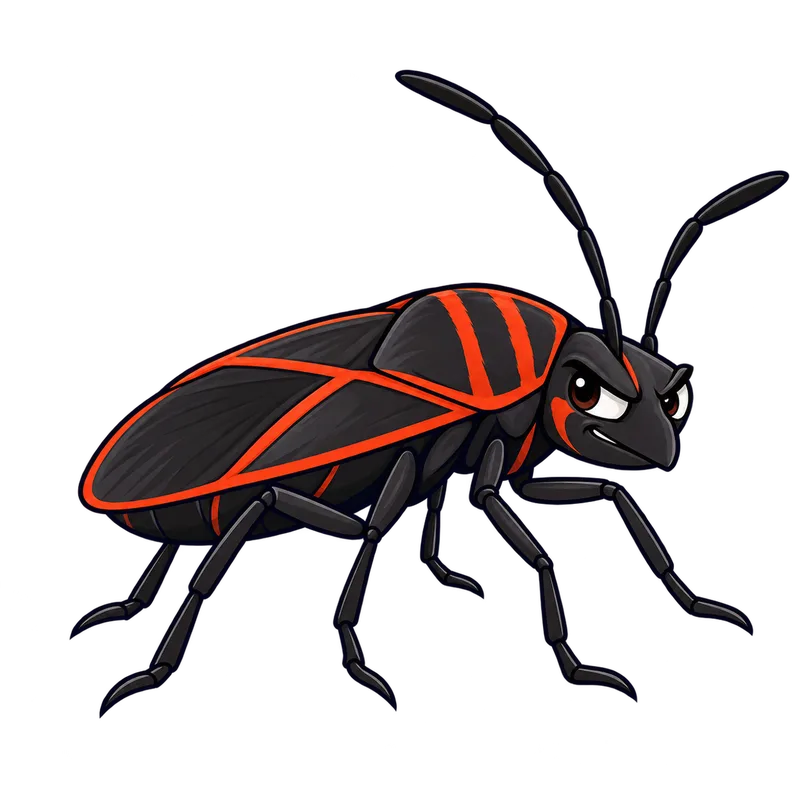
Boxelder bugs feed primarily on the seeds of female boxelder trees and any fallen seeds collected in flower beds. They target these specific seed-bearing trees during the spring and summer months, completely ignoring male boxelder trees that do not produce seeds.
What is actually going on
You walk out to your patio on a crisp September morning and notice a dense cluster of dark red and black bugs sunning themselves on the siding of your house, looking remarkably like they own the place. Naturally, you wonder what brought them here and what they have been snacking on to reach this stage. The short answer is that boxelder bugs feed primarily on the seeds of female boxelder trees, along with any fallen seeds that have collected down in the flower beds.
The dining habits of these insects are remarkably specific. They do not care for just any tree in the yard, and they certainly do not care about the health of your prized ornamentals. Instead, they target female, seed-bearing boxelder trees. If you have a male boxelder tree in the yard, it will usually remain completely ignored because it does not produce the seeds these bugs are after.
It also helps to know that despite their steady munching during the warm months, these insects rarely do any real botanical damage. You might picture a swarm of plant pests stripping leaves to skeletons or killing a tree from the inside out, but boxelder bugs do not work that way. They are practically harmless to the trees themselves, causing negligible plant injury and zero agricultural loss.
The real shift happens when the calendar rolls into mid to late August. Their appetite for seeds fades away, and a strong urge to find shelter takes over. That is the exact moment they abandon the trees, crawl onto the sunny exterior walls of your house, and start looking for small gaps to sneak indoors for the winter.
Boxelder bugs spend the spring and summer months tied directly to the reproductive output of specific trees. Female boxelder trees produce the winged seeds that serve as the primary food source for both adult bugs and their developing nymphs. When those seeds drop into the mulch or flower beds underneath the canopy, the bugs follow, crawling along the ground to feed on the accumulation.
This relationship explains why an infestation usually feels localized to specific parts of a yard. If your neighbor has a female boxelder tree dropping seeds near your property line, you will likely see the insects moving back and forth. But once late summer arrives, their biological imperative changes from eating to surviving the cold. They stop feeding actively and begin marching toward vertical, sun-warmed surfaces like brick walls and wooden siding.
How to tell for sure
Spotting these bugs is usually straightforward once you know what to look for, mostly because they tend to congregate in plain sight. Adult boxelder bugs are roughly half an inch long, featuring a distinct dark brown or slate-gray body outlined by striking red or orange markings along the edges. Their wings lie flat across their backs, forming a neat V-shape or a pair of parallel lines depending on how they rest.
Younger boxelder bugs, known as nymphs, look a bit different. They are smaller, rounder, and usually bright red, lacking the fully developed wings of the adults. You will usually find them scurrying across the ground, clustering around fallen seeds in garden mulch, or massed together on the trunk of a female boxelder tree during the summer months.
People often confuse them with milkweed bugs or various types of squash bugs because of the bright red coloring. A good way to tell them apart is by checking their behavior in late summer. If you see hundreds of them sunbathing on a warm, south-facing brick wall or trying to squeeze underneath your window sashes, you are dealing with boxelder bugs finishing up their outdoor season and moving inward.
One common myth worth questioning is the idea that these insects bite humans or chew through household wiring. They do not have chewing mouthparts designed for wood or fabric, nor do they feed on indoor food supplies. They are simply looking for a dark, dry space to ride out the cold months, and your living room just happens to look like a cave to them.
What usually comes next
When you find these bugs gathering on your walls or wandering across your indoor sashes, your best immediate move is mechanical removal. Grab your vacuum cleaner or a broom and dustpan, collect the bugs, and dispose of them. Avoid the temptation to step on them or squash them against your curtains or white baseboards, because their crushed bodies release a harmless but stubborn pigment that leaves an unsightly stain.
Looking at the bigger picture, you have to decide whether you want to address the root of the population or simply manage the autumn migration. If you are tired of sweeping them up every single year, the most permanent cultural fix involves the yard itself. Replacing a female, seed-bearing boxelder tree with a male tree or a completely different shade species removes the local food supply entirely, meaning the bugs will eventually look elsewhere for sustenance.
If removing a mature tree is out of the question, keeping flower beds clean of fallen seeds and sealing up exterior gaps with caulk before August ends will cut down drastically on indoor guests. Timing matters here. Waiting until late October to seal your windows is too late because the bugs are already settled behind your drywall.
When to get help
Boxelder bugs pose no medical, toxic, or structural damage risks to humans, pets, or your home, so you do not need to panic over health hazards. However, there are times when you should bring in outside help. If the source of the infestation is a massive, towering female boxelder tree situated right over your roof or power lines, you should hire a professional arborist with the right equipment to handle the removal safely.
You might also consider professional help if your home is large, has extensive high-elevation siding, or presents tricky structural entry points that make DIY caulking impossible. When dealing with commercial perimeter treatments or large-scale barrier applications, always rely on a licensed applicator who understands local environmental regulations, such as keeping spray away from concrete runoff zones and protecting active pollinators.