
Can stink bug eggs be found in a house?
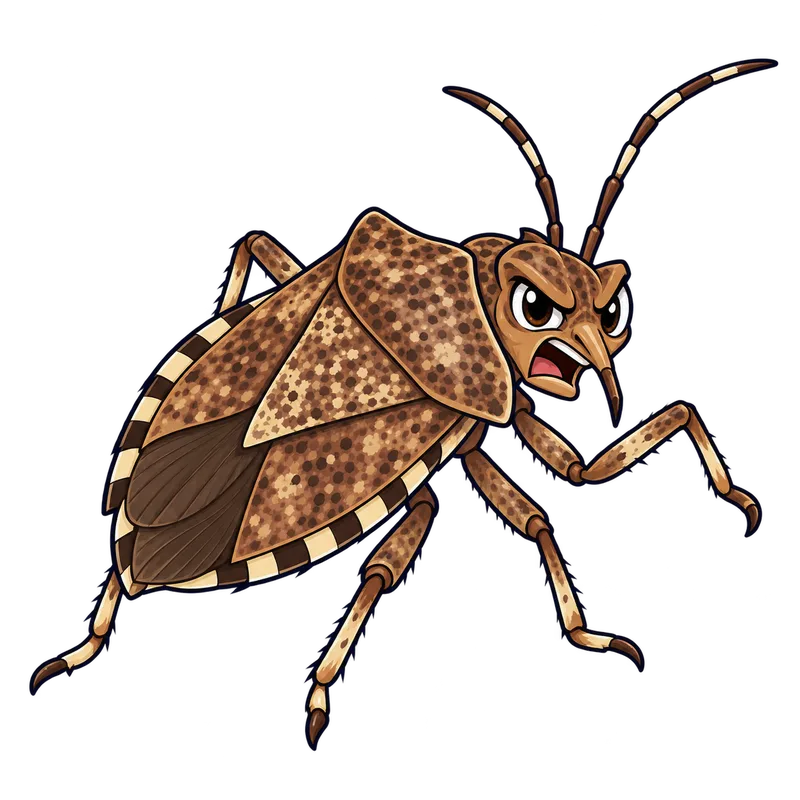
Stink bug eggs can be found in a house only if they arrive as passengers glued to the leaves of a plant carried indoors from outside. Adult stink bugs enter homes in autumn to hibernate and their reproductive systems shut down entirely, meaning they never lay eggs on indoor walls or furniture.
What is actually going on
Picture this: it is a cool October evening, you are clearing the patio pots before the first frost, and as you carry a potted pepper plant inside you notice a neat little cluster of pale barrels stuck under one of the leaves. Or maybe you have just found a stink bug wandering across the living room wall and now you are wondering whether the thing has set up a nursery somewhere behind the drywall. Fair question. Here is the short answer: stink bugs almost never lay eggs inside a house. If you find their eggs indoors at all, they arrived as passengers, glued to the leaves of a plant you carried in from outside.
The reason comes down to why the bugs are in your home in the first place. The adult stink bugs that show up on your walls and window sills in autumn, usually the brown marmorated kind that has spread across most of the country, are not looking for food or a place to raise a family. They are looking for a winter hiding spot. After the first genuinely cool days of September, they gather on warm, sunlit exterior walls and slip in through gaps around windows, door frames and attic vents. Once inside, they enter a dormant state called diapause, which is basically insect hibernation. Their reproductive systems shut down entirely. They do not feed, they do not mate and they do not lay eggs. Think of them as uninvited motel guests who checked in for the winter and are sleeping straight through to spring. The room service is closed.
Egg laying belongs to a completely different season of their lives. From roughly May through mid-October, while they are outdoors and actively feeding, females deposit their eggs on living plants. And they are picky about real estate. A female chooses the underside of a leaf on a host plant, something like a tomato, pepper, bean, peach or apple, because the moment the nymphs hatch they need soft plant sap and developing seed pods to survive. Your drywall, carpet, curtains and window frames offer none of that. A stink bug egg laid on a painted wall would be a dead end, and evolution has made sure the bugs know it.
So where does the rare indoor egg cluster come from? Hitchhiking. If you bring potted plants, patio containers or cut garden foliage indoors during the warm months without checking them, you can carry in a leaf that already has eggs glued to it. In homes with sunrooms, indoor vegetable containers or a lot of tropical houseplants, females that wander inside during summer can occasionally feed and lay on those leaves too. That is the exception, and it is a manageable one. It is not a sign that your walls have become a breeding ground.
How to tell for sure
Stink bug eggs have a distinctive look once you know it. Each one is shaped like a tiny barrel or a miniature tin can standing on end, with a flat top, and they are packed shoulder to shoulder in a tidy cluster of usually somewhere between 20 and 70 eggs. Depending on the species and how close they are to hatching, they can look pale green, cream, yellowish or darker. The single biggest clue is location: a genuine stink bug egg cluster sits on the underside of a living leaf, pressed flat against the leaf surface. If what you found is not on a leaf, it is probably not stink bug eggs.
This matters because people regularly blame stink bugs for egg masses that belong to entirely different pests. If you have spotted a greyish smear on your siding, fence, railing or outdoor furniture that looks like a smudge of dried mud, putty or plaster, usually an inch or so long and cracking as it weathers, that is a spotted lanternfly egg mass, typically covering 30 to 50 eggs. If you find a tan or buff-colored patch that looks spongy or fuzzy, like a bit of felt stuck to a tree trunk, wall or woodpile, that is a spongy moth egg mass, and those can hold anywhere from 100 to 1,000 eggs. Neither has anything to do with stink bugs, and both are worth reporting in areas where those invasive species are being tracked. Stink bugs, by contrast, never plaster anything onto hard surfaces. No mud, no fuzz, just clean little barrels in neat rows on foliage.
One more identification trap, and it is a common one. Finding lots of adult stink bugs indoors in January does not mean they are breeding in your walls. A hundred dormant bugs in an attic feels like an infestation, and the word is tempting, but biologically it is an aggregation: a crowd of sleepers, not a colony. There is no nest to find and no egg source to eliminate. The bugs all walked in through the same gaps, and they will all try to walk out, or toward your lamps, when warm days return.
What usually comes next
The decision in front of you is refreshingly simple: deal with the plant, not the house. If you found a cluster of little barrel-shaped eggs on the leaf of something you carried indoors, nobody needs chemicals and nobody needs to panic. Take the plant outside or over to the sink, snip off the affected leaf and bag it, or just wash the foliage down with tepid water. For a heavier situation on ornamentals, a mild insecticidal soap does the job, used exactly the way its label tells you to use it. After that, give the rest of your houseplants a quick once-over, flipping leaves to check the undersides, because one cluster sometimes has company. And from now on, make inspecting pots part of the ritual every time a plant comes in from the patio. Ten seconds of looking under the leaves beats any treatment you could buy.
Now, if your real problem is the adult bugs strolling around the house in autumn and winter, here is the honest truth: that battle was won or lost back in late summer. Exclusion is the whole game. Before the first cool September days arrive, caulk the cracks around window frames, seal the gaps where pipes and utility lines come in, fit door sweeps, repair torn screens and check the attic and crawl space vents. A bug that cannot get in cannot end up on your ceiling in February. For the ones already inside, the vacuum is the standard tool, with one caveat you will only ignore once. Stink bugs release their defensive odor when crushed or disturbed, and a vacuum can hang on to that smell, which lands somewhere between crushed coriander and a skunk with ambition. A shop vacuum, or a machine whose bag you can pull out and take straight to the trash, spares your good vacuum the trauma. Whatever you do, skip the indoor bug bombs and foggers. They do not reach the cracks where the bugs are actually resting, and all they accomplish is leaving residue on the surfaces your household lives on.
When to get help
For most households, stink bugs are a nuisance, not an emergency. They do not bite, they do not sting, they do not damage the structure of your home and they do not contaminate stored food. That said, there are situations where calling in help is the sensible move rather than a defeat.
If the autumn crowd gathering on your exterior walls is heavy, or if the entry points sit somewhere you cannot reasonably reach or seal, like high gable vents or a complicated roofline, a licensed pest control operator can apply a targeted exterior perimeter treatment before the bugs get in. Timing matters there, usually right at the beginning of the season, and some of the more effective residual products are restricted to professional use anyway. Leave those to the people with the training and the equipment, and expect any applicator to follow the label, including the rules about keeping sprays away from concrete, where runoff can carry chemicals into storm drains, and away from blooming plants where pollinators are working.
Two more situations deserve a clear word. If you find what looks like a grey putty-like or tan spongy egg mass on your property and you live somewhere spotted lanternfly or spongy moth is a concern, report it to your state agriculture department or extension service instead of just scraping it off and forgetting it. And if anyone in the household develops an unexplained bite, rash or allergic reaction, do not pin it on the stink bugs and do not guess. Stink bugs are not biters, so something else is going on, and that is a question for a doctor, an urgent care clinic or your regional poison control center, not for a bug identification.
The bottom line, if you take one thing away from all this: stink bugs sleep in houses but raise their young on leaves. Check the plants you carry inside, seal the gaps before September, and the eggs will stay exactly where they belong, outdoors.