
What is the life cycle of a brown marmorated stink bug?
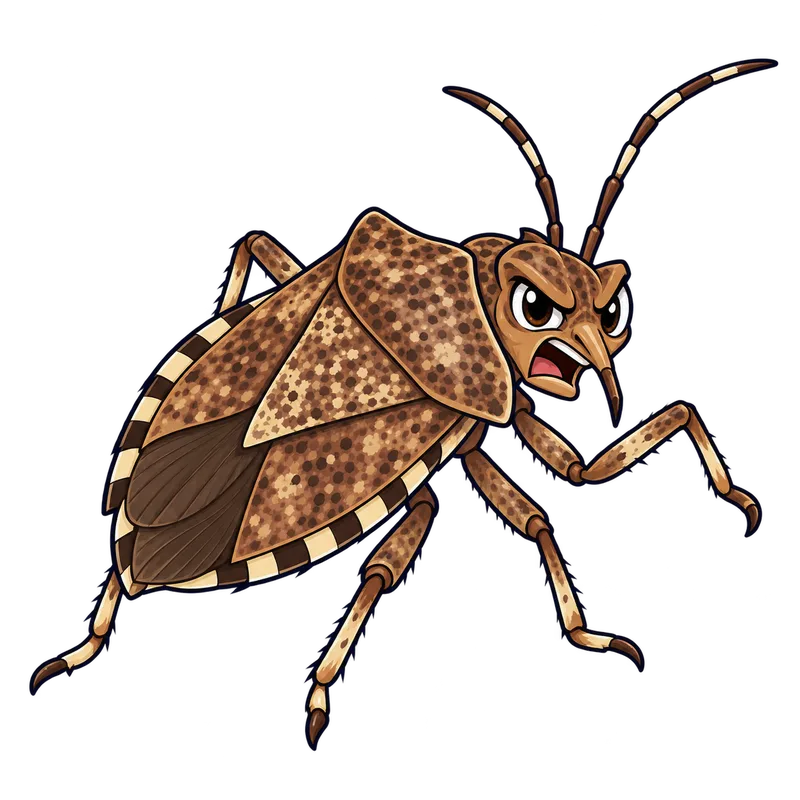
The brown marmorated stink bug goes through incomplete metamorphosis with three life stages, which are egg, nymph, and adult. The cycle starts in spring when overwintered adults wake up, feed, and lay clusters of barrel-shaped eggs on the undersides of leaves. These hatch into nymphs that spend the summer feeding and growing into autumn adults.
What is actually going on
Picture a sunny afternoon in late September. You walk outside and there are a dozen flat, shield-shaped bugs parked on the warm siding by your window, like tiny knights taking a break from battle. That scene is your first real clue about the life cycle of the brown marmorated stink bug, because what you are watching is the final act of its year.
Here is the short version. This bug goes through incomplete metamorphosis, which means it has three life stages: egg, nymph, and adult. There is no pupa, no cocoon, no dramatic transformation like a butterfly. The young ones hatch out looking like smaller, wingless, more colorful versions of their parents, and they simply molt and grow until they reach adult size.
The year starts, for the bug, in your walls. Adults spend the winter tucked into sheltered spots, often inside houses, sheds, and the gaps around window frames. When spring warmth arrives, they wake up, head outside, and start feeding on buds, leaves, and young fruit. After a few weeks of feeding, the females lay their eggs on the undersides of leaves, in tidy clusters of 20 to 70 barrel-shaped eggs standing side by side like a miniature rack of canned goods.
Those eggs hatch into nymphs that spend the summer feeding alongside the adults, sucking sap from fruit, seedpods, and shoots with piercing mouthparts, basically a built-in straw. By early autumn, the new generation of adults is fully grown, and after the first cool days of September they abandon the plants and gather on sun-warmed walls, looking for a way into shelter. Then the whole thing starts over. So when you see them on your siding, you are not watching an invasion out of nowhere. You are watching the closing scene of a cycle that has been running quietly in your garden all summer.
How to tell for sure
The adult is the easy one. It is about 5/8 inch long, roughly the size of a fingernail, with a broad five-sided body that genuinely does look like a little shield. The brown marmorated part of the name refers to the marbled, mottled brown coloring, and if you look closely you can usually see lighter bands on the antennae and a faint alternating pattern along the edge of the abdomen.
The nymphs trip people up. They are smaller, rounder, wingless, and often show bolder contrasting colors than the adults, so folks assume they are a different bug entirely. They are not. If you find small shield-shaped insects clustered on a plant in midsummer, feeding in the same spots where you saw adults, you are usually looking at the next generation in progress. The eggs are the giveaway if you catch them early: a neat, single-layer patch of tiny barrel shapes glued to the underside of a leaf, almost too orderly to be accidental.
One thing worth saying plainly, because it changes what you should do: not every shield-shaped bug is a pest. The spined soldier bug, for example, is a stink bug that eats caterpillars and beetle larvae, including Colorado potato beetles. Spraying everything with a shield outline can kill off the very insects that were quietly working in your favor, and broad sprays can backfire further by wiping out the natural enemies of aphids and spider mites, leaving you with a worse problem than the one you started with. So before you treat anything, confirm what you actually have. If you are unsure, your local extension office can usually identify a specimen or a good photo.
You can also read the damage. On apples and peaches, feeding while the fruit is young causes deep puckered dimples and hard corky spots, as if someone pinched the fruit while it was still growing. Growers call this cat-facing. On tomatoes and peppers, look for pale halo-like rings on the skin. On green beans and okra, expect raised pimple or wart-like bumps. These marks are sometimes mistaken for fungal disease or drought stress, but they are feeding scars, and they tell you the bugs were there weeks earlier.
What usually comes next
What you do next depends almost entirely on the calendar, and honestly, this is where most people go wrong. The same bug calls for two completely different responses depending on the season, and mixing them up wastes your effort at best.
From late spring through summer, the action is in the garden. Flip leaves over and look for those egg clusters, then crush or scrape them off before they hatch. Keep broadleaf weeds like chickweed, mullein, and legumes mowed down near your vegetables and fruit trees, because those weeds are staging grounds where the bugs feed and multiply before hopping over to your crops. If feeding damage starts showing on fruit or pods and the bugs are actually present, that is your window for treatment, always following the product label for the specific crop and the required wait between spraying and harvest. Some options, including certain organic ones, can be used close to harvest, while others demand a longer gap, and the label is the only authority on that. Not the neighbor, not a forum, the label.
Come September, forget the garden. Spraying your tomatoes now accomplishes nothing against the bugs gathering on your house, because they have already checked out of the plants. The practical move is exclusion: seal cracks around window frames, utility lines, vents, and siding before the first cool spell, not after. People who wait until October are sealing bugs in, not out, and then wondering why the bedroom ceiling has guests all winter.
For the ones that get inside anyway, hand removal or a vacuum works, with one honest warning. A stink bug in a vacuum will make that vacuum smell like stink bug for a good long while, and every time you run it you will be reminded of your decision. A lot of people keep a cheap dedicated vacuum for the job, or just use a dustpan and a container of soapy water. It sounds like a small thing, but nobody warns you about it until it is too late.
When to get help
A few bugs on the windowsill is a nuisance, not a crisis. But if autumn aggregations are getting into wall voids, attics, or upper stories in large numbers, or they keep coming back year after year despite your sealing work, a licensed pest professional has the equipment and access to treat the building envelope properly. One caution applies to any perimeter treatment: pesticides should never go onto driveways, sidewalks, or other hard surfaces where rain can wash them into drains and waterways, and they should not be applied where pollinators are actively visiting nearby flowers.
If you are growing fruit or vegetables commercially and the damage is reaching the point where the crop is not worth selling, that is a decision for a licensed applicator who can build a targeted program rather than a blanket spray. Part of the reason is those aphid and mite flare-ups that tend to follow heavy-handed treatment, turning one problem into three.
And if your real problem is the fruit itself, with dimpled apples or spotted tomatoes and no bugs in sight, bring a sample to your county extension office. The feeding scars linger long after the bugs have moved on, and a correct identification is what separates a fixable pest problem from a whole season of spraying at the wrong thing.