
What do brown marmorated stink bug eggs look like?
Brown marmorated stink bug eggs are tiny, barrel-shaped structures with flat tops and rounded bases. When freshly deposited by an adult female, these eggs usually appear light green, off-white, or cream-colored. They are laid in tightly packed clusters of 20 to 70 eggs and are anchored securely to the undersides of host plant leaves.
What is actually going on
You are out in the garden on a warm Tuesday morning, turning over the broad leaves of your tomato plants or checking the underside of a favorite pepper bush, when you notice a tight little patch of tiny, pale green dots arranged in neat rows. They look almost like miniature wooden barrels standing shoulder-to-shoulder on a green roof. You might wonder if you are looking at the start of an invasion, or if some helpful insect has left behind a clutch of future garden defenders.
Brown marmorated stink bug eggs are tiny, barrel-shaped structures laid in tightly packed clusters of 20 to 70 eggs, anchored securely to the undersides of host plant leaves. Unlike butterflies or beetles that lay smooth, oval, or disc-like eggs, members of the stink bug family lay eggs with a rigid, geometric profile. Each individual egg features a flat top and a rounded base, standing upright rather than lying flat on the foliage.
When freshly deposited by an adult female, these eggs usually appear light green, off-white, or cream-colored. As the days pass and the embryos inside develop toward emergence, the color shifts slightly, sometimes darkening just before the tiny nymphs hatch. You will almost exclusively find them on living, broadleaf plant foliage during the active growing season, running roughly from May through mid-October in many regions.
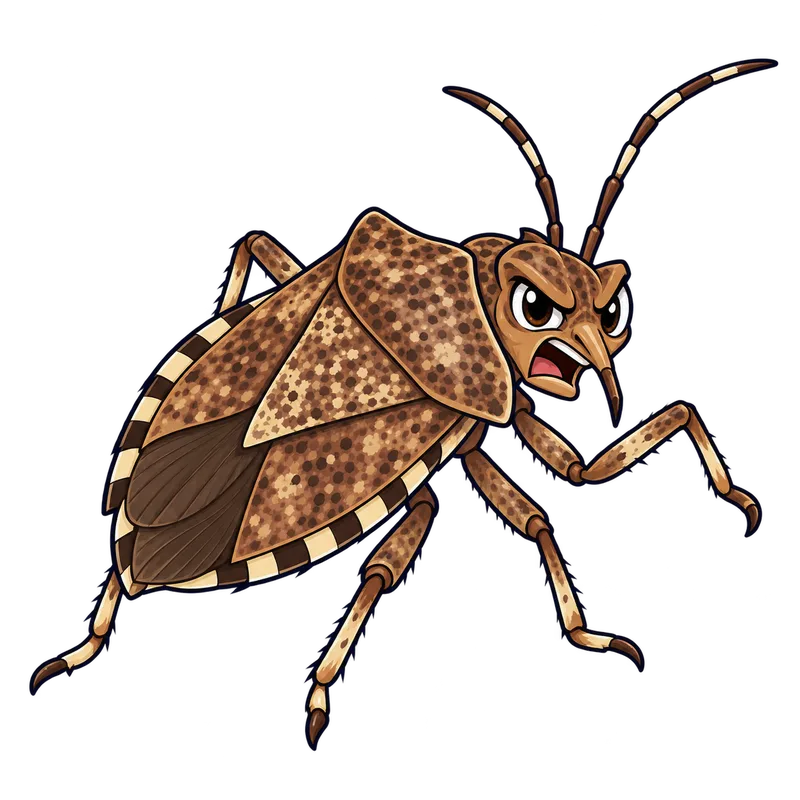
It helps to know what the adult creators look like when you are hunting for these clusters. Full-grown brown marmorated stink bugs measure about five-eighths of an inch long and feature a distinct five-sided shield shape, resembling a medieval knight's heraldic badge. They spend the spring and summer feeding on plant sap using piercing-sucking mouthparts, targeting leaf buds, developing fruit, and seedpods before searching for winter shelter as the weather cools in September.
The life cycle of the brown marmorated stink bug drives its seasonal behavior and oviposition patterns. Adult bugs overwinter in protected shelters, including forest leaf litter, rock piles, and human structures. In late spring, around May, adults emerge and disperse to host plants, including fruit trees like peaches, nectarines, and apples, alongside vegetables such as tomatoes, peppers, sweet corn, beans, and eggplant.
After mating, females lay barrel-shaped egg clusters on the undersides of host leaves. Upon hatching, wingless nymphs emerge and undergo five developmental instars, gradually increasing in size and displaying contrasting color patterns before reaching adulthood. During late summer and early autumn, starting around the first cool days in September, adult stink bugs begin aggregating on the exterior walls of houses, sheds, and commercial buildings. They seek cracks and crevices to enter structures for winter dormancy. It is critical to note that indoor aggregation in autumn involves adults seeking shelter, not active reproduction or egg laying.
How to tell for sure
Finding a cluster of tiny barrel-shaped eggs on a leaf is a strong clue, but you usually need to look closer to confirm what you are dealing with. Using a hand lens or a magnifying glass helps reveal the flat tops and vertical ridges characteristic of pentatomid eggs. Even so, several other garden pests lay similar clusters that can easily trick an observer.
Squash bugs, for instance, lay their eggs on cucurbits like pumpkins and squash, but their eggs turn a coppery brown right before hatching, unlike the green-to-white shades of stink bugs. Harlequin bugs also produce barrel-shaped eggs in similar counts, but their clusters feature striking black-and-white bands. Colorado potato beetles deposit bright yellow oval eggs on the undersides of solanaceous foliage like potatoes and eggplants.
You also want to avoid a common mistake: destroying the eggs of beneficial predators. Spined soldier bugs, lady beetles, and green lacewings also lay egg masses on garden plants. Eradicating every cluster indiscriminately removes the natural biological control agents that actively help regulate pest populations in your yard.
Another common belief worth questioning is that you might find stink bug eggs inside your house during the winter. Adult stink bugs do aggregate on the exterior walls of homes in autumn, seeking cracks and crevices to enter structures for winter dormancy. But they enter solely to hibernate, and they do not feed, mate, or lay eggs inside living spaces during the cold months. Reproduction happens strictly outdoors on warm host plants.
What usually comes next
Once you find a suspected stink bug egg cluster on a prized garden plant, you usually have to decide whether to intervene or leave it alone. Because the thick, chitinous outer shell of the egg protects the developing embryos from many common contact chemical sprays, spraying liquid insecticides directly onto an egg mass is usually ineffective.
The most straightforward and practical decision for a small garden or a few isolated plants is physical removal. You can simply pick off the infested leaf or gently scrape the egg mass directly into a container of soapy water. This mechanical approach removes the threat instantly without introducing harsh chemicals onto the food crops you plan to harvest later.
If you choose to use a registered insecticide on broader garden infestations where nymphs have already hatched, you must always read and follow the product label instructions carefully. This means respecting pre-harvest intervals so you do not consume residues, and avoiding applications during peak bloom times when bees and other pollinators are active. Never apply chemical treatments along concrete paths or driveways where rain runoff can wash residues directly into storm drains and groundwater.
When to get help
There are times when a backyard gardener's routine checks intersect with larger agricultural or structural issues that require outside expertise. If you manage a commercial orchard, vineyard, or large vegetable farm, heavy stink bug pressure can cause severe economic losses by deforming fruit with internal corky tissue breakdown and external blemishes known as cat-facing. In those large-scale scenarios, consulting a local university extension specialist or a licensed agricultural pest advisor is the safest course of action.
On the residential side, stink bugs do not bite, sting, transmit blood-borne pathogens, or cause structural wood damage to buildings. However, if a reader or someone in your household experiences unexpected skin reactions, rashes, or health symptoms they suspect are linked to insects, you should consult a qualified healthcare clinician, an urgent care clinic, or a poison control center rather than attempting a self-diagnosis.
Finally, biosecurity protocols matter greatly in regions where the brown marmorated stink bug or other invasive quarantine pests are under active government surveillance. If you live in an area where agricultural authorities track the spread of new invasive species, take clear photographs of the suspected pest or egg mass, contain it if requested, and report the finding immediately to the responsible national or regional plant health agency.