
Other True Bugs
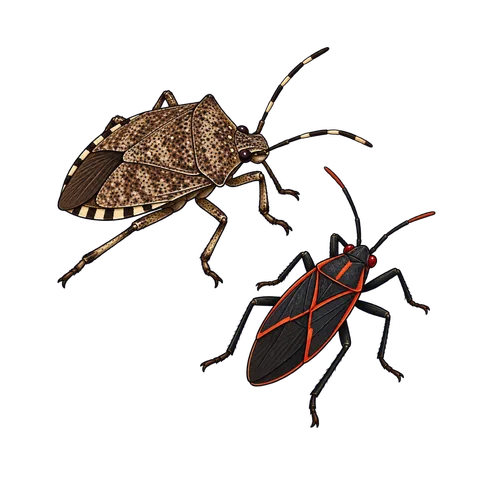
What throws these creatures onto the same catalog shelf is a shared set of basic equipment, namely a jointed piercing beak for drinking sap and stiff-based wings that fold completely flat across the back, even though they span everything from tiny turf dwellers to broad fruit-munching shields. While they look wildly different at a glance, every creature in this group develops through simple stages without a distinct resting pupa phase, meaning the young nymphs simply grow larger and add wing pads as they mature on your plants.
You can tell them apart from beetles by checking the wings and mouthparts, because beetles have chewing jaws and rigid wing covers that meet in a straight line down the middle rather than overlapping flat like a true bug. If you are squinting at something jumping sideways like a crab or holding its wings in a steep tent shape over its sides, you are looking at a leafhopper rather than a true bug, and hairy jumping grasshoppers or soft worm-like caterpillars with chewing jaws belong in entirely different groups altogether.
Explore other true bugs
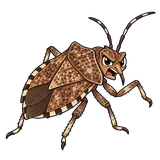 Brown marmorated stink bugHalyomorpha halys
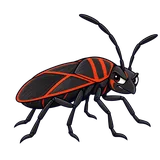 Boxelder bugBoisea trivittata
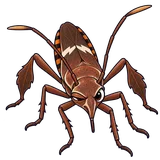 Western conifer seed bugLeptoglossus occidentalis
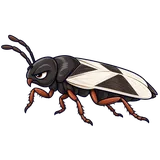 Southern chinch bugBlissus insularis
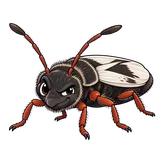 Hairy chinch bugBlissus leucopterus hirtus
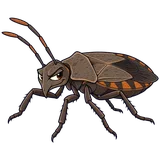 Squash bugAnasa tristis
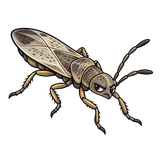 False chinch bugNysius raphanus