
What does a false chinch bug look like?
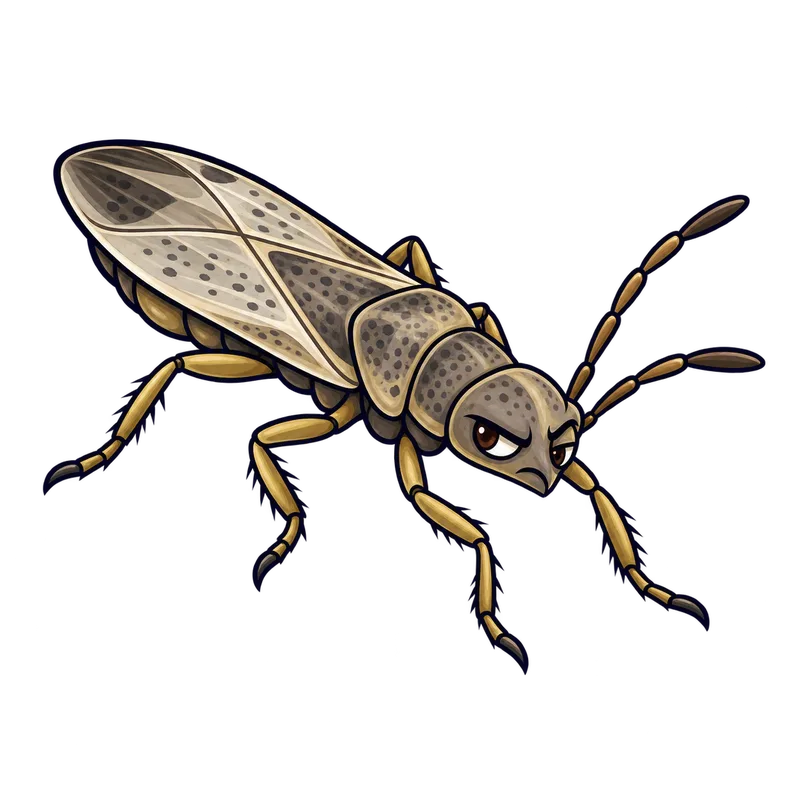
An adult false chinch bug is a tiny, slender insect measuring roughly one-eighth to one-sixth of an inch long with a dull grayish-brown color. Its physical features include a broad head with bulging eyes, a dark triangular scutellum on the back, and clear wings marked by faint gray-brown flecks.
What is actually going on
Picture stepping out onto your patio on a warm late spring afternoon and noticing what looks like a thick patch of spilled coarse coffee grounds crawling across the concrete. You bend down for a closer look, and the entire patch starts shifting and streaming toward your vegetable garden. Before you panic and start hunting for heavy chemical sprays, take a breath. You are likely looking at a mass migration of adult and nymphal false chinch bugs making a temporary dash from drying wild weeds into irrigated yards.
These tiny insects are slender, dull grayish-brown, and measure roughly one-eighth to one-sixth of an inch long. They spend most of their lives quietly out in uncultivated fields, feeding on wild mustard and other winter annual weeds. But when those wild plants dry up under the early summer heat, the bugs pack up and march en masse in search of fresh moisture. They can cover exterior house walls, patios, and garden borders by the thousands, creating the unsettling impression of a moving carpet.
A common objection homeowners raise at this point is whether these swarms are destroying their lawns. It is easy to assume they are turf pests because there are so many of them, but false chinch bugs are just passing through. They might briefly settle in the grass to rest, but they do not live in the turf crown or feed on grass blades the way true chinch bugs do. Their migration is a seasonal event that usually runs its course in one to three weeks, after which they scatter or die off naturally.
How to tell for sure
To know for certain what you are dealing with, you need to look past the sheer number of bugs and examine a single specimen up close. A regular hand lens or jeweler's loupe offering 10x magnification helps immensely here. Pop a few bugs into a clean glass jar and take a look at their physical features.
Start with the head and eyes. An adult false chinch bug usually has a broad head that is almost as wide as its thorax, featuring prominent, bulging compound eyes set wide apart. Now look at the back. Right behind the head and thorax, you should spot a dark triangular shape known as the scutellum.
Next, check the wings folded flat over the abdomen. False chinch bugs usually have clear or translucent forewings marked only by faint gray-brown flecks, and they usually overlap in a faint X-pattern. Crucially, they lack the solid black wing-margin patches or the high-contrast dark X-mark that define true chinch bugs. If you find wingless immature nymphs instead of adults, they will usually look like tiny, speckled gray-brown bits of dirt with faint reddish abdominal flecks.
One final clue reveals itself if you accidentally crush one. False chinch bugs usually possess defensive stink glands. Stepping on them or handling them roughly releases a distinct, pungent odor reminiscent of a true stink bug.
What usually comes next
The urge to grab a heavy spray can when thousands of bugs coat your patio or foundation is entirely natural. But broad-spectrum insecticides usually turn out to be a waste of time and money during these seasonal marches. Because the insects keep streaming in from the dry fields week after week, fresh arrivals simply replace the ones you knocked down as soon as the residue settles.
Instead, concentrate on simple physical blocks and easy garden defenses. If you need to keep those hungry sap-suckers away from young vegetable starts, put up floating row covers or fine insect netting well before the peak movement begins. Should the invaders start marching across your concrete or climbing up the siding, just hook up the garden hose and wash them back down with a steady spray of water.
When a few stray bugs manage to slip underneath the gap of a screen door, skip the poison and reach for the vacuum cleaner instead. Sucking them up and pitching the bag keeps the rooms clear of unwanted visitors without setting off their defensive stink. Just keep your established plants properly watered, since healthy vegetation easily handles minor feeding and bounces right back once the whole spectacle ends.
When to get help
While these migrating swarms can drive you crazy outdoors, they pose zero medical or veterinary risk to anyone in the household. They do not bite people or pets, they carry no diseases, and they certainly do not care to chew on your framing, furniture, or pantry staples.
If someone in your home develops skin irritation or an allergic reaction after clearing out weeds or handling heavy yard debris during an outbreak, do not waste time guessing the culprit. Reach out to a qualified clinician, an urgent care clinic, or your local poison control center to get proper medical advice.
When the problem moves out of the backyard and into a commercial operation, the whole playbook changes. If massive swarms start threatening young commercial orchards like almonds, pistachios, or citrus groves, or large commercial nurseries where a wiped-out crop means a heavy financial loss, call in a licensed professional crop consultant or a local university extension agent right away to handle the situation under regional guidelines.