
Boxelder bugs vs stink bugs: which tree or building clues differ?
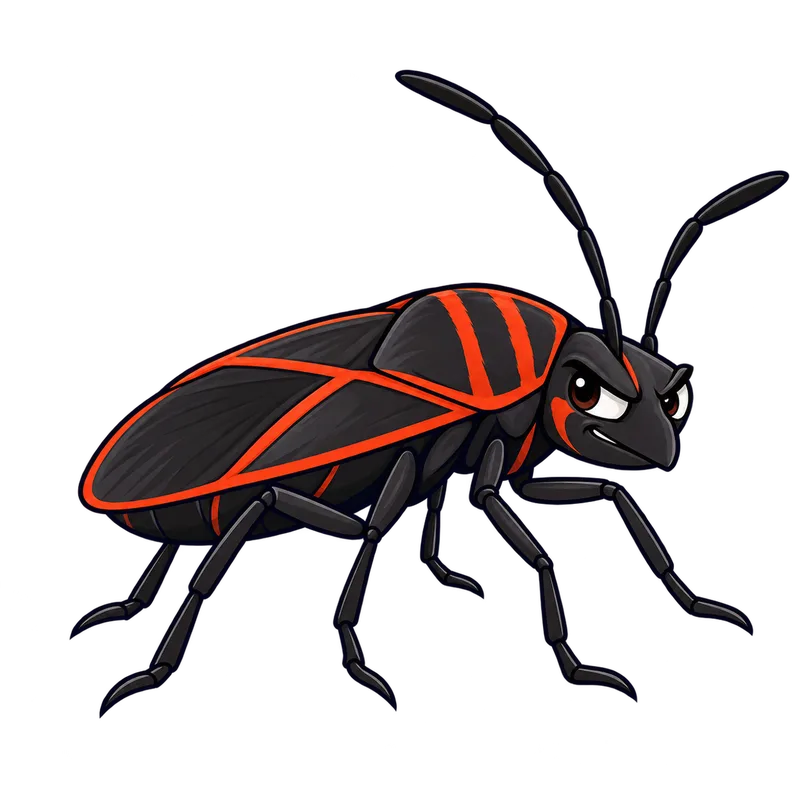
Boxelder bugs and stink bugs differ in their appearance, outdoor habits, and timing. Stink bugs have a five-sided shield shape and measure about five-eighths of an inch long, while boxelder bugs are narrower and feature striking red or orange markings. Boxelder bugs also gather on warm walls in mid to late August, whereas stink bugs tend to wait for the first cool day in September.
What is actually going on
You walk out to your driveway on a crisp September afternoon and notice a dark, shield-shaped insect sitting right beside the front door, perfectly still on the sun-warmed siding. Two weeks ago, you might have tripped over a dozen slender, red-marked bugs congregating under the big maple tree by the back fence. It is easy to lump these overwintering bugs together as one generic nuisance, but you are actually looking at two entirely different actors with very distinct habits. One is a boxelder bug, and the other is a stink bug.
They both share the same frustrating habit of moving off the trees and onto the warm walls of your house just as the weather turns chilly, but their reasons for being there and their daily routines beforehand are worlds apart. Boxelder bugs have tunnel vision. They care almost exclusively about seed-bearing female boxelder trees, which are often called Manitoba maples in some regions, and they spend their summers hanging around the dropped seeds and foliage. Stink bugs, on the other hand, are generalists with an appetite for practically everything in your vegetable garden and orchard.
So why do both pests end up lining your window sashes at the same time of year? It all comes down to the calendar and the temperature drop. Both species are looking for a dry, protected place to wait out the winter freeze. They do not want to eat your drywall or lay eggs in your insulation. They just want a safe hollow in a wall or an attic space where they can hunker down until spring.
How to tell for sure
Morphology gives them away instantly if you take a closer look. True stink bugs usually have a distinct five-sided shield shape, and adults measure about five-eighths of an inch long. Boxelder bugs are narrower, darker, and feature striking red or orange markings along their wing margins and thorax.
When you look at the plants they damage, the clues diverge even further. Stink bugs possess piercing-sucking mouthparts that act like tiny straws, injecting digestive enzymes into developing fruit and vegetables. This feeding leaves behind unmistakable calling cards, such as dimpled and sunken deformities on peaches and apples, whitish jelly-like ooze seeping from wounds, and internal pockets of dry, corky tissue. They also leave white halo marks on tomatoes and peppers, or raised wart-like pimples on green bean pods. Boxelder bugs usually cause negligible injury to mature trees, focusing their attention on fallen seeds and soft foliage rather than ruining your harvest.
Timing is another reliable marker for outdoor activity. Boxelder bugs typically gather on warm exterior walls and require preventative perimeter treatments in mid to late August. Stink bugs, particularly the brown marmorated variety, tend to wait for the first crisp, cool day in September before they start staging on buildings. That makes the first week of September the critical window for outdoor management.
What usually comes next
Deciding how to handle these invaders usually starts with exclusion rather than reaching for a bottle of insecticide. Before the calendar hits their respective migration windows, take a tube of high-quality caulk and seal up the cracks around your window sashes, utility penetrations, and siding gaps. Repair any torn window screens and install tight-fitting door sweeps.
If you already have a few bugs wandering across your living room rug, your first instinct might be to grab the vacuum cleaner. That works well for boxelder bugs, but vacuuming stink bugs usually releases a pungent, long-lasting defensive odor right through the exhaust of the machine, turning your vacuum into a temporary scent dispenser. A broom and a dustpan or a dedicated shop vacuum kept outside are much better choices for keeping the indoor air pleasant.
In the landscape, you can tackle the root of the problem by addressing the plants that draw them in. Replacing seed-bearing female boxelder trees in your immediate yard cuts off the main attraction for boxelder bugs. For stink bugs, clearing out broadleaf weeds like chickweed and mullein near your vegetable patch helps reduce local populations. If you decide to apply an outdoor perimeter spray to your foundation walls, keep in mind that modern rules strictly prohibit spraying concrete surfaces where storm runoff can carry chemicals into groundwater, and you must never spray when pollinators are actively visiting nearby flowers.
When to get help
There are moments when a DIY approach is not enough and you need to bring in outside expertise. If stink bug feeding is causing widespread fruit damage and corky tissue across a commercial orchard or a large high-value home garden, you should call a professional custom applicator or a commercial arborist. Treating large, mature shade trees requires high-pressure equipment that standard home sprayers simply cannot handle safely.
You should also consult a professional or your local university extension diagnostic clinic if you cannot pin down the exact identity of the insect. Not all shield-shaped bugs are pests, as beneficial predators like the spined soldier bug actively hunt down garden caterpillars and beetle larvae, and you certainly do not want to wipe them out by mistake. Any decisions regarding restricted-use pesticides, complex structural treatments, or large-scale spraying belong strictly in the hands of a licensed pest control operator who can manage the safety equipment requirements and local environmental regulations.