
How do you get rid of boxelder bugs?
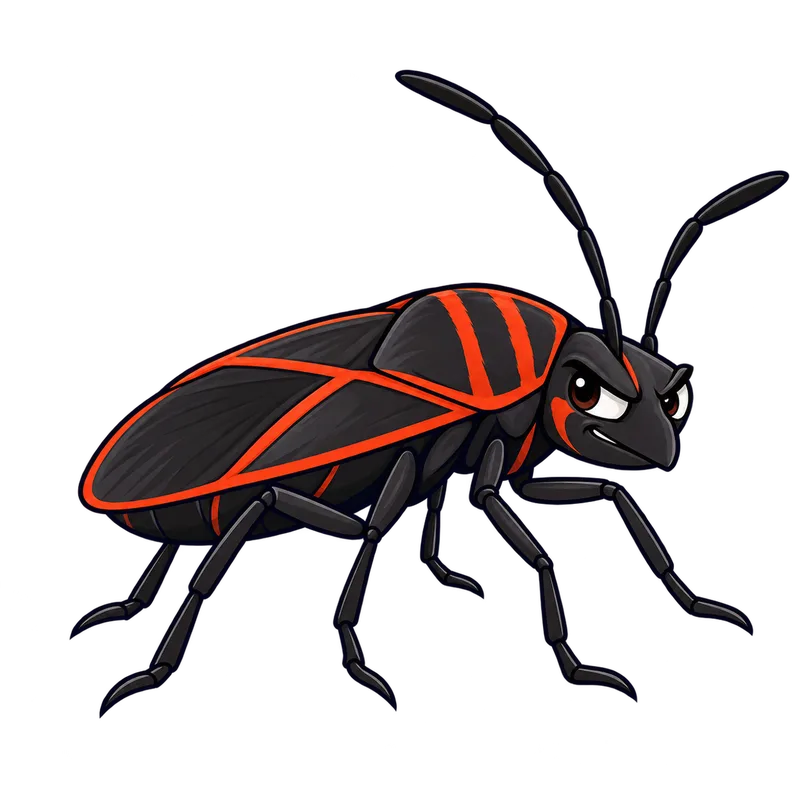
Get rid of boxelder bugs by sealing up your house with exterior grade caulk before the weather turns cool in autumn. You can also clean up tree seeds in your yard and use outdoor perimeter barriers in late August. For indoor stragglers, gently suck them up with a vacuum cleaner to avoid a smelly mess.
What is actually going on
You step outside on a crisp afternoon in late August to grab the mail, and you notice your siding is practically moving. Dozens of dark, flat-backed bugs with faint red outlines are sunning themselves on the warm brick and vinyl, treating your exterior wall like a beach boardwalk before a cold snap. By October, a few of those sunbathers somehow find their way past your window frames and start sluggishly crawling across your living room rug. It is an unsettling sight, but the reality is thankfully much less dramatic than a termite swarm or a roach infestation.
Getting rid of boxelder bugs is not about fighting a massive household plague. Instead, it is a seasonal game of managing where they live, blocking how they get inside, and handling the stragglers without making a smelly mess. Because these insects spend the warm months feeding harmlessly on the seeds and sap of female boxelder trees, they only become your problem when autumn arrives and they go looking for a warm place to sleep out the winter.
If you want them gone for good, you have to tackle the problem in stages rather than relying on a single magic spray. That means sealing up your house before they try to move in, cleaning up the tree seeds that draw them to your yard in the first place, and using outdoor perimeter barriers at the exact right moment in late summer. You can safely manage the ones that do make it indoors with a simple vacuum cleaner, provided you do it right.
Before you start sealing cracks or buying sprays, you usually want to confirm you are actually looking at boxelder bugs and not something more destructive. These insects are roughly half an inch long, with elongated, flat bodies that are mostly black or dark slate gray. Their defining feature is a series of bright reddish or orange markings, including three distinct thin lines running down the top of the area right behind their head, along with red margins around their wings.
People frequently confuse them with common stink bugs or various garden beetles, but boxelder bugs have piercing, sucking mouthparts rather than chewing jaws. You will usually find them congregating on the south or west-facing sides of buildings where the afternoon sun hits hardest, or clustering around flower beds where seeds have fallen from overhead shade trees.
One common misconception is that these bugs are chewing through your drywall or destroying your shade trees. In truth, they do not eat wood, fabric, insulation, or household food. While they might occasionally poke at a houseplant out of confusion, they rarely cause any noticeable physiological damage to mature trees. Their entire offense is aesthetic and psychological. They just crowd your walls in autumn and occasionally stain your white curtains if you accidentally crush them.
How to tell for sure
You have to make a choice between trying to block them out ahead of time or reacting to them once they are already inside your living space. If you are reading this while they are still sunning themselves on your exterior walls in August, your best move is physical exclusion and preventive timing. You need to grab a tube of exterior-grade caulk and seal up every gap around your window frames, door jambs, siding joints, and utility pipes before the weather turns cool. If you wait until October to seal those cracks, you simply lock the bugs inside your wall voids, forcing them to emerge directly into your rooms looking for a way out.
If you choose to skip the exterior prep and they are already wandering across your rug, do not reach for an aerosol can of heavy indoor insecticide. Spraying chemicals inside your living quarters is usually unnecessary and introduces needless pesticide exposure for your family and pets. Instead, treat indoor removal like a routine housekeeping task. Grab a vacuum cleaner with a hose attachment, suck up the stray bugs gently so you do not crush them against the fabric and release their defensive odor, and immediately empty the vacuum bag or canister into an outdoor trash bin.
The biggest mistake people make is assuming they can spray perimeter chemicals anywhere around the foundation without a second thought. Modern environmental rules strictly prohibit applying liquid pesticides along concrete walkways, asphalt driveways, or hardscapes where a heavy rainstorm could wash the runoff straight into local storm drains and waterways. If your home has a wide concrete patio running along the foundation, your outdoor spraying options are limited by law, meaning you have to rely even more heavily on caulking, window screens, and physical barriers.
What usually comes next
Most boxelder bug management is straightforward enough for a Saturday afternoon DIY project, but certain situations call for an outside expert. If you live in a multi-story house or a large commercial building where the aggregations happen high up on upper-story exterior walls, do not try to balance on a tall ladder with a heavy sprayer. High-reach power equipment and specialized safety gear belong in the hands of a licensed pest control professional.
You also need to step back and call a professional when large-scale tree treatments are required. If a massive, seed-bearing female boxelder tree towers over your roofline and rains down hundreds of pounds of seeds every season, treating the canopy safely requires commercial application methods.
On the safety front, always treat outdoor insecticides with respect. If you decide to apply an approved perimeter barrier in late August, wear the recommended personal protective equipment listed on the product label, including long sleeves, long pants, and chemical-resistant gloves. Keep in mind that spraying when bees and other pollinators are actively foraging on nearby flowering weeds or shrubs can cause severe non-target mortality. Always check the label for pollinator protection warnings and wait until pollinators are absent.
When to get help
If someone in your household experiences an accidental chemical splash in the eye or swallows a pesticide concentrate, flush the affected area with water for fifteen minutes and seek immediate medical attention or contact your local poison control center right away. A clinician can provide the correct medical evaluation for chemical exposure, and local agricultural extension agencies can help clarify specific regional rules regarding structural perimeter treatments when property owners face unusual infestation pressures.