
Are western conifer seed bugs dangerous?
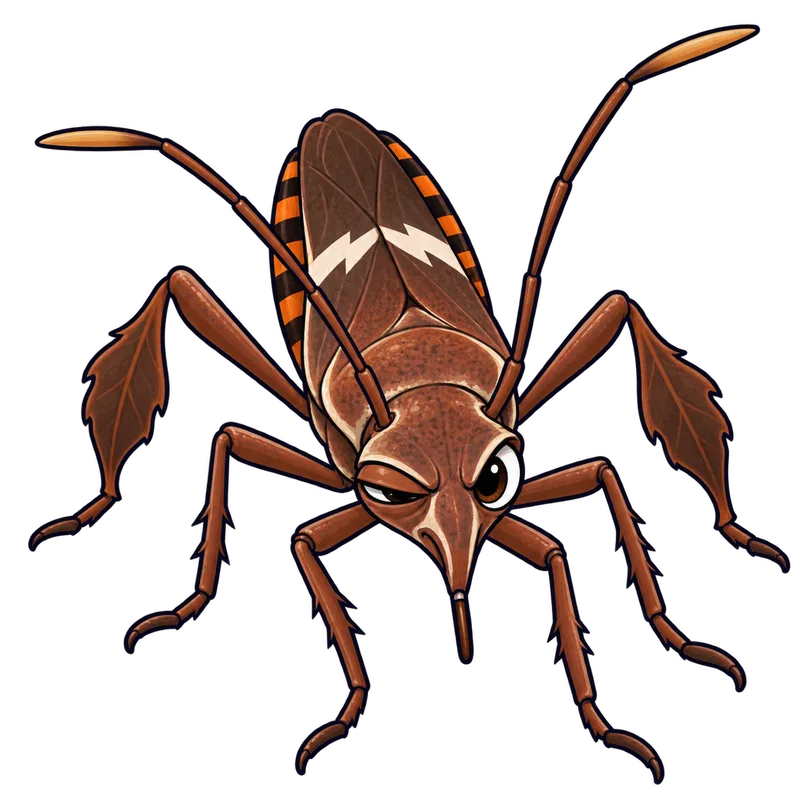
No, western conifer seed bugs are medically harmless nuisance pests that do not bite, sting, transmit disease, or cause structural damage to your house. They are large, brownish insects that measure up to an inch long and seek shelter indoors when the weather turns cold.
What is actually going on
You walk into the living room on a crisp October afternoon and spot a large, brownish bug marching sluggishly across your white baseboard. It looks bulky, almost prehistoric, with long legs and a slow, deliberate crawl. Naturally, you might wonder if you are dealing with a threat to your home, your pets, or your own skin. To answer the question directly, western conifer seed bugs are medically harmless nuisance pests that do not bite, sting, transmit disease, or cause structural damage to your house.
Think of these insects as outdoor campers that got a bit confused by the weather. They spend the spring and summer outdoors feeding on the sap of pine cones and conifer seeds, completely minding their own business. When the autumn air turns chilly, or when summer heat becomes too intense, they look for a cozy place to ride out the season. They gather on sun-warmed exterior walls, particularly those facing south or west, soaking up the heat just like people crowding around a campfire.
Once they find a tiny opening around a window frame or a gap in the siding, they slip inside to hibernate in wall voids or attics. They do not come in to build nests, and they certainly do not reproduce or munch on your drywall, electrical wiring, or wooden framing. Their mouthparts are shaped like tiny, rigid needles designed strictly for piercing plant seeds and extracting sap, meaning they lack the physical capability to chew timber or feed on fabrics.
The trouble with western conifer seed bugs usually begins on a sunny winter day when your indoor heating kicks on. That warmth tricks the sleeping bugs into thinking spring has arrived, causing them to wander sluggishly out of the walls and into your living space. While finding a handful of them crawling on your curtains can certainly give you a start, their presence is entirely accidental and seasonal. They are simply looking for a way back outside.
Knowing why these bugs show up helps you figure out how to handle them. As summer fades and the air turns crisp, the bugs congregate on warm, sunlit surfaces outdoors. They send out chemical scents that draw even more bugs to the exact same spots along your siding.
Those that manage to slip through tiny gaps in the structure settle down in dark, quiet spaces out of the way. Once your winter heating kicks on, it warms those wall cavities and tricks the resting bugs into waking up early. They wander out into your living areas looking for a way out, but if you squeeze them, step on them, or suck them into a bagless vacuum without care, they release a defensive liquid. That fluid contains oily compounds and pigments that leave stubborn yellow and brown stains on your carpets, drapes, and walls.
How to tell for sure
Recognizing a western conifer seed bug usually comes down to spotting a few distinct physical traits with your naked eye. They are relatively large insects with an elongated, somewhat flattened body. Their color usually ranges from a rich brown to nearly black, often featuring subtle reddish or orange markings near the middle. If you look closely, you will notice leathery front wings with translucent tips, six long legs, and a pair of antennae that segment into clear sections.
People frequently confuse them with other seasonal visitors, such as boxelder bugs, stink bugs, or elm seed bugs. Stink bugs tend to be wider and shield-shaped, while boxelder bugs are usually darker with bright red lines tracing their backs. In certain regions, homeowners occasionally worry about running into kissing bugs, which are blood-feeding vectors capable of carrying parasites. However, kissing bugs have distinct cone-shaped heads and different coloration patterns.
If you find an insect indoors and feel unsure about its identity, you can usually rely on the context of where you found it. Seed bugs typically appear during autumn or warm winter days as sluggish wanderers, rather than active biters. Still, if an insect has somehow bitten a sleeping resident or caused an unusual skin reaction, visual identification from a photograph is never enough to settle the matter.
What usually comes next
When you spot one of these bugs meandering across your wall, the most important practical choice you face is how to remove it without creating a bigger mess. The golden rule here is never to crush, squash, or stomp on a western conifer seed bug. When startled, squeezed, or stepped on, these insects release a strong, unpleasant defensive odor often compared to bitter almonds or pungent skunk spray. Furthermore, crushing them releases bodily fluids that can leave stubborn yellowish-orange or dark stains on your paint, wallpaper, drapes, or carpets.
Squashing a seed bug is a bit like stepping on a ripe blackberry on a clean rug. The bug itself is entirely harmless, but the cleanup turns a two-second task into an annoying chore. Instead of reaching for a tissue or a shoe, your best bet for safe indoor removal is a vacuum cleaner.
Using a vacuum with a disposable bag lets you suck the bugs up quickly before they can release their defensive scent. If you use a bagless model, you can slip a thin nylon stocking over the end of the vacuum hose and secure it with a rubber band to trap the insects inside the net. Once you finish vacuuming, simply seal the bag or the stocking inside a plastic trash bag and toss it straight into an outdoor garbage bin.
When to get help
Most encounters with western conifer seed bugs can be managed at home through simple physical removal and by sealing up gaps around your doors and windows. However, certain situations call for stepping back and bringing in outside help. If you or someone in your household experiences an unexplained bite, a strange skin lesion, or a severe allergic reaction, you should stop trying to identify the insect yourself. Skip the online photo comparisons and contact a licensed healthcare clinician, an urgent care facility, or your local poison control service right away.
You should also consider involving a professional pest management company when dealing with heavy, persistent invasions. If thousands of bugs blanket your siding every autumn and DIY vacuuming simply cannot keep up with the sheer volume, a pest professional can apply targeted exterior barrier treatments to intercept the insects before they cross your building envelope. Professionals are also helpful when exclusion work requires sealing high-elevation rooflines, complex soffits, or commercial structures where safety equipment is necessary. Finally, if you ever suspect that an insect inside your home is a biting vector rather than a harmless seed bug, your local university extension office or a licensed technician can examine a preserved physical specimen to give you a definitive answer.