
How do you get rid of western conifer seed bugs in a house?
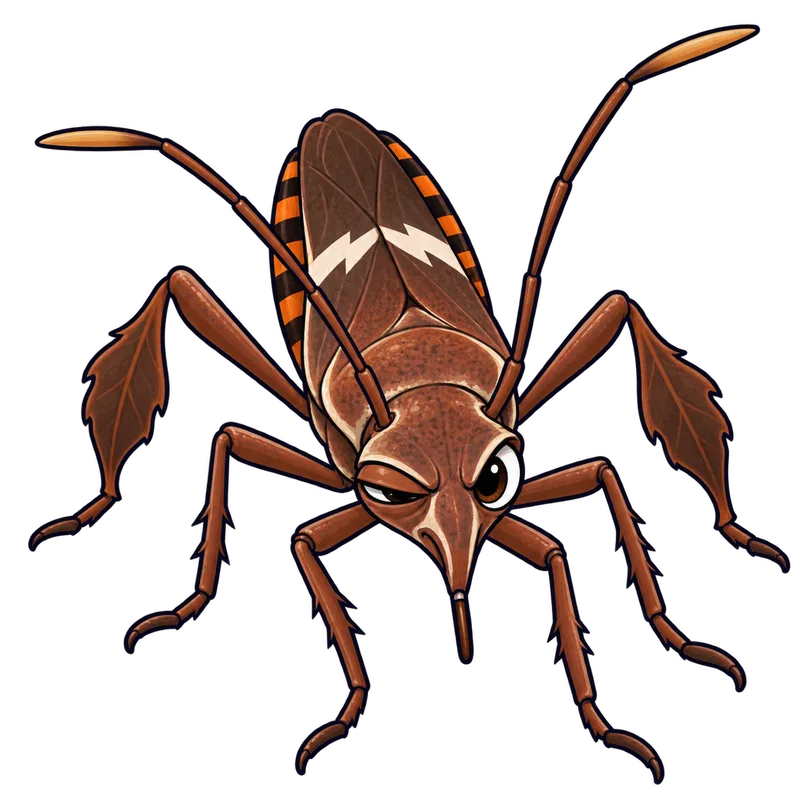
To get rid of western conifer seed bugs in a house, you need to vacuum up live bugs gently without crushing them and seal exterior gaps like window frames and utility penetrations. Because these 15 to 20 mm brown bugs migrate indoors to escape autumn chill, indoor aerosol sprays will not stop new arrivals.
What is actually going on
You walk into the living room on a crisp October morning and spot what looks like a miniature brown tank slowly marching across the baseboard. Before you can grab a tissue to squash it, you remember what happened last time and freeze. Getting rid of western conifer seed bugs in a house is not about setting off bombs or hunting down a hidden nest. They are seasonal occasional invaders that migrate indoors when outdoor temperatures swing from summer heat to autumn chill, seeking a warm place to sleep through the cold months.
These bugs do not breed, lay eggs, or chew on your structural timber, wiring, or indoor fabrics. They spent the spring and summer outdoors feeding on the cones and needles of pine and fir trees. When the days shorten and the thermometer drops, their instinct tells them to find a protected refuge. They squeeze through microscopic gaps in your siding, window frames, and utility penetrations, ending up inside your wall voids, attics, and door frames.
On warm winter days, sunshine beating against an exterior wall heats up those hidden cavities. The bugs wake up sluggishly, get confused by the warmth, and wander out into your living space instead of heading back outside. Because they are just crashing for the winter, indoor aerosol bug sprays will not stop the steady stream of new arrivals.
Effective management relies on a straightforward sequence. You remove the live bugs already inside without triggering their defense mechanisms, seal the physical entry gaps on the exterior, and tidy up the immediate perimeter of your home. Chemical treatments usually only play a role when applied as a timed exterior barrier before the bugs arrive in large numbers.
Western conifer seed bugs usually measure about 15 to 20 mm in length, giving them a distinctively large, elongated oval shape compared to smaller household pests. They belong to the leaf-footed bug family, which explains their most reliable identifying feature. If you look closely at their hind legs, you will usually notice wide, flattened expansions that look remarkably like tiny brown leaves attached to their shins.
They feature long 4-segmented antennae and leathery forewings that fold flat over their backs, ending in translucent tips. Their color tends to be a mottled dark brown or grayish brown. People frequently confuse them with elm seed bugs, boxelder bugs, or brown marmorated stink bugs, but those species lack the leaf-like leg flat-spots. Elm seed bugs are noticeably smaller and feature reddish-orange markings, while boxelder bugs carry distinct red stripes on their thoraxes.
You do not need laboratory equipment to tell them apart, but you usually need to look at them closely from a distance of 1 to 2 meters to spot the general shape, and closer to 10 to 30 cm to see the leg shapes or wing patterns. Never try to identify an insect from a mysterious mark or a bite on your skin. Seed bugs possess piercing-sucking mouthparts meant for plant seeds, and they usually do not bite humans. If you are holding a physical specimen, a simple 10x magnification hand lens will confirm the thoracic scent gland openings and the flat leg expansions immediately.
How to tell for sure
When you find these bugs wandering across your ceiling or curtains, your practical decision involves how to remove them without ruining your paint or textiles. Grabbing a shoe or a paper towel to crush them is usually a mistake. When threatened, these insects release a volatile fluid from scent glands on their thoraxes, producing a sharp odor that smells strongly of bitter almonds. Worse yet, that defensive fluid contains pigments that leave permanent yellow or orange stains on wallpaper, carpets, and drapes.
Your best tool is a standard vacuum cleaner with a wand attachment. Vacuum the live bugs gently from the surfaces where they rest. Once you finish, immediately remove the vacuum bag or empty the canister into a sealable plastic trash bag, tie it shut, and carry it out to your exterior garbage bin. Leaving captured bugs inside a vacuum canister will let their pungent scent drift through your rooms the next time you turn the appliance on.
After clearing out the immediate visitors, your next logical step is closing the door to future arrivals by sealing exterior gaps. Caulk around your window frames, repair torn screens with fine mesh, and install tight door sweeps. If you skip the exclusion work and rely only on indoor cleaning, you will simply find yourself vacuuming up new guests week after week.
What usually comes next
Most seasonal home invasions can be handled with a vacuum and a tube of exterior caulk, but certain situations call for outside help. You should consider calling a licensed pest management professional if your home sits directly adjacent to a dense conifer forest, resulting in thousands of bugs overwhelming your siding every autumn beyond the capacity of standard do-it-yourself methods. Professional help is also warranted when entry points sit at dangerous heights, such as upper gable vents, steep rooflines, or high soffits that require commercial ladders and safety gear.
If you decide that an exterior perimeter residual spray is necessary to stop heavy annual migrations, a licensed applicator should handle the job. Pesticide labels are strict legal documents, and professional applicators know how to apply treatments safely without risking non-target wildlife, beneficial pollinators like honeybees, or local water sources.
When to get help
Seed bugs do not bite, sting, or transmit infectious diseases. However, massive accumulations of hidden insects in wall voids can occasionally attract secondary scavengers like carpet beetles, and the shed skin fragments can sometimes trigger indoor allergy symptoms. If anyone in your household experiences unexplained skin lesions, severe rashes, or allergic reactions, do not guess at the cause. Direct the affected individual to a qualified clinician, an urgent care service, or your local poison control center for a proper medical evaluation.