
Western conifer seed bug vs stink bug: how can you tell?
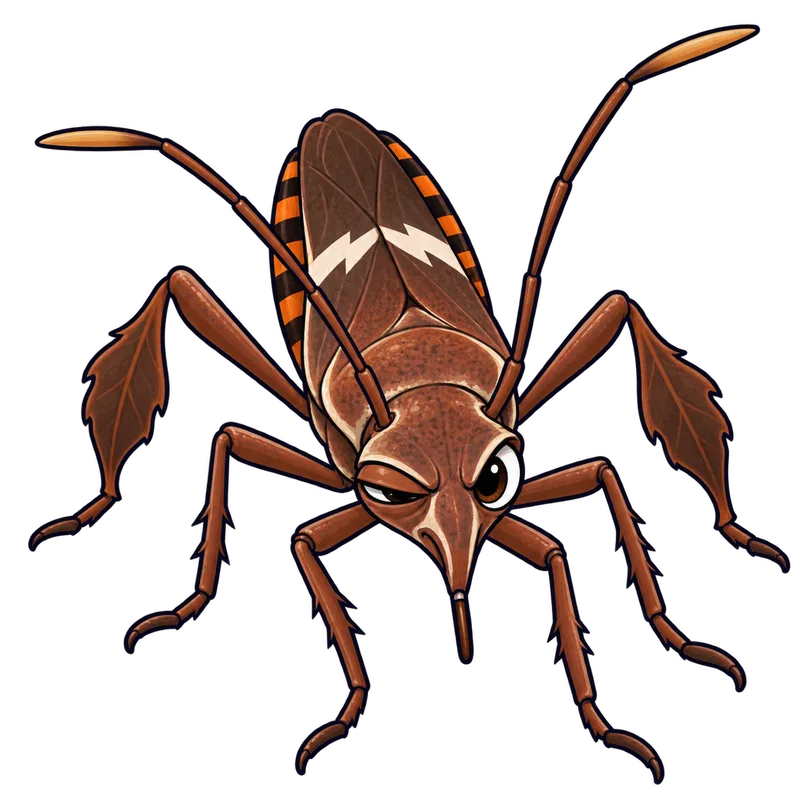
You can tell a stink bug and a Western conifer seed bug apart by looking at their body geometry. Stink bugs have a broad, shield-shaped body that measures around half an inch long with blunt shoulders. Western conifer seed bugs are noticeably narrower, more elongated, and look somewhat like an overgrown pine seed.
What is actually going on
You walk out to the back porch on a crisp October afternoon, coffee mug in hand, and notice the vinyl siding is practically covered in slow-moving, brownish bugs soaking up the last good warmth of the year. Within a week, a couple of them somehow materialize on your living room curtains, crawling in slow motion across the fabric. If you have ever stared at one of these uninvited houseguests and wondered what exactly you are looking at, you are usually choosing between a stink bug and a Western conifer seed bug.
Both of these insects belong to the true bug order, which means they share a distinct family trait of piercing-sucking mouthparts that they use outdoors to tap into plant juices, seeds, and fruits. They are also grouped together as seasonal invaders. When the outdoor temperature starts dropping in the fall, they quit roaming around the garden and look for a tight, dry place to hunker down for the winter. Your house happens to look like a five-star hotel to them.
The main confusion happens because they show up at the exact same time, behave in the exact same lazy way inside your living room, and can both let loose a terrible odor if you accidentally step on them. Yet they are entirely different insects with distinct family lineages. Telling them apart is usually straightforward once you know what physical shapes to look for on your window screen.
Stink bugs and Western conifer seed bugs are classic autumn interlopers. They spend the spring and summer outdoors feeding on vegetation, tree seeds, or agricultural crops, causing no trouble inside human dwellings. As days shorten and temperatures drop in September and October, these adults undergo a physiological shift prompting them to seek overwintering shelter. They congregate in the hundreds on sun-baked exterior walls, particularly those facing south or west where solar heat lingers longest.
From those sunny perches, they slip through microscopic construction gaps, sliding glass door frames, utility penetrations, and loose attic vents. Once inside wall voids, attics, or crawl spaces, they enter a state of sluggish dormancy known as diapause. They do not feed, mate, or lay eggs inside your home, nor do they chew on wood, wiring, or household fabrics. They simply wait out the cold months in the dark. Problems arise when indoor heating tricks them into thinking spring has arrived prematurely, causing them to wander out of the walls and into your living quarters.
How to tell for sure
The quickest way to figure out which bug you are dealing with is to look at its body geometry from above. Stink bugs, particularly the invasive brown marmorated species common across North America, usually have a broad, distinct shield-shaped body. If you imagine the metal shield of a medieval knight, or a blunt pentagon, you have the right silhouette. They usually measure around half an inch long, look somewhat flat on top, and have blunt shoulders.
Western conifer seed bugs, on the other hand, are noticeably narrower and more elongated. Instead of looking like a shield, their body profile is more rectangular or stretched out, almost like an overgrown pine seed with long legs. You will also usually notice that seed bugs have slender, elongated antennae and a somewhat cylindrical torso compared to the wide, armor-plated look of a stink bug.
Common beliefs suggest you need a microscope to tell minor plant pests apart, but the overall outline usually tells you everything you need to know. If it looks wide and shield-like, it is usually a stink bug. If it looks slim, elongated, and leggy, it is usually a conifer seed bug. Neither of them is interested in biting you, and neither of them is going to munch on your wooden framing or lay eggs in your furniture. They just want a dark crack in your drywall to sleep through January.
What usually comes next
The single most practical choice you face when you find these bugs indoors is how to remove them without turning your living room into a chemical warfare zone. Your first instinct might be to grab a rolled-up magazine and swat it, or crush it with a tissue. That is usually a mistake. Crushing either a stink bug or a seed bug triggers their defense mechanism, releasing pungent chemical fluids from their scent glands that smell remarkably foul and can leave a permanent orange or brown stain on your upholstery, drapes, or wallpaper.
Instead of smashing them, reach for the vacuum cleaner. Gently vacuuming the bugs up is the cleanest way to clear them out of your living space. There is one catch to keep in mind, because if you leave the vacuum bag sitting in the closet, the trapped bugs will release their defensive odors inside the machine and the exhaust will vent that smell right back into your rooms.
The solution is simple. As soon as you finish vacuuming up the strays, take the vacuum bag straight outside, seal it inside a plastic trash bag, and toss it into your outdoor garbage bin. If your vacuum uses a bagless canister, empty the contents directly into an outdoor bin and rinse the container out with soapy water. Once the indoor cleanup is done, your long-term focus should shift entirely to outdoor prevention by sealing up gaps around windows, repairing torn screens, and caulking utility penetrations before the next migration season rolls around.
When to get help
Occasional invaders are mostly a nuisance rather than an emergency, but certain situations call for outside help. If your home is experiencing a massive, multi-story invasion where thousands of bugs blanket your exterior walls every autumn, standard DIY caulking and store-bought sprays are usually not enough to keep up. In those cases, you should bring in a licensed pest control operator to apply a professional exterior barrier treatment to your foundation before the fall migration begins.
There is also a public health angle that requires careful attention, especially depending on where you live. While standard stink bugs and conifer seed bugs do not bite, sting, or transmit infectious diseases, people living in certain western regions need to watch out for lookalikes. Native kissing bugs, which belong to the assassin bug family, can occasionally wander into homes in foothill communities and carry the parasite responsible for Chagas disease.
If you suspect you are dealing with a blood-feeding insect rather than a harmless plant bug, do not attempt to handle it bare-handed. Save the specimen safely in a sealed container without crushing it and consult a local public health agency or a professional entomologist for proper identification. If anyone in your household experiences an unexpected bite, an unusual skin reaction, or significant allergic symptoms associated with insect exposure, reach out to a medical clinician or poison control immediately.