
Do boxelder bugs bite?
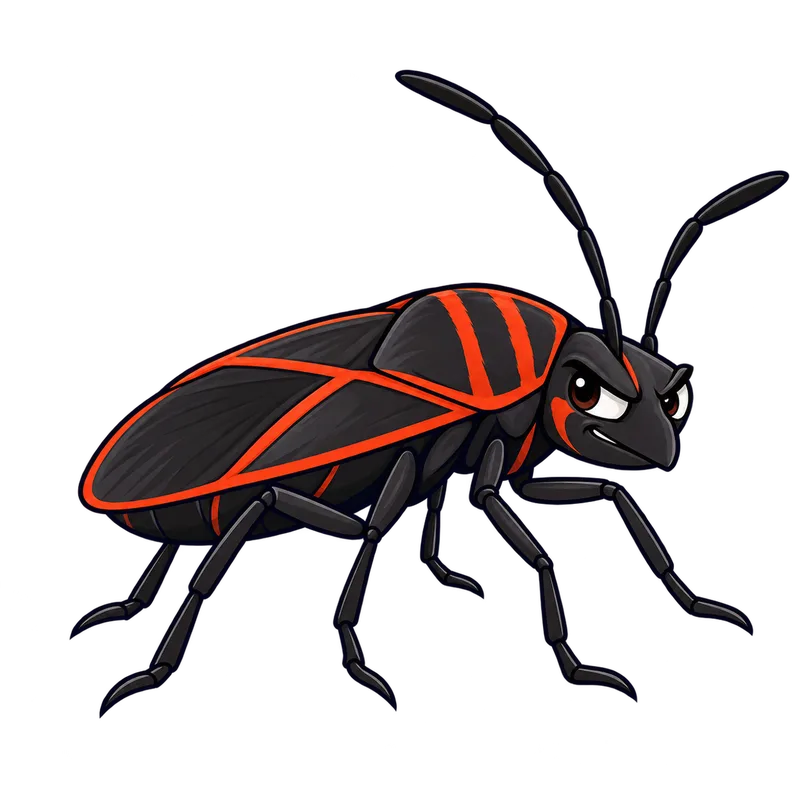
No, boxelder bugs do not bite humans, and they lack the physical mouthparts to do so. These half inch long occasional invaders possess a straw-like mouth designed exclusively for piercing plant tissue and sipping sap from trees.
What is actually going on
You walk out to your back porch on a warm afternoon in late September, and your siding looks like it is crawling away. There are dozens of flat, oval bugs marked with bold red and black lines, sunning themselves lazily against the warm bricks. If you have ever stared at a wall covered in these insects, a very reasonable thought crosses your mind: are those things going to bite anyone?
The short answer is no. Boxelder bugs do not bite humans, and they do not have the physical equipment to do it anyway. It is easy to see why people worry, though. When an insect appears by the hundreds on your home exterior and occasionally wanders across your living room rug, human instinct assumes it is looking for trouble or a meal. But boxelder bugs are what entomologists call occasional invaders. They spend their summers quietly hanging out in seed-bearing female boxelder trees, sipping sap and developing without bothering anybody.
The trouble only starts when the weather turns crisp in late August and September. These insects are looking for a cozy place to ride out the winter, and your house happens to look like a giant warm cave. They gather on south and west-facing walls to soak up the final rays of autumn heat, slip through tiny gaps in window sashes or siding, and settle into wall voids until spring. They are not there to raid your pantry or chew your framing. They are just trying to sleep through the cold months.
People often find an unexplained red mark on their skin during the colder months and immediately blame whichever bug they saw crawling on the wall last. But skin lesions cannot be diagnosed by looking at a photograph or matching them up with a suspected insect. If you are dealing with unexplained skin reactions, swelling, or persistent pain, a clinician or an urgent care professional usually needs to take a look, because insects that actually bite or feed on blood leave entirely different physical evidence than a plant-eating bug.
Boxelder bugs are pretty distinct once you know what to look at. They usually measure about half an inch long, with a dark brown or black body set off by bright red or orange stripes along the edges and across their back. They belong to the true bug family, meaning they possess a specialized straw-like mouthpart designed exclusively for piercing plant tissue and sucking juices out of maple seeds and foliage. They do not have chewing jaws, and they certainly do not have predatory mouthparts built for hunting or piercing human skin.
You might wonder if they could accidentally poke you if you pick one up barehanded or crush it against your skin. While any insect might react defensively if squeezed, boxelder bugs lack the blood-feeding habits or medically significant venom associated with genuine biting pests like mosquitoes, bed bugs, or fleas. If you spot them indoors during winter, they are usually sluggish and harmless, stumbling around near windows because indoor heating tricked them into thinking spring had arrived early.
How to tell for sure
If you want to be certain what you are dealing with, look at the physical traits rather than guessing based on random indoor encounters. Boxelder bugs have flat, dark backs marked with striking red or orange lines along the outer edges and the middle shield behind the head. They are distinctly oval and slow moving compared to fast, erratic household pests. Finding them clustered in the autumn sun on exterior brick or siding, rather than inside flour bins or damp bathroom corners, points right to these plant feeding occasional invaders.
What usually comes next
Since these bugs are not biting you or destroying your home, your best move is usually to ignore the heavy chemical sprays and focus strictly on physical exclusion and simple cleanup. Rushing to buy an aerosol pesticide for your living room is usually a waste of time and money, not to mention an unnecessary chemical exposure for your family and pets.
Instead, just grab a vacuum cleaner or a broom. When boxelder bugs emerge inside during winter or early spring, vacuuming them up is the cleanest and most efficient way to deal with them. Just remember to empty the vacuum bag or seal the canister contents immediately so they do not crawl right back out into the room.
Long term management is all about denial. If you want them off your exterior walls next autumn, you have to stop them from getting inside in the first place. Inspect your window sashes, door frames, and foundation penetrations in mid summer, and seal every visible gap with quality caulk or weatherstripping before August rolls around. If you happen to have a large female boxelder tree dropping seeds right next to your foundation, you might eventually decide that replacing that specific tree with a non host species is the only way to cut off the population at the source.
When to get help
There are times when a casual household nuisance crosses the line into something that requires outside expertise. If you or someone in your home experiences severe skin irritation, spreading redness, or systemic symptoms like dizziness or fever, skip the pest control manual entirely and contact a primary care physician, a local clinic, or poison control. Unexplained medical symptoms always require a qualified healthcare provider rather than guesswork about insects.
On the property side, you might run into situations where do it yourself methods fall short. If boxelder bugs have heavily infested deep structural wall voids across a multi story building, or if sealing the exterior requires specialized equipment and high reach work, calling a licensed pest management professional is usually the smartest choice.
If you do decide to use outdoor perimeter treatments before the autumn migration, remember that you cannot just spray wherever you like. Local environmental laws and pesticide label directions strictly prohibit applying chemical barriers on concrete surfaces where rain runoff can wash them into storm drains or groundwater. You also have to steer clear of outdoor applications when flowering plants are present and local pollinators are active. Always read and follow the product label instructions carefully, as those rules carry legal authority and protect the surrounding environment.