
Do western conifer seed bugs bite?
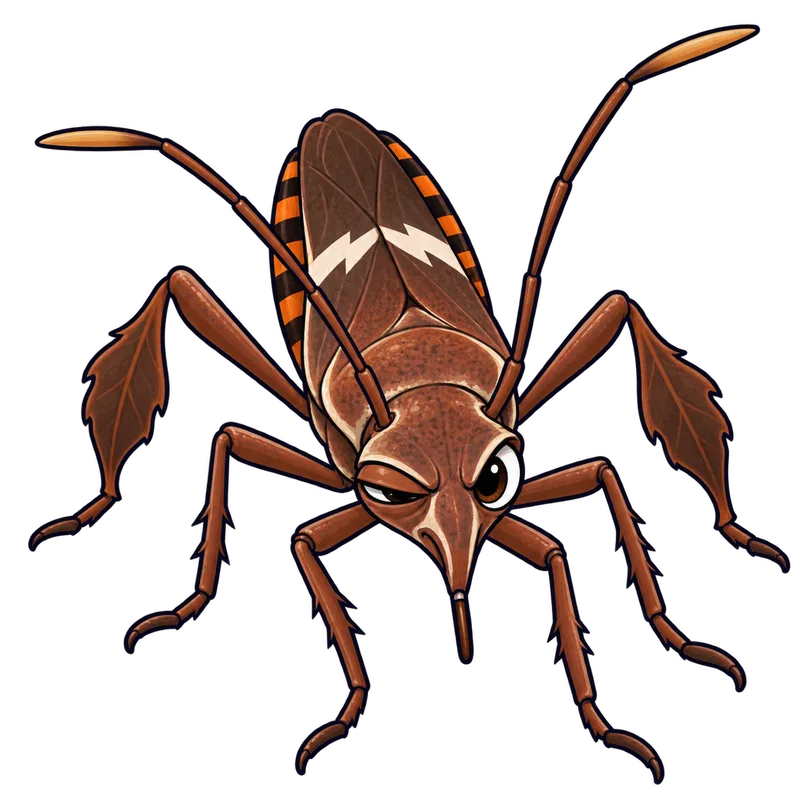
Western conifer seed bugs do not bite or sting humans, and they cannot feed on blood or human tissue. Their straw-like mouthparts are built entirely for piercing plant-based conifer cones and extracting seed juices. While a trapped bug may cause a minor pinprick sensation against your skin, it is merely a mechanical accident.
What is actually going on
You walk into the living room on a crisp autumn afternoon, glance at the sunny wall near the window, and spot a large, clumsy brown bug marching across the drywall. It looks a bit menacing, and you might wonder if it is about to sink its mouthparts into you or a pet. The short answer is no. Western conifer seed bugs do not bite or sting humans, and they cannot feed on blood or human tissue.
These insects belong to a group of true bugs whose mouthparts are built entirely for a plant-based diet. Instead of biting mandibles or a venom apparatus, they have a specialized, straw-like beak tucked under their heads. In nature, they use this slender mouthpart to pierce conifer cones and extract juices from developing seeds. Your skin is simply not on the menu.
You might wonder why they end up inside your house if they are not looking for food or a place to nest. When the outdoor temperature starts dropping in late summer and autumn, these bugs look for a dry, sheltered spot to wait out the cold. They gather on warm, sunlit walls like tiny solar panels before slipping through gaps into attics or wall voids. Once they are inside, they do not reproduce, eat your food, or damage your furniture. They just go dormant and wait for spring.
The main hazard they present is chemical rather than physical. If you accidentally step on one or try to pick it up with your bare hands, it releases a defensive fluid from scent glands on its thorax. This liquid produces a sharp odor that many people compare to bitter almonds or crushed marzipan. While a trapped bug might press its beak against your skin and create a minor pinprick sensation, this is merely a mechanical accident rather than a predatory bite.
Western conifer seed bugs are plant-feeding insects that move indoors simply to escape cold weather. They are driven by temperature changes rather than an attraction to human food, blood, or indoor structures. When autumn arrives, they search for protected wall voids and attics where they can ride out the winter months in a dormant state. They do not build nests, lay eggs, or feed on indoor materials. Their presence is entirely seasonal, meaning they will try to head back outside once spring warmth returns.
How to tell for sure
Adult western conifer seed bugs run about three-quarters of an inch in length, making them hard to miss when they trudge across a rug. They usually sport a dark reddish-brown to nearly black hue, paired with a somewhat flat and oval frame. If you peer closely at their folded wings, you can often pick out a faint, pale X across the back, plus alternating light and dark stripes running down the sides of the belly.
Spotting these clues usually just requires leaning in a bit closer, or grabbing a simple magnifying glass if you want to inspect that straw-like beak tucked right beneath the chest. You will not need laboratory gear for a basic identification, but remember that people frequently mix them up with other innocent seasonal visitors like boxelder bugs or brown marmorated stink bugs.
One important detail involves lookalike insects that actually can bite. Kissing bugs belong to an entirely different family of true bugs, and they can bite people at night while carrying genuine health risks. Seed bugs are harmless plant eaters, but if you live where blood-seeking insects show up and you wake up with mysterious bites, visual guessing is not enough.
What usually comes next
When you spot one of these clumsy visitors hiking across the floor, the smartest move is grabbing the vacuum instead of a shoe or a napkin. Smashing them sets off their scent glands, putting out that nasty bitter almond smell and usually leaving a stubborn yellow-brown mark on your carpet or wall.
Sucking the bug up with a vacuum removes it cleanly without any physical contact or a stink cloud. As soon as you finish, walk the vacuum bag straight out to the outdoor trash can so the smell stays outside your living room. If your vacuum uses a canister instead of a bag, dump the contents right into an outside bin and give it a quick rinse.
Skipping indoor foggers and aerosol bug sprays is generally the right call. Those sprays rarely reach deep into the wall spaces where the insects hide for the winter, and leaving piles of dead bugs inside your walls can draw in scavenger pests like carpet beetles. Focusing on physical removal and sealing up cracks outside keeps your house peaceful without unneeded chemicals.
When to get help
Most run-ins with western conifer seed bugs just call for a vacuum and some patience, but certain scenarios do require outside assistance. If you find thousands of these bugs swarming into your living areas, or if they take over a business where cleanliness standards are strict, reach out to a licensed pest control operator. They can inspect the building and manage massive outdoor clusters safely.
On the health side, if you or a family member develop unexplained skin marks, heavy swelling, or suspect a run-in with blood-seeking kissing bugs, you need to talk to a doctor, an urgent care clinic, or your local poison control center. Never try to diagnose a bite or skin issue from a picture or a web search, since medical professionals are the ones who can actually figure out what happened.