
Are kissing bugs dangerous?
Yes, kissing bugs can be dangerous because they are blood-sucking insects that may transmit a parasite causing Chagas disease or trigger severe allergic reactions with their saliva. The real-world risk depends on where you live and whether infectious waste from the bug is rubbed into a fresh bite wound.
What is actually going on
You are sitting on the back patio on a warm July evening, and a large, dark insect lands quietly on your arm. It is about the size of a coin, sporting reddish-orange markings along its edges. You brush it off without much thought, but later a friend warns you that it might be a kissing bug. Suddenly, you are wondering if that brief encounter just put your health at serious risk.
So, are kissing bugs dangerous? The short answer is yes, they can be, but the real-world risk depends a lot on where you live and how the interaction happens. Kissing bugs are blood-sucking insects that pose two distinct health threats. First, they can transmit a single-celled parasite that causes Chagas disease. Second, their saliva contains proteins that can trigger severe allergic reactions in some people, ranging from mild itching to full-blown anaphylaxis.
Despite those alarming possibilities, an actual disease transmission from a kissing bug bite in the United States remains rare. You might be surprised to learn that even though a large percentage of wild kissing bugs carry the parasite in places like Texas or California, people rarely contract the illness from them locally. Our homes usually have tight window screens, solid foundations, and air conditioning, which keep these bugs outdoors where they belong. Furthermore, native kissing bug species here often behave differently than their tropical relatives, usually waiting quite a while after feeding before they eliminate waste.
That distinction matters because the parasite is not actually injected through the bug mouthparts while it feeds. Instead, the insect typically defecates during or right after a blood meal. Infection happens only when someone inadvertently rubs or scratches that parasite-laden waste into a fresh bite wound, a cut, or the mucous membranes of the eye. If the bug crawls away and you never touch the waste or rub your skin, the chance of catching the disease from that single bite drops significantly.
Before you panic over every creepy-crawly on your porch, you need to know what you are actually looking at. Adult kissing bugs usually measure between half an inch and an inch and a quarter long. They have a cone-shaped head, thin antennae, and a dark brown or black body framed by a distinctive striped margin along their flattened abdomen, usually featuring orange, red, or light yellow bands. Their mouthpart is a long, thin, straight needle tucked neatly beneath the head, designed to slide into skin with minimal fuss.
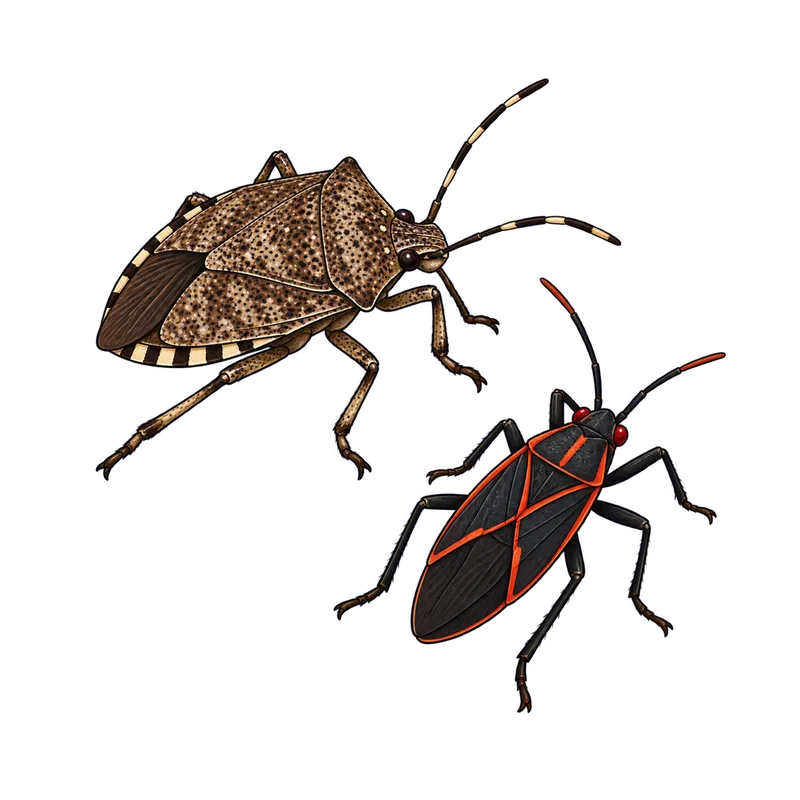
People frequently confuse kissing bugs with harmless look-alikes. Wheel bugs, leaf-footed bugs, boxelder bugs, and masked hunters show up around homes all the time and share a superficially similar shape or color scheme. A leaf-footed bug might sport wide, flattened sections on its legs that look like tiny leaves, while a wheel bug carries a distinct gear-like crest on its back. None of those look-alikes feed on human blood or transmit diseases, even though a predatory assassin bug can deliver a sharp, painful poke if you accidentally grab it.
How to tell for sure
You also cannot trust a skin mark to reveal the identity of the culprit. One person might break out in a red, itchy welt, while another feels nothing at all. A spot on your skin cannot name the insect or tell you if it carried a pathogen. When you need a definite answer, you must catch the actual insect in one piece and let a public health worker, extension agent, or bug specialist check it under a microscope.
What usually comes next
Spotting one of these insects inside your living area means your primary concern is safely containing it without squishing it. Never slap a kissing bug with your bare hand or step on it with a shoe. Crushing the body breaks the digestive tract open, which might spread infectious waste across your skin or into the surrounding air.
Instead, pull on a set of disposable gloves or turn a plastic bag inside out over your hand like a mitten. Carefully coax the insect into a hard plastic jar or a zip-top bag that seals tightly. Pop that container into the freezer for a few hours once the bug is safely inside. Cold temperatures dispatch the insect cleanly while keeping its body and any potential parasites intact for testing later. Clean the nearby surfaces and wash your hands thoroughly with a mix of one part household bleach to nine parts water after the bug is locked away.
Discovering one adult bug drawn to a bright porch light during a warm evening does not mean you are dealing with a hidden infestation. Adults are strong flyers and frequently wander indoors from nearby brush piles, animal nests, or yard debris. Finding wingless young bugs inside your living quarters, however, suggests they are breeding nearby and calls for a careful check of your door seals and window screens.
When to get help
Certain pest encounters move past being a minor household annoyance and demand professional intervention. Seek immediate emergency medical care and call nine-one-one if you notice signs of a severe allergic reaction following a bite, including widespread hives, swelling around the face or throat, wheezing, lightheadedness, or difficulty breathing. Individuals with known extreme sensitivities who live in areas where kissing bugs thrive should talk to a doctor about carrying emergency epinephrine.
A medical evaluation is also wise if you experience unexplained persistent fever or a strange, non-painful swelling on one eyelid, especially following travel to rural parts of Latin America where local housing styles make contact with these insects much more frequent. A physician can order the right blood tests if vectorborne exposure is a real possibility.
For pest control, skip the standard cans of bug spray from the grocery store shelf and contact a licensed pest control professional if you suspect an established indoor population, such as finding multiple bugs or immature nymphs. Reach out to your local university extension office or public health department to submit any captured specimens for proper identification and tracking data.