
How do kissing bugs get into a house?
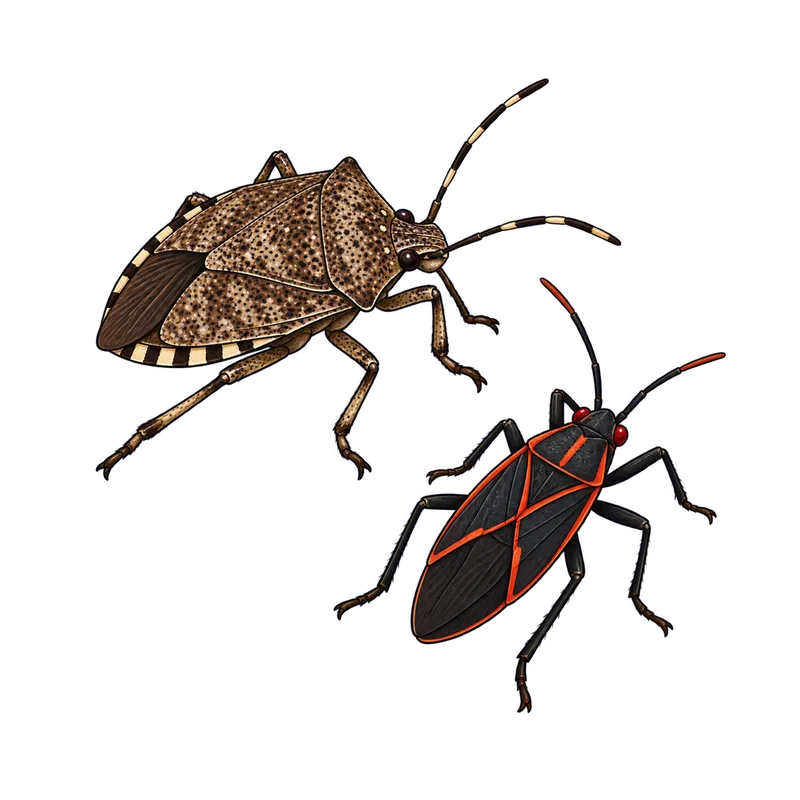
Adult kissing bugs get into a house by flying toward outdoor lights at night and slipping through gaps like worn weather stripping, torn window screens, or unsealed doors. They can also crawl inside from nearby wild animal nests, or hitch a ride indoors on firewood, pet bedding, and camping gear.
What is actually going on
Picture a warm July evening where you are finishing up a late barbecue in the backyard, leaving the bright patio light blazing while the screen door swings shut behind family members carrying plates inside. Unbeknownst to anyone, an adult kissing bug navigating by that artificial light source flies straight toward the glow, lands on the frame, and finds a small gap in the worn weather stripping alongುತ್ತಿದ್ದ the bottom of the door. It crawls right into the hallway, hitching an invisible ride into your living space simply because the exterior envelope of your house had a minor vulnerability.
Adult kissing bugs get into a home primarily through a combination of nocturnal flight dispersal and straightforward structural breaches. During warm months, usually from May through October, adult bugs are active at night and possess fully functional wings. They are strongly drawn to porch lamps, security lights, and even the interior illumination spilling through uncurtained windows. Once these insects land on the exterior walls, they search for entry points such as unsealed gaps beneath doors, cracks around window frames, tears in wire mesh screens, open chimney flues, or unsealed crawlspace vents.
Beyond direct flight entry from the outside world, these pests can also infiltrate living areas from microhabitats that have established close to the structure. If wild animals like woodrats, raccoons, or opossums build nests in attics, wall voids, or subfloor spaces, kissing bugs often follow their hosts indoors. Outdoor populations frequently thrive in brush piles, rock walls, stacked firewood, or chicken coops, and both adults and wingless juvenile nymphs can crawl through interior crevices into bedrooms. Passive transport also happens when people bring infested firewood, outdoor pet bedding, or camping gear inside, or when unsealed pet doors offer direct walking access to the interior.
A single adult bug found indoors on a summer night usually represents an isolated flying intruder drawn by outdoor lighting. However, finding flightless, wingless nymphs inside points toward a local breeding population established somewhere in or directly adjacent to the building. Understanding how they cross the threshold helps explain why simple environmental adjustments around the perimeter of your house matter more than guessing about random sprays.
Before worrying about control, you need to know what you are looking at, because plenty of harmless backyard insects share a passing resemblance to kissing bugs. True kissing bugs belong to the subfamily of triatomine bugs and usually measure between one-half inch and one and one-quarter inches long, roughly the size of a US quarter. They feature an elongated, flat oval body that is typically dark brown or black. Most species display distinctive red, orange, or yellow diagonal stripes along the flattened outer edge of their abdomen.
The most reliable physical identifiers require looking closely at the head and mouthparts. A kissing bug has a distinctly long, cone-shaped head that narrows toward the tip, earning it the alternative name of conenose bug. Beneath that head sits a straight, needle-like beak folded flat in a resting position. Their legs are exceptionally long and uniformly thin throughout their length, lacking any swollen femurs or leaf-like expansions.
Several look-alike insects often confuse homeowners. Leaf-footed bugs have similar body proportions and coloring, but their hind legs feature noticeably widened, leaf-like flat sections used for display. Predatory assassin bugs look closer, but they usually possess a thick, stout, curved beak and tend to deliver an instantly painful defensive bite if handled. Bed bugs are much smaller, around the size of an apple seed, and lack wings entirely. If you spot an insect matching the general profile of a kissing bug, you usually want to examine its head shape and legs before drawing any conclusions.
How to tell for sure
When you find a suspect insect indoors, your best immediate move is to secure the specimen safely without crushing it instead of grabbing a bug spray or swatting it with your bare hand. Smashing a kissing bug right on your skin can break open its gut and spill parasite-carrying fluids over any tiny scratch or abrasion, which just invites unnecessary risk.
Instead of touching it with your fingers, pull on a pair of gloves or slip your hand inside a small zip-top plastic bag, turn the bag over gently above the insect, guide it inside without squeezing, and seal it tight. You can also slide it into a glass jar using a piece of stiff paper. Pop the sealed container into the freezer for a few hours to humanely dispatch the specimen while keeping the body intact for a proper look later. Once that is done, wash your hands well and wipe down the surfaces where you spotted the crawler using a standard household cleaner or a diluted bleach mixture.
That captured bug gives you a solid piece of evidence to show your local vector control office or university extension service if you need a firm ID. With the immediate visitor tucked away safely, your next sensible task is all about blocking future access, like putting sturdy weather stripping on doors, patching torn screens, and keeping outside lights turned off at night so you stop rolling out the welcome mat.
What usually comes next
There are times when a pest issue moves past simple weekend DIY fixes and calls for backup. If you are pulling multiple kissing bugs out of corners within a short span, particularly those wingless nymphs, or if you suspect a hidden nest tucked inside your wall voids or attic insulation, you want to bring in a licensed pest control operator. Comprehensive treatments, specialized wall dusts, and professional perimeter sprays need proper training and strict adherence to safety labels.
On top of that, if wildlife like bats, squirrels, or raccoons have taken up residence in your attic and are dragging these bugs right to your doorstep, you need to call a licensed wildlife removal expert. Many animals, especially bats and certain nesting birds, are protected by strict wildlife conservation laws, meaning you cannot legally trap, move, or harm them on your own whim.
When to get help
Regarding health concerns, insect bites and skin welts can never be accurately diagnosed or identified from a quick photo or a description of a mark on your skin, since human reactions to bites vary so much from one person to the next. If you think a kissing bug got you, wash the spot well with soap and water and talk to a doctor or healthcare provider for proper advice. If anyone shows signs of a severe allergic reaction like trouble breathing, swelling in the face, or dizziness, head to the emergency room right away. Pet owners who find their dogs acting sluggish or looking distressed after messing with bugs should take the animal to the vet without delay.