
Why are boxelder bugs gathering around windows?
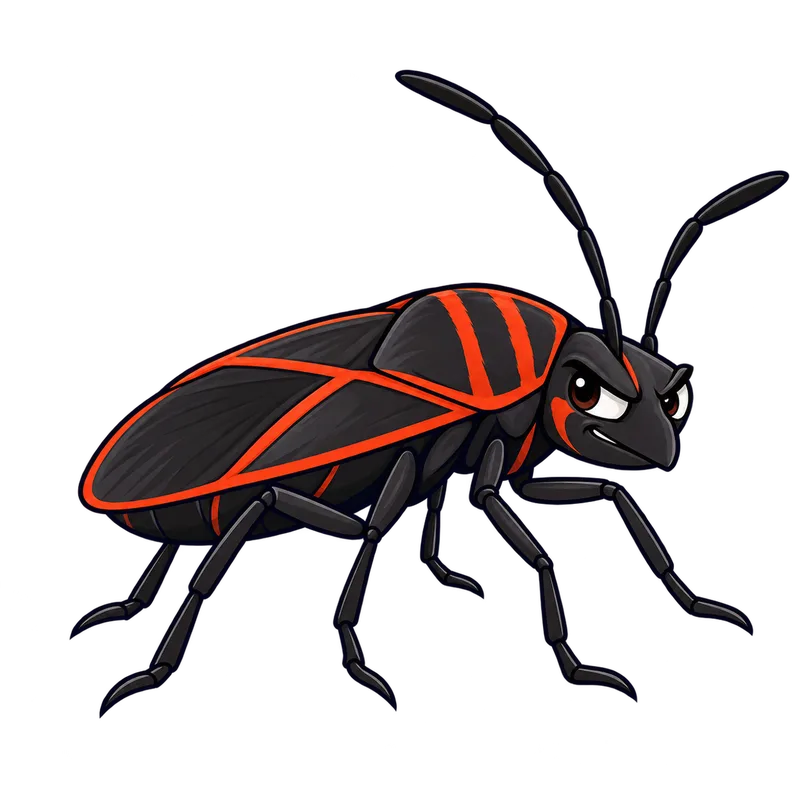
Boxelder bugs gather around windows in late summer and fall because they are looking for a warm place to spend the winter. Sunny windows are the warmest spots on the outside of a house, and the gaps around them are the easiest way in for these cold blooded insects trying to survive until spring.
What is actually going on
It is a bright September afternoon and the west side of the house looks busy. Dozens of black bugs with red markings are crawling over the window frame, a few more are sunning themselves on the glass, and one has somehow made it to the inside of the sill. Tomorrow there will be more. It feels like an invasion, and in a sense it is, just not the kind that should worry you.
Boxelder bugs gather around windows in late summer and fall because they are looking for a warm place to spend the winter. Sunny windows are the warmest spots on the outside of a house, and the gaps around them are the easiest way in. The bugs are not eating your house, not nesting in the walls and not biting anyone. They are cold blooded insects trying to survive until spring, and your window frame looks like an excellent hotel.
The pattern starts in the yard. Through late spring and summer, boxelder bugs feed on boxelder trees, specifically the female trees that produce seeds, and in the flower beds where those seeds fall. Male boxelder trees make no seeds and support far fewer bugs. As the season turns, the adults leave the trees and head for anything that holds heat.
Glass and dark window frames soak up the afternoon sun and stay warmer than the wall around them, which is why the south and west sides of a house usually get the biggest crowds while the shaded north side stays quiet. From there, the bugs look for shelter: a loose sash, a cracked bit of caulk, worn weatherstripping, a torn screen. Each one is an entrance to a wall void where they can wait out the cold.
How to tell for sure
An adult boxelder bug is about 12 to 15 mm long, dark gray to black, with distinct red or orange lines on its back. It is a true bug, which means it feeds by sipping plant juices through a beak, not by chewing.
That detail matters, because it rules out a lot of fears at once. A boxelder bug cannot chew wood, so it is not damaging your sills or framing. It does not bite people. And the ones that get inside are not reproducing there. They do not lay eggs, feed or breed indoors over the winter. On a warm winter day a few may wake up and wander toward an inside window, which is where most people first notice them indoors.
Other insects crowd windows in fall too. Brown marmorated stink bugs tend to show up around the first cool days of September, Asian lady beetles in early October, and cluster flies in the upper parts of window sashes. If what you are seeing matches the red lined black bug above, you are dealing with boxelder bugs.
One warning is worth taking seriously. If the insects around your windows are biting people, leaving marks on skin or damaging wood, they are not boxelder bugs, whatever they look like at a glance. Bat bugs, bed bugs and wood boring beetles can all turn up in similar places, and they need a professional look.
What usually comes next
The most effective control is closing the doors before the guests arrive. Seal the gaps around window sashes and repair loose tracks. Caulk cracks in exterior trim and around places where pipes and wires pass through the foundation. Make sure window screens fit tightly and are not torn, and add door sweeps. It is unglamorous work, and it does more than any spray.
For the ones already inside, a vacuum or a broom and dustpan is all you need. Empty the vacuum or throw out the bag promptly so they do not simply walk back out. Try not to crush them on light colored fabric or carpet, since they can leave a stain.
Indoor bug sprays are the wrong tool here. By the time the bugs are inside the walls, spraying window sills does very little, and it puts chemicals in your living space for no real gain.
If the problem comes back every year, look at the yard. A seed bearing female boxelder tree near the house is usually the source, and replacing it with a different species is the longest lasting fix. Cleaning up the seeds that pile up in nearby flower beds helps too.
Where an outdoor treatment makes sense, timing is everything. A preventive perimeter treatment works in mid to late August, before the bugs move onto the house, not in winter after they are already tucked away. Follow the product label exactly, keep children and pets away until it has dried, do not spray flowering plants where pollinators are feeding, and never apply it to concrete or other hard surfaces where rain can wash it into storm drains.
When to get help
Most boxelder bug problems are a nuisance that caulk and a vacuum can handle. Call a licensed pest control professional when the crowds cover upper story windows, soffits or complicated siding that you cannot reach safely, or when you want help with sealing and exclusion on a larger scale.
And call someone sooner if the "boxelder bugs" are biting, leaving marks on skin or chewing wood, because then they are something else.
Put simply, they are after the warmth, they are harmless to the house, and the best time to keep them out is before September arrives.