
Why do stink bugs appear indoors in winter?
Stink bugs appear indoors in winter because central heating systems or winter sunshine warm up their hiding spots inside wall voids. That gentle heat tricks the dormant insects into thinking spring has arrived. They wake up and wander into living spaces because they are confused by the warmth.
What is actually going on
You walk into the living room on a freezing Tuesday in January, and there it is. A large, armor-plated bug is slowly doing the backstroke across your cream-colored ceiling, looking entirely out of place against the winter chill outside. You might wonder how anything could possibly survive and wander around a house in the dead of winter. It feels like an infestation, but what you are actually witnessing is a slumber party gone completely wrong.
Stink bugs do not appear indoors during winter because they are breeding, laying eggs, or chewing on your woodwork. They are simply waking up by mistake. Back in early autumn, typically after the first crisp days in September, these insects finished up their summer feeding on outdoor crops and garden plants. Seeking protection from the impending frost, they crawled into dark crevices, under siding, and through unsealed gaps around windows. They settled into a state of deep physiological dormancy known as diapause, which is basically an insect version of hibernation designed to let them ride out the cold months without eating a single bite.
The trouble starts once the heating kicks on inside your house. Central heating systems, or even a sudden burst of bright winter sunshine baking the exterior brick or siding of a south-facing wall, raise the temperature inside your wall voids. That gentle warmth tricks the dormant bugs into thinking spring has finally arrived. Confused by the localized heat and drawn toward interior lighting, they wake up, push past drywall gaps or ceiling fixtures, and stumble right into your living space. They are not looking to start a family or feed on your pantry items, because their mouthparts are built strictly for piercing plant sap. They are just disoriented travelers trying to find an exit that leads outside, only to find themselves trapped in a heated living room instead.
Stink bugs treat human buildings as artificial caves. In nature, they tuck themselves under loose tree bark or deep within thick layers of rotting leaf litter. Our homes offer something much better with dry, protected wall voids and attics that shield them from freezing temperatures. When outdoor temperatures drop in September, they fly toward sun-warmed exterior walls and squeeze through tiny construction gaps. Once inside, they drop their metabolic rate and wait out the winter. They are completely inactive until indoor heating or a warm winter afternoon heats up their hiding spot. That thermal cue wakes them up prematurely, sending them wandering into your heated rooms where they cannot survive long-term anyway.
How to tell for sure
Spotting an unfamiliar bug on the wall usually makes people assume the worst, but identifying a winter stink bug is fairly straightforward once you look at the silhouette. The primary culprit behind these indoor winter appearances is usually the brown marmorated stink bug, an invasive species that arrived from Asia decades ago and settled across much of the country.
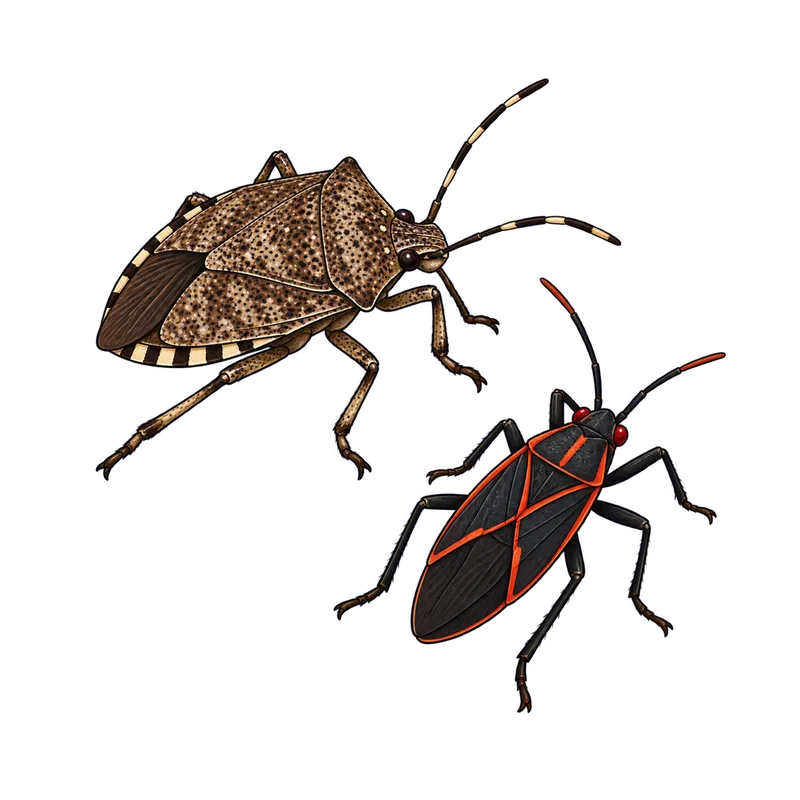
Adult stink bugs usually measure about five-eighths of an inch long, giving them a noticeable heft when you spot them crawling near a lamp or window. Their most defining feature is a distinct five-sided, shield-like body shape that resembles a miniature medieval shield. They feature a mottled brownish-gray color pattern on top, often with faint alternating light and dark bands on their antennae and outer wing edges. You might occasionally find native shield bug species indoors, though they tend to stay outdoors in much lower numbers. If you happen to notice tiny barrel-shaped objects clustered in neat rows on outdoor railings or window frames during warmer months, those are usually stink bug eggs. Indoors during winter, however, you will generally only find the solitary, slow-moving adults.
If the insect in question is tiny, reddish-brown, and scuttling across a windowsill by the hundreds in late summer, you are usually looking at boxelder bugs or Asian lady beetles rather than stink bugs. A stink bug travels alone or in small, sluggish groups during the winter months, relying on its hard exoskeleton and its infamous defense mechanism rather than speed. If you handle one roughly or try to squash it, specialized scent glands on its thorax will release a pungent, unmistakable chemical odor that smells sharply like crushed cilantro or coriander.
What usually comes next
When you find a sluggish stink bug wandering across your rug in the middle of January, your immediate practical decision usually comes down to how to get rid of it without turning your living room into a smelly disaster. Resist the urge to smash it with a shoe or suck it up into a standard vacuum cleaner without thinking ahead. Crushing a stink bug triggers its defense mechanism immediately, releasing that sharp, foul-smelling chemical into the air of your room. Vacuuming them up can also trap the odor inside the machine, meaning every time you turn the vacuum on over the next few weeks, you will be greeted by a ghostly reminder of the bugs you caught.
Instead, the most reliable approach for an active indoor bug is gentle mechanical removal. You can slide a stiff piece of paper underneath the insect, cover it with an inverted glass, and carry it outside to drop it in the snow where it will quickly re-freeze and perish. Alternatively, you can brush the bug directly into a small container filled with warm water mixed with a few drops of liquid dish soap. The soap breaks the surface tension of the water, causing the insect to sink and drown instantly without triggering a defensive spray. Focusing your energy on indoor removal is just a temporary fix for the current winter visitor, of course. The real work happens months ahead of time. Once the weather warms up in spring and summer, sealing up the tiny gaps around your window frames, repairing torn mesh on attic vents, and caulking structural siding joints before the first cold snap of September is what stops the next wave from moving in before winter even begins.
When to get help
Most winter stink bug encounters are merely an annoying household nuisance that you can manage on your own with a cup of soapy water, but certain situations call for outside intervention. If you live in an older, loosely constructed multi-story home or a rural property surrounded by extensive agricultural fields or orchards, you might experience overwhelming numbers of bugs emerging from the walls all winter long. When indoor invasions become a constant, heavy structural issue rather than a random stray bug, bringing in a licensed pest control operator is the right call. Professionals have access to specialized power application equipment and heavy-duty residual products designed to treat structural gaps and exterior perimeter zones safely.
Attempting to treat a heavy winter invasion yourself with DIY indoor aerosol foggers or indoor pesticide sprays is generally a waste of time and counterproductive. Spraying living spaces will not reach the thousands of bugs hidden deep inside unheated wall voids, and dead insects left inside those cavities can eventually attract secondary pests like carpet beetles. When dealing with exterior perimeter treatments, timing and environmental regulations matter immensely. Professional applicators must follow strict local laws that prohibit applying pesticide sprays to concrete surfaces where rainwater runoff could wash chemicals directly into storm drains, waterways, or groundwater. Regulations also forbid exterior applications when active flowering plants and pollinators are present around the foundation.
On the health side, a quick word of caution is necessary regarding skin marks. Stink bugs do not possess biting mouthparts, and they cannot sting, transmit diseases, or harm pets. If you or a family member develop unexplained skin lesions, persistent red bumps, or allergic reactions, never assume a bug caused them based on an insect sighting alone. Turn immediately to a medical clinician, urgent care center, or your local poison control center to get an accurate diagnosis for any physical symptoms.