
What should you inspect to reduce boxelder bug entry next season?
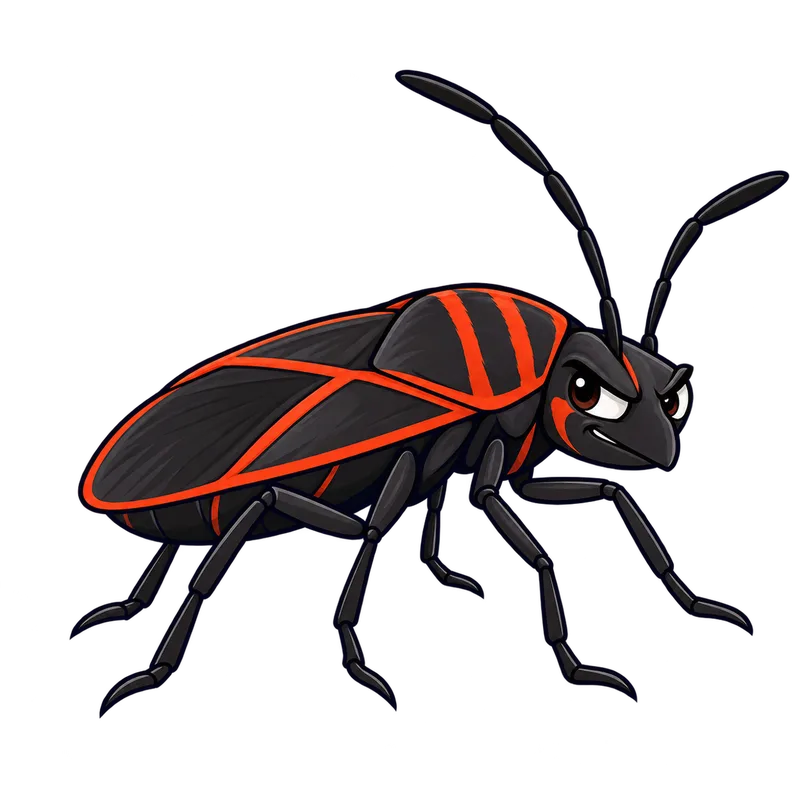
To reduce boxelder bug entry next season, you should inspect the landscape outside by mid-to-late August and check for structural gaps in your house. Specifically, look for seed-bearing female boxelder trees in your yard, along with vulnerable entry points like window sashes, loose siding overlaps, and foundation gaps.
What is actually going on
Picture a warm afternoon in late August. You are sitting on the porch, enjoying the tail end of summer, when you notice a steady procession of dark-bodied, red-lined insects marching up the sunny, south-facing wall of your house. They are not chewing your siding, and they certainly are not paying rent, but they are looking for a warm place to ride out the winter. If you want to keep them from turning your wall voids into a high-rise hotel, you need to inspect and seal your building envelope before they start moving in.
To stop boxelder bugs next season, you have to look closely at two main areas: the landscape outside and the structural gaps in your house. The inspection starts well before the first frost, usually by mid-to-late August. That is when these pests finish feeding on their preferred host trees and begin scouting for thermal shelter. If you wait until October, when they are already squeezing through every loose window frame and foundation crack, you are too late.
The process is a straightforward chain reaction. The bugs congregate on seed-bearing female boxelder trees during the summer months, feed on the fallen seeds, and then make a short migration toward the nearest warm vertical surface. By inspecting the gaps they use to break in, managing the trees that attract them, and setting up exterior barriers at the right time of year, you can cut off their route entirely.
How to tell for sure
Before you start sealing cracks, you usually want to make sure you are dealing with boxelder bugs and not some other wandering insect. Adult boxelder bugs are roughly half an inch long, with a dark slate-gray or black body marked by distinctive reddish-orange lines along the edges and back. You will usually find them clustered in large groups on sun-drenched exterior walls, garage doors, or rock piles as the weather begins to cool.
Your landscape inspection usually begins with the trees in your yard or your neighbor's yard. Boxelder trees are dioecious, meaning individual trees are either male or female. The males are harmless observers, but the seed-bearing female trees act as a neighborhood magnet. If you see clusters of bugs feeding on the foliage or swarming over the accumulation of fallen seeds and pods on the ground underneath, you have found the primary source of the population.
You also need to inspect the vulnerable entry points on your home exterior. Boxelder bugs have flattened bodies that let them slip through remarkably tight spaces. Check window sashes, frame perimeter cracks, loose siding overlaps, utility penetrations where pipes enter the house, and foundation gaps. If you can slide a credit card into a gap around a window frame, a boxelder bug can walk right through it.
What usually comes next
Once you finish poking around, you have to decide what to do with all those weak spots you just found. The most practical long-term move is simply locking them out. Grab some tough exterior caulk and fill every crack along the foundation and siding, and make sure to plug those loose gaps around your window sashes. Doing all of this before mid-August takes away their entry routes before they even start thinking about moving indoors.
If physical sealing is not quite enough because your yard borders a massive grove of host trees, you might consider an outdoor preventative barrier spray. This has to happen in mid-to-late August, right before the insects migrate toward the warm walls. You can apply approved residual insecticides around the foundation and exterior framing, but you have to follow the rules on the label. Never spray on hard concrete surfaces like driveways or walkways where rain runoff can wash the product straight into storm drains, and never spray when bees or other pollinators are actively visiting nearby flowers.
You also have to think about the trees causing the trouble in the first place. If you have a seed-bearing female boxelder tree right next to your foundation, treating it or eventually replacing it with a completely different tree species is often the only permanent fix. As for the bugs that manage to slip indoors anyway, resist the urge to fog your living room with heavy chemical sprays. A standard vacuum cleaner or a simple broom and dustpan will clear them out safely without turning your baseboards into a chemical zone. Always keep any pesticide treatments entirely out of reach of children and pets.
When to get help
Most of the prep work for boxelder bugs is well within reach for a handy homeowner, but certain situations call for some outside muscle. If your home is multiple stories high and you cannot safely reach the upper window sashes or high siding gaps to seal them, you should bring in a licensed pest management professional who has the proper extension equipment and safety gear.
You should also consult a professional arborist if you need to prune or remove large female boxelder trees growing right up against your roofline. On the chemical side, if your property layout makes it difficult to apply a perimeter barrier without risking runoff onto hard concrete aprons or into nearby water features, a professional applicator can ensure the job complies with all local environmental protection laws. For severe indoor infiltrations that resist your usual cleaning efforts, local pest control technicians can advise you on targeted, low-risk management strategies that keep your living space safe and comfortable.