
Why do stink bugs enter homes in autumn?
Adult stink bugs enter human homes in autumn because shorter daylight hours and cool nights signal them to find a safe place to sleep through the winter in a dormant state called diapause. They are drawn to the warmth radiated by houses and squeeze through unsealed gaps to find dry, stable wall cavities.
What is actually going on
Picture a crisp Saturday afternoon in September. You walk out to check the mail, and you notice a couple of broad, armored bugs basking lazily on the warm vinyl siding right beside your front door. A week later, there are dozens of them. They do not seem to be in a rush, and they certainly are not eating your house, but they are definitely moving in.
Adult stink bugs head for human homes in autumn because the outdoor world is losing its appeal. As daylight hours shorten and the first cool nights settle in, the garden plants and fruit trees they spent the summer feeding on start to die back. Sensing that winter is on the way, these insects experience a biological trigger that sends them looking for a place to sleep away the cold months in a dormant state called diapause.
Your house acts like a giant solar panel on a chilly fall day, absorbing heat and broadcasting it outward. Stink bugs pick up on that warmth and climb up exterior walls, seeking out dark, narrow cracks to crawl into. They usually squeeze through unsealed gaps around windows, utility pipes, and attic vents, dropping into hidden wall cavities where they plan to sit tight until spring.
You might wonder why they do not just stay outdoors under a pile of leaves like other insects. The honest truth is that many do, but natural shelters often fail to protect them from freezing temperatures or heavy moisture. Human structures offer dry, stable, temperature-buffered voids that greatly improve their odds of surviving the winter. Once they settle into those dark spaces, they turn off their active lives entirely, waiting for the return of warm weather or the deception of indoor heating to wake them up early.
How to tell for sure
If you are looking at a stubborn bug crawling across your living room ceiling on a sunny January afternoon, you usually want to confirm what you are dealing with before you grab a napkin. True to their family name, adult stink bugs have a distinct body shaped like a tiny medieval knight shield, measuring about five-eighths of an inch long. They are typically mottled brown or grayish, though shades can vary, and they possess a segmented set of antennae with pale banding.
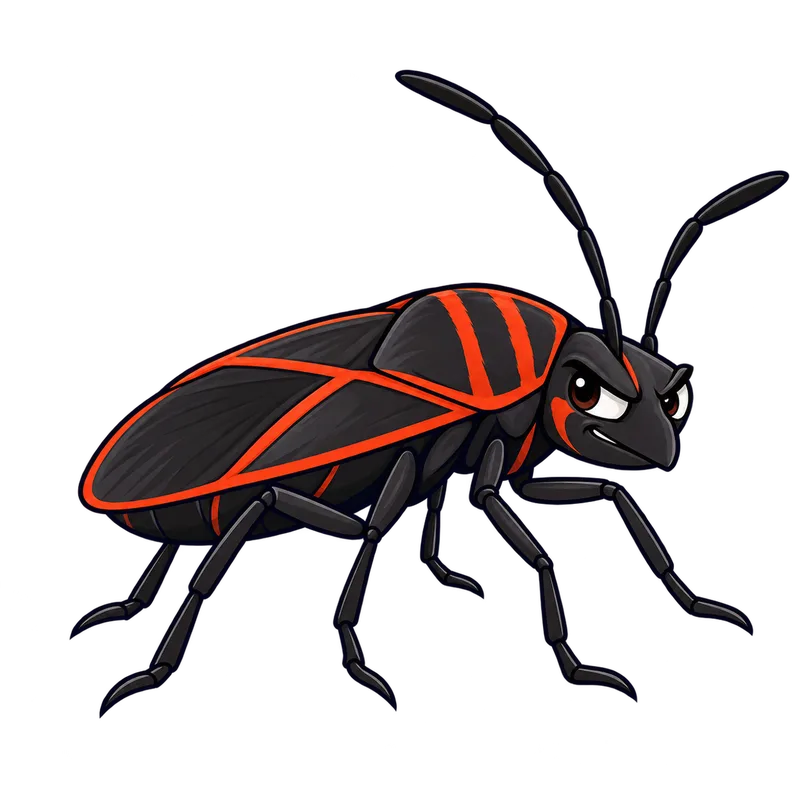
A very common point of confusion involves the boxelder bug, which shares the exact same habit of gathering on sunny house walls in autumn. Boxelder bugs are narrower, darker, and marked with striking reddish-orange stripes along their edges. Squash bugs are another frequent look-alike, usually darker brown or nearly black and commonly found near garden vegetables rather than wandering indoors.
You can usually tell a brown marmorated stink bug from native relatives by looking for faint white bands on its antennae and alternate light and dark markings along the outer edge of its abdomen. If you gently disturb one and catch a sudden, pungent aroma that smells faintly of crushed cilantro or stale spices, you have your answer.
One common belief is that these insects are quietly breeding or chewing through your insulation during the winter months. Fortunately, that is not how they operate. They do not lay eggs, feed on household supplies, or cause structural damage indoors. They are simply uninvited, sleeping houseguests waiting out the cold.
What usually comes next
The practical decision you face is whether to spend your time sealing up the house or chasing individual bugs around with a canister of spray. If you find them wandering indoors during the winter, skip the indoor aerosol insecticides. Spraying chemicals into living spaces or trying to fog wall voids rarely solves the problem because the bugs are tucked away deep inside structures where mists cannot reach, and it only leaves unnecessary residues where you live.
Instead, physical exclusion is your best line of defense, and timing is everything. Caulking exterior cracks, sealing gaps around windows and doors, and putting fine mesh over attic vents must happen before September begins, long before the bugs start their autumn migration. Once they are already tucked inside your walls for the winter, your options narrow down to physical removal.
When you spot them wandering across a wall, the best approach is to scoop them up with a piece of cardboard or gently guide them into a jar. If you decide to use a vacuum cleaner, be prepared for a surprise. Vacuuming live stink bugs forces the machine to absorb and immediately exhaust their defensive scent, which will turn your vacuum into an olfactory hazard every time you turn it on for months afterward. If you must vacuum them, use a machine with a disposable bag or a dedicated shop vacuum filled with soapy water.
If you consider exterior barrier sprays to keep them off your siding in early autumn, remember that timing and location matter greatly. Professional applicators often use micro-encapsulated treatments on exterior entry zones during the first week of September, but these treatments come with strict legal boundaries. You must never apply pesticides to concrete or asphalt surfaces where rain or garden hoses can wash the product straight into storm drains, and you must avoid spraying entirely when flowering plants are present and pollinators are active.
When to get help
Most encounters with autumn stink bugs require nothing more than a dustpan and a bit of patience, but certain situations call for backup. If you manage a multi-story residential building, an older home with complex rooflines, or high attic soffits where sealing entry points requires professional ladders and safety gear, it pays to bring in a licensed pest control operator. They have the specialized equipment needed to reach high exterior gaps that are unsafe for a homeowner to tackle alone.
Regarding professional pesticide applications, leave the concentrated formulations to the experts who carry the correct personal protective equipment and understand the strict environmental buffer laws governing runoff.
On the health front, stink bugs do not bite, sting, or transmit human diseases, and they do not pose a danger to pets. However, if someone in your household develops unexplained bites, skin lesions, or severe respiratory symptoms after interacting with insects indoors, do not assume the stink bugs are responsible. Reach out to a medical clinician or an urgent care service, as another pest like fleas or bed bugs, or an unrelated medical condition, is likely at play.