
Are bed bug stains on sheets different from stains on a mattress seam?
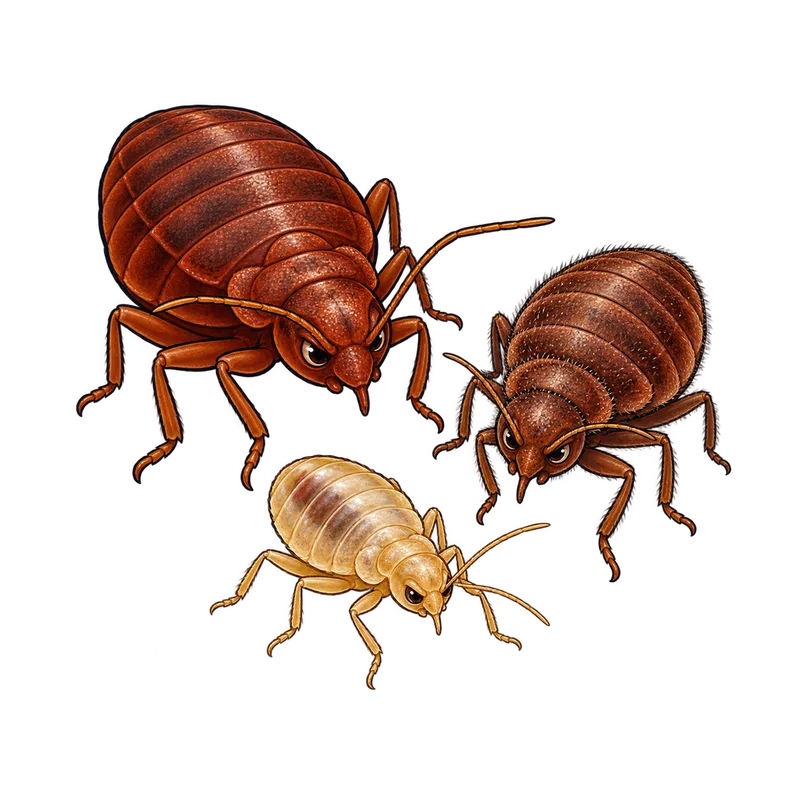
Yes, bed bug stains on sheets are different from stains on a mattress seam. Sheet stains frequently include rusty or reddish smears from crushed, blood-engorged bugs and occasional fecal spots. Stains on a mattress seam consist almost exclusively of dark brown or blackish fecal speckling deposited in the tight crevices where the insects congregate.
What is actually going on
You pull back the duvet on a quiet Tuesday morning, and there it is: a dark smudge on the bottom sheet that definitely wasn't there when you made the bed on Sunday. It looks like a smear of fountain pen ink or a tiny drop of dried rust. Naturally, your mind races straight to the worst-case scenario. You start wondering if those marks on the sheets are the same thing as the dark little specks you usually hear about along the mattress edge.
Yes, bed bug stains on sheets frequently include rusty or reddish smears caused by crushed, blood-engorged bugs alongside excreted fecal spots, whereas stains on a mattress seam consist almost exclusively of dark brown or blackish fecal speckling deposited at primary harborage sites where the insects congregate to digest blood meals.
Think of the mattress seam as the bed bug home address and the bed sheets as the highway. Bed bugs spend the vast majority of their time tucked away in tight crevices where their bodies can touch surrounding surfaces on multiple sides. Mattress seams, box spring folds, and headboard joints serve as these primary aggregation points. Because the bugs return here after feeding to rest and digest, their digested waste accumulates directly in those folds as concentrated clusters of tiny, dark brown to blackish dots. They stick to the fabric and piping like flat ink spots.
Sheets, on the other hand, are just temporary travel routes. Stains show up there through two very different actions. Sometimes a bug simply defecates while walking across the fabric on its way to feed or return to a harborage. Other times, a fully engorged bug is accidentally compressed by your body weight as you shift in your sleep. When that happens, the distended insect ruptures, leaving a distinct rust-colored or bright red smear on the cotton. Fresh bite wounds that bleed slightly before clotting can leave similar marks, which explains why sheet stains often look more like smudged blood than neat little dots.
How to tell for sure
Spotting a suspicious mark on your bedding usually triggers immediate panic, but a few simple observations can help you figure out what you are actually looking at. First, look at the location. If you find tiny, tarry black dots densely encrusted along the heavy fabric piping of a mattress seam, you are usually looking at a true harborage sign. Real harborage spots on mattress seams are rarely found in isolation. They are usually co-located with other physical evidence, such as tan, papery cast skins left behind as nymphs grow, tiny pearly-white eggs glued to the fabric, and sometimes live bugs tucked away in the folds.
If you are dealing with a dark speck on a sheet or a mattress seam and want to know what it is, you can usually perform a simple water-solubility test using a damp cotton swab or a wet paper towel. Press the damp cloth against the spot and wait a few seconds. Because bed bug fecal spots are composed of digested blood proteins, they will rehydrate and run reddish-brown, much like dark red ink bleeding into the fibers. Non-biological dirt, standard dust, or cockroach frass generally will not run red in this manner.
Context changes everything about what you see. On dark blue, black, or heavily patterned bed sheets, fecal spots and rusty blood smears become nearly invisible to the naked eye. If you use a smooth, zippered mattress protector over your bed, you get rid of those deep fabric seams entirely, meaning any bugs left inside or arriving later have to hang out along the zipper line or on the wooden bed frame instead. Bite marks on their own are never a reliable way to confirm an infestation either, since many people show zero skin reaction to bed bug bites, and doctors cannot diagnose the pest from a mark on the skin.
What usually comes next
When you discover suspicious stains, your immediate practical move involves thoroughly inspecting the entire sleeping area rather than just washing the sheets and hoping for the best. Pull back all bedding, grab a bright flashlight, and use a thin plastic card to probe gently along every fold, tuft, and seam of the mattress and box spring. If you confirm the presence of bed bug signs, laundering your sheets and pillowcases on high heat makes sense as a first step. Washing and drying bedding at high temperatures for at least thirty minutes kills all bed bug life stages and eggs on loose fabrics.
Washing the sheets will never solve an infestation on its own if the bugs are already established in the mattress seams or the bed frame. To protect your bed going forward, consider installing certified, bite-proof, zippered encasements over both the mattress and the box spring. These covers trap any bugs residing inside, eliminate deep seam hiding places, and make any new fecal spotting immediately visible on a smooth, white surface.
When to get help
There are times when do-it-yourself checks and basic laundry routines are simply not enough to fix the problem. You should involve a professional licensed pesticide applicator when fecal spotting and harborages have spread beyond the mattress to baseboards, electrical outlets, wall voids, or adjacent rooms. If your home is a multi-family apartment building, a dormitory, or a commercial property, pest migration across shared walls creates risks that require coordinated professional treatment.
If you or anyone in your household experiences severe itching, widespread allergic reactions, or secondary skin infections from scratching, consult a primary care physician, urgent care clinic, or dermatologist right away. Never attempt to diagnose a rash or prescribe medical treatments yourself. All chemical treatments must be handled strictly according to product label directions under federal law. Never apply liquid residual insecticides directly onto bed sheets, pillows, or open sleeping surfaces where skin makes direct contact, and leave restricted-use chemical decisions to licensed professionals.