
How should you handle bedding and laundry during a bed bug treatment plan?
You should handle bedding and laundry during a bed bug treatment plan by stripping items carefully and sealing them in heavy plastic right at the bedside. Take the sealed bags straight to a heat source, run dry items on medium-to-high heat in the clothes dryer, and store the clean laundry in fresh, unused plastic bins until the treatment is finished.
What is actually going on
Picture standing in your bedroom on a Tuesday morning, staring at a pile of sheets you are suddenly afraid to touch. You know something is biting you in the night, and now you have been told that every piece of fabric in this room needs to go through a strict decontamination routine. The instinct is to rip everything off the bed in a panic and haul it down the hallway in your arms, but that is precisely how a localized problem turns into a whole-house invasion.
Bed bugs and their eggs hide tightly packed along mattress seams, pillowcase folds, and the deep crevices of box springs. When you disturb unbagged bedding, you act as an accidental shuttle service, dropping tiny pests onto the hallway carpet with every step. The actual process of handling laundry during an infestation is less about punishing your clothes and more about creating a thermal trap. Every single fabric item that touches the bed needs to be stripped carefully, sealed right there at the bedside in heavy plastic, and taken straight to a heat source that hits lethal temperatures.
The heat is what does the heavy lifting here. While people often assume that washing garments in hot water is the main weapon, the real work happens in the clothes dryer. Dry items actually reach lethal core temperatures much faster than wet ones because they do not have to waste time evaporating moisture first. Even garments labeled for dry cleaning only can often go straight into a dry tumbler on medium-to-high heat for a short cycle without suffering structural damage, provided they are completely dry to begin with.
How to tell for sure
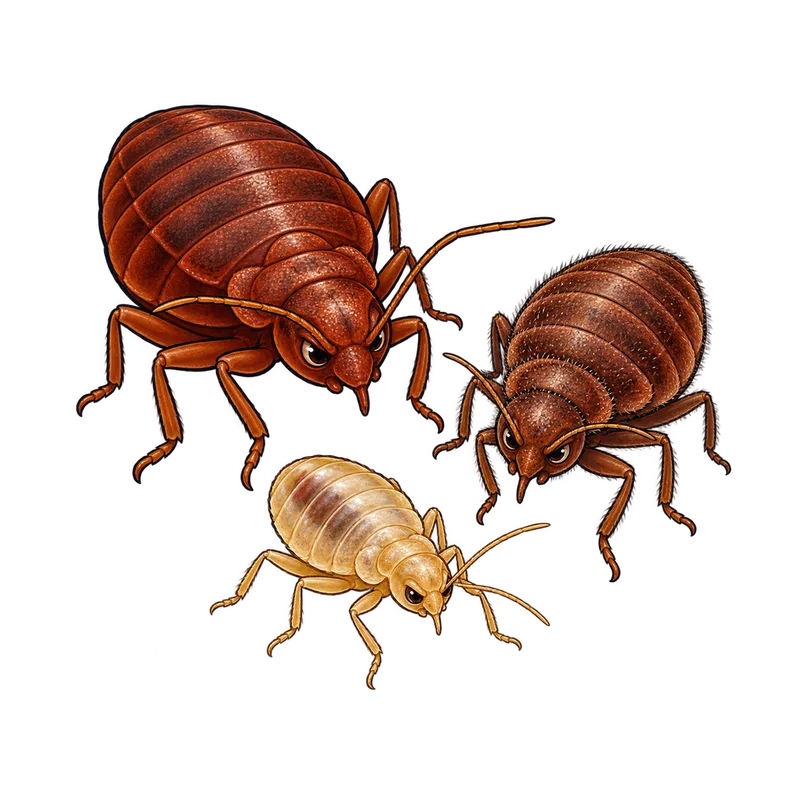
Before you start bagging up half your wardrobe, you usually need to confirm what you are dealing with. Bed bugs are reddish-brown, flat, and oval when unfed, measuring about the size of an apple seed. Once they feed, they swell up and darken, looking more like a plump grain of cooked rice. Their tiny eggs are about one millimeter long, cemented stubbornly to surfaces, and look like pinheads or grains of sea salt.
You might also spot dark, ink-like fecal speckling along the fabric piping of your mattress. There is a simple field test for this: take a damp cloth and dab at the dark spot. If it re-hydrates and smears into a reddish-brown hue because of the digested blood, you usually have a strong indicator of blood-feeding pests rather than ordinary dirt or household debris.
Do not rely on the bites themselves to give you a definitive answer. Skin reactions vary wildly from person to person, and a cluster of red welts can just as easily come from mosquitoes, dry air, or an allergic reaction to laundry detergent. If you find actual insects, examine them closely. Common bed bugs have small fringe hairs along the edge of the shield behind the head that are usually shorter than the width of their eyes. If those hairs are noticeably longer, you might actually be dealing with bat bugs that have wandered down from an attic roost, which changes the solution entirely since you would need to exclude the bats first.
What usually comes next
Once you get all that laundry bagged up in thick plastic and run through the hot dryer, you still have to figure out where to put it. People often pull those warm, safe items straight out of the machine and drop them right back into the same laundry basket they used to carry them down the hall. That old basket is practically a staging ground for bugs. You want to drop that clean laundry directly into fresh, unused plastic bags or sealed bins with tight lids, and it has to stay locked up in there until the whole house treatment is completely finished.
Now you have to deal with the bed itself. Pouring liquid poisons all over the place where you sleep is generally a terrible idea, and product labels usually forbid it outright, so you rely on physical barriers instead. You need to pull on heavy, zippered encasements that are specifically rated for bed bugs over both the mattress and the box spring. If money is tight and you can only buy one, protect the box spring first because all those dark wooden internal corners and hollow spaces make it a favorite hangout.
Once those covers are zipped completely shut and tucked under their safety flaps, leave them alone for months so any trapped bugs or hidden eggs eventually perish. Move the bed frame away from the baseboards so the blankets do not trail on the floor, and slide specialized interceptor cups under every single leg. This turns your bed into an isolated island where crawling insects cannot climb up while the rest of the room gets sorted out.
When to get help
There comes a point when running endless loads of laundry and zipping up mattress covers is simply not going to cut it, and you need to bring in a professional. If you have followed every heating and bagging rule by the book and bugs keep showing up after a couple of weeks, or if you suspect you are actually dealing with bat bugs from the attic, stop guessing and call a licensed pest controller. They have the proper equipment and training to tell the difference and apply the right fix.
You also need outside help when structural issues or building rules get in your way. Strict regulations govern how chemical treatments are applied, and dumping unapproved sprays onto your bed creates serious health hazards for everyone living there. If you share a wall with neighbors in an apartment building or a multi-family complex, treating just your unit will never work because the bugs simply travel back and forth through electrical outlets and shared wall voids.
As for your health, if anyone in the house develops severe blistering, intense itching, or signs of an infection from scratching, get them to a doctor right away. If someone ever shows acute allergic signs like facial swelling or trouble breathing after being bitten, treat it as a medical emergency and get to an emergency room immediately.