
When can bed bug evidence in an apartment affect neighboring units?
Bed bug evidence in an apartment affects neighboring units whenever active insects crawl through structural wall voids, shared utility lines, or common hallways. This spread happens when insects move because a neighboring apartment becomes vacant, population density gets too high, or store-bought foggers drive them out of their hiding spots.
What is actually going on
Imagine walking into your living room on a quiet Tuesday evening and noticing a tiny, reddish bug creeping along the baseboard. You crush it, hoping it is a stray wandering from outdoors, but a cold knot forms in your stomach because you know what it looks like. Within days, the bites start showing up. Naturally, your first thought turns to how it got there and whether your next-door neighbors are dealing with the exact same nightmare.
Bed bug evidence in an apartment usually affects neighboring units whenever active insects crawl through structural wall voids, shared utility lines, electrical conduit channels, or common hallways. These pests are not lazy. An adult bed bug can travel more than 16 feet in just 5 minutes when it goes looking for a meal. If the apartment next door becomes vacant or the population density in one room gets too high, the insects do not simply stay put and starve. They pack up and move through the tiniest gaps in your walls.
This spread often accelerates because of well-meaning mistakes. If someone tries to clear out an infestation using a store-bought fogger, commonly known as a bug bomb, the aerosolized chemicals rarely penetrate deep cracks. Instead, the irritating mist acts like a panic button, flushing the insects out of their hiding spots and driving them straight into wall cavities where they escape into neighboring apartments. Solving the issue requires inspecting not just the affected room, but an entire perimeter that includes apartments directly above, below, laterally adjoining, and across the hallway.
How to tell for sure
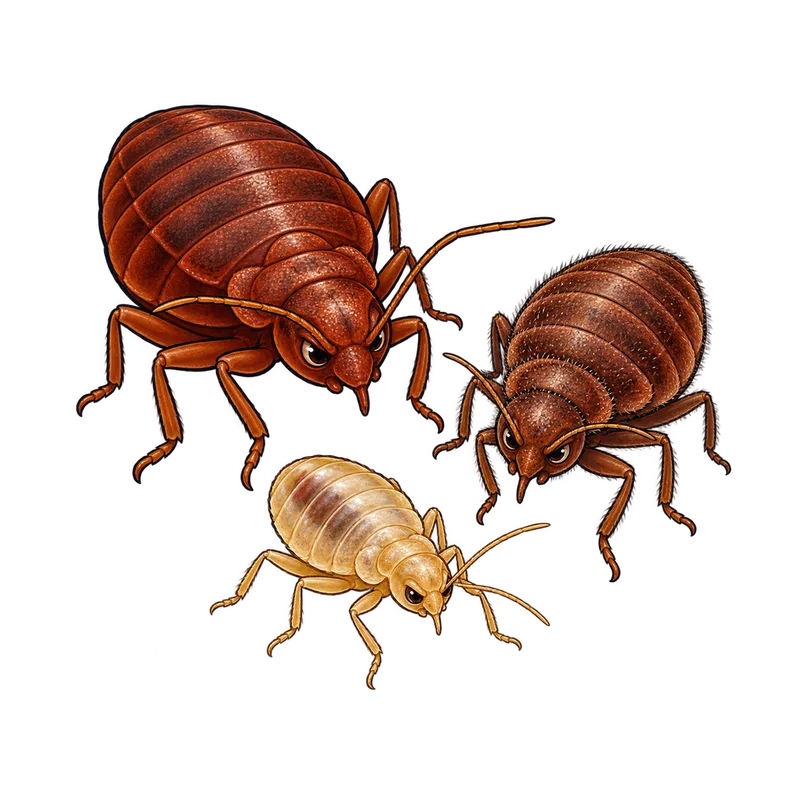
Before you start pointing fingers at the neighbors or calling a moving company, you need to confirm what you are actually looking at. Bed bugs in their adult stage usually measure about 5 to 7 mm long, roughly the size and shape of an apple seed or a small lentil. Newly hatched nymphs are much smaller, resembling tiny poppy seeds. Think of their bodies as being as flat as a credit card. If a crack or crevice in your molding is wide enough to slide a credit card into, a bed bug can use it as a home.
You usually spot them by looking for dark fecal spotting on mattress seams, box spring joints, or wooden bed frames. If you find these spots, dab them with a damp white paper towel. Digested blood will smear reddish-black like wet ink, which helps rule out ordinary household dirt or cockroach droppings.
Do not rely on skin bites alone for identification. Roughly 20% to 30% of people show no physical reaction to bed bug bites, and skin marks can easily stem from dry air, allergies, or other insects. If you do find a specimen, keep in mind that differentiating a true bed bug from a bat bug usually requires a 10x to 50x magnification lens to examine the tiny fringe hairs on the shield behind the head. If those hairs match or exceed the width of the eye, you might actually be dealing with bat bugs coming down from an attic wildlife issue rather than a standard apartment infestation.
What usually comes next
Once bed bug evidence is confirmed, property management or landlords generally have to step in because multi-family buildings treat these infestations as structural problems rather than isolated housekeeping failures. You can take immediate steps to protect your sleep space by turning your bed into an island. Pull your bed frame at least 6 inches away from surrounding walls, curtains, and nightstands. Encase both your mattress and box spring in certified, zippered bed bug-proof covers, and place pitfall interceptor cups under every leg of the bed frame.
Make sure your bed linens, blankets, and dust ruffles never touch the floor, which would otherwise act like a drawbridge for crawling insects. Gather your infested clothing and bedding and run them through a clothes dryer on medium-to-high heat for 20 to 30 minutes. Reaching a core temperature of 120 degrees Fahrenheit kills every life stage, including eggs, without needing harsh chemicals.
Avoid throwing unsealed furniture out into the hallway. Dragging an untreated mattress down a public apartment corridor usually dislodges live insects and spreads the infestation directly to your neighbors. Professional pest management teams typically follow up with non-repellent residual treatments or desiccant dusts injected safely into wall voids and electrical outlets.
When to get help
Bed bugs do not transmit human disease pathogens, but heavy infestations create very real health concerns like severe sleep deprivation, chronic anxiety, and secondary skin infections from relentless scratching. If you or someone in your household develops a widespread allergic reaction or an infected skin breakdown, consult a healthcare provider right away.
In multi-family housing, tenants should notify property management immediately so licensed pest control professionals can initiate a coordinated inspection of all adjacent units. Landlords and building owners must comply with local habitability laws and structural pest control regulations, which usually require certified applicators rather than DIY attempts. If you suspect an infestation originates from wild animal nesting in an attic or a chimney void, bringing in licensed wildlife control specialists ensures that protected animals are handled legally while the structural entry points are permanently sealed.