
Flea bites vs bed bug bites: what clues are useful?
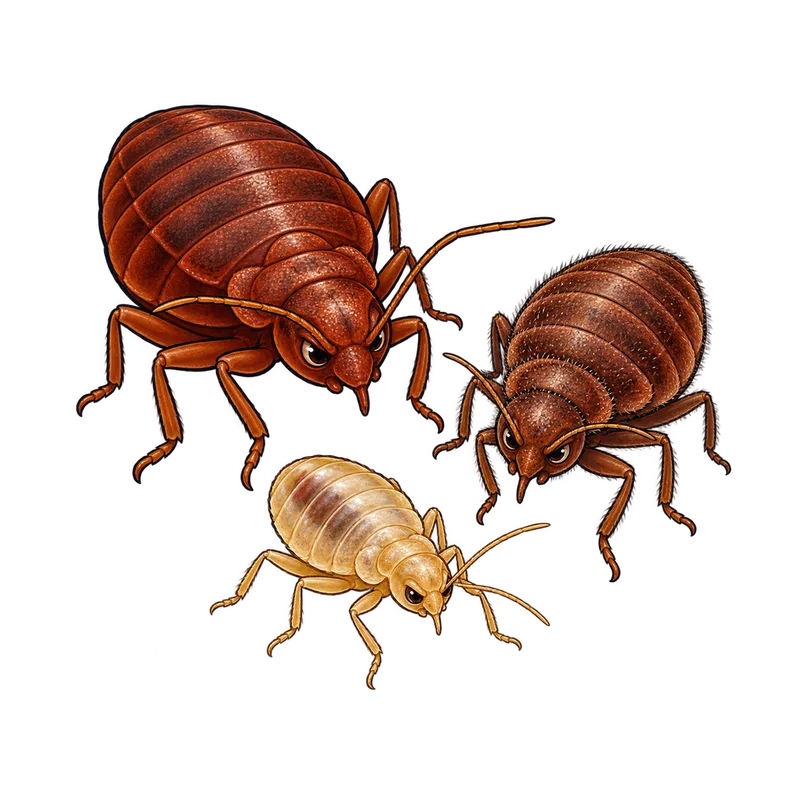
To tell flea bites and bed bug bites apart, look at where they happen on your body and how the insects move. Fleas hop up from carpets and target your lower legs, while bed bugs crawl and bite any skin exposed during sleep. Skin marks alone are unreliable because every immune system reacts differently.
What is actually going on
Imagine waking up to a row of itchy red welts on your arm, or an angry cluster of bites around your ankles. You immediately strip the sheets, grab a flashlight, and start hunting for whatever is feasting on you while you sleep. The natural instinct is to point a finger at the nearest pest, but trying to diagnose a bug by looking at a skin mark or a blurry smartphone photo is a fool's errand. Your skin reacts to salivary proteins, and every immune system handles those proteins differently. One person might develop huge, angry blisters within minutes, while another person sharing the exact same bed shows zero skin reaction at all.
That lack of skin reaction in a significant number of people is what usually throws everyone off. It leads to the classic household mystery where one partner wakes up covered in welts and the other thinks they are completely safe, assuming there cannot possibly be an infestation. Instead of staring at your skin, you need to look at the environment and the physical clues left behind.
To figure out whether you are dealing with fleas or bed bugs, you have to look at how the insects move and where they hang out. Fleas are tiny, reddish-brown, wingless bugs that are pinched flat from side to side, which lets them slip easily through dense pet fur or carpet fibers. They possess powerful hind legs built for leaping. Bed bugs are built differently. They are flattened from top to bottom, like an apple seed, which lets them squeeze into paper-thin cracks and mattress seams, but they lack wings and jumping mechanics entirely. They only crawl.
How to tell for sure
Locomotion and physical architecture dictate where these pests bite you. Fleas usually target the lower extremities, specifically between your ankles and knees, because they hop up from carpets, rugs, or domestic pets wandering across the floor. If you find itchy bites concentrated around your socks and shins after walking across a room, you are usually looking at flea activity. Bed bugs, on the other hand, crawl exclusively. They target any skin exposed during sleep, such as the face, neck, shoulders, arms, and back, often leaving linear or clustered groups of bites.
Physical evidence in your living space usually confirms what you are dealing with. For bed bugs, you want to inspect within an eight-foot radius of where people sleep. Check mattress piping, box spring corner covers, headboard attachment brackets, and wooden bed frame joints. You are looking for live bugs, pale tan shed skins from molting nymphs, tiny pearl-white eggs, and dark, ink-like fecal speckling.
You can run a simple test on those dark spots using a damp cotton swab or a wet paper towel. Bed bug fecal spotting consists of digested blood, so it will dissolve and run reddish-brown when moistened. If the spot stays hard and black, it is usually cockroach droppings or ordinary household grime. For fleas, confirmation usually involves checking pet resting zones, inspecting pet fur near the tail base and belly with a fine-toothed comb, or capturing jumping adults on white sticky tape placed near baseboards.
One important catch involves bat bugs, which look nearly identical to common bed bugs to the naked eye. If you notice bugs crawling down upper walls, near ceiling moldings, or emerging from chimneys and attics, you might have bat bugs that have migrated into living quarters after their animal hosts left. Distinguishing them requires looking at tiny fringe hairs under high magnification, which is a job for an expert rather than a guess on your part.
What usually comes next
Once you have gathered your physical evidence, you need to make a practical decision about verification before taking any chemical action. Do not rely on over-the-counter foggers or total release bug bombs. Foggers fail to penetrate deep harborages, leave ineffective residues, and often just drive the pests to scatter into adjacent rooms and wall voids, making a manageable problem much worse.
Instead, capture a physical specimen. Use clear adhesive tape to trap a crawling insect, and stick the tape onto a clean white paper towel so you can see it clearly. Alternatively, you can collect specimens in a sealed plastic bag. Take that specimen to a local agricultural extension office or a qualified pest professional for definitive identification. Knowing whether you are treating a flea infestation, a bed bug harborage, or a bat bug invasion changes the entire remediation plan, especially since bat bugs require sealing up animal entry points rather than just treating a mattress.
When to get help
Certain situations require stepping back and letting professionals take over. If you observe systemic allergic reactions, wheezing, facial swelling, difficulty breathing, or any signs of anaphylaxis following bites, seek medical care immediately. You also need professional medical evaluation if intense scratching leads to secondary bacterial skin infections.
On the structural side, if your investigation points toward bat bugs or wildlife in your attic, remember that bats are protected under conservation laws. It is illegal to harm, trap, or poison them. Bat removal and building exclusion must always be performed by licensed wildlife control specialists using one-way doors outside of sensitive breeding seasons. For severe or multi-unit housing infestations, leave chemical treatments to licensed pest control operators who follow strict product label directions and state regulations.