
Which pest problems need an inspection before treatment?
Wood-destroying insects, cryptic biting parasites, and hidden structural invaders need a formal pre-treatment inspection before anyone sprays a single drop of chemical. Applying pesticides without checking the site first can violate federal and state laws, and you might be treating the entirely wrong organism.
What is actually going on
Picture walking into the basement on a rainy Tuesday evening, smelling that familiar damp laundry scent, and noticing a little pile of fine wood dust on top of the workbench. Your immediate reaction is probably to grab a can of spray from the garage shelf and go to town on every crevice in sight. But holding off for a second makes all the difference. Pests like wood-destroying insects, cryptic biting parasites, and hidden structural invaders usually need a formal pre-treatment inspection before anyone sprays a single drop of chemical.
This is not just extra paperwork designed to run up a bill. Applying pesticides without checking the site first can violate federal and state laws, depending on where you live, because product labels carry the force of law. If the label instructions say you must scout or evaluate the site before applying a product, treating blindly is a legal violation. More than that, you might be treating the entirely wrong organism.
People often assume that finding wood dust means powderpost beetles, or that waking up with itchy bumps means bed bugs. But wood damage could just as easily stem from old moisture issues that dried up years ago, and skin reactions can come from dry air, laundry detergents, or everyday allergies rather than bugs in the bed. An inspection maps out the exact extent of the harborage, tracks down moisture problems, and figures out whether you are dealing with a structural pest, a wildlife issue, or nothing living at all.
How to tell for sure
Figuring out what you are looking at usually requires more than a quick glance in the dim light of a crawlspace. For wood-destroying insects like subterranean termites, you generally look for mud tubes running across foundation walls and probe timbers to see if they yield to pressure. If you find swarmers, you tell them apart from winged ants by looking for straight antennae and a thick waist. For powderpost beetles, the type of frass, which is the fine powdery waste they leave behind, tells the story. Lyctid beetles leave a very fine, talc-like dust in hardwoods, while Anobiids leave gritty frass in damp softwoods.
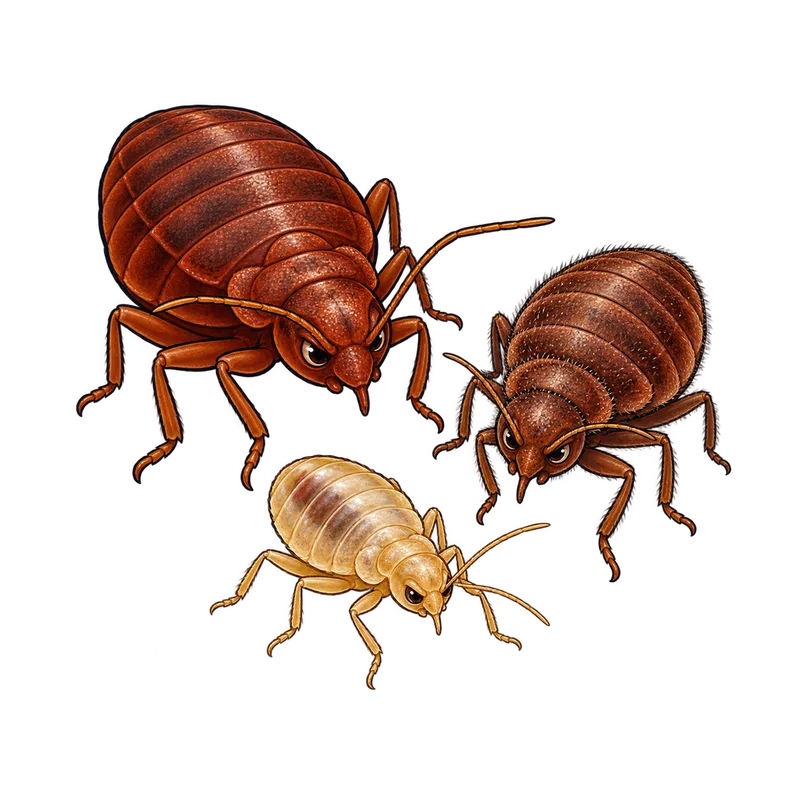
With blood-feeding parasites, things get even trickier. Bed bugs are reddish-brown, oval, and about a quarter-inch long, but they have a close relative called the bat bug. Bat bugs look almost identical to the naked eye, but under a microscope, their tiny hairs tell them apart. If you treat a home for bed bugs when the real culprits are bat bugs living in the attic, the treatment usually fails because the primary host is still roosting in the wall void.
Bites are never enough for a positive identification. Arthropod bites cannot be diagnosed to species level based on a skin mark, because human skin reacts in all sorts of different ways to the same environmental trigger. A proper identification usually requires either a physical specimen or a clear view of the living insect in its nesting area.
What usually comes next
When the inspection wraps up, you have to make a practical choice based strictly on what the physical evidence shows. If the inspector finds active wood-boring beetle damage isolated to a single piece of decorative molding, swapping out that specific timber often solves the problem without using any chemicals at all. On the flip side, if you are dealing with bed bugs in an apartment building, spraying just one bedroom is usually a waste of time and money. The inspection needs to map out the adjoining units above, below, and on either side to stop the bugs from scattering into the shared walls.
If moisture turns out to be the real culprit, fixing a leaky pipe or clearing blocked subfloor vents to drop the humidity is the required first step before anyone should even consider a pesticide. When chemical treatments are genuinely necessary, you have to follow the product label down to the letter, keeping people and pets completely out of the area until the spray dries and the required waiting period ends.
When to get help
Some situations go way beyond what you can safely handle with a flashlight and a screwdriver on a weekend afternoon. If an inspection reveals structural framing timbers that crumble easily under a hand probe or make hollow sounds when tapped, you are looking at potential structural failure. That calls for a professional timber pest treatment and often a structural engineer to evaluate whether the building can still safely carry its own weight.
If you find bats, nesting birds, or other protected wildlife living in your attic or wall voids, federal and state laws usually protect them during breeding seasons. You will need to bring in a licensed wildlife control specialist to handle safe exclusion once the animals move out on their own schedule.
Medical symptoms also demand outside help immediately. If anyone in the house develops severe skin reactions, signs of a secondary infection from scratching, or trouble breathing, stop worrying about the bugs for a minute and consult a primary care clinician, an urgent care facility, or your regional poison control center right away.