
Can bed bugs live in a couch or other furniture?
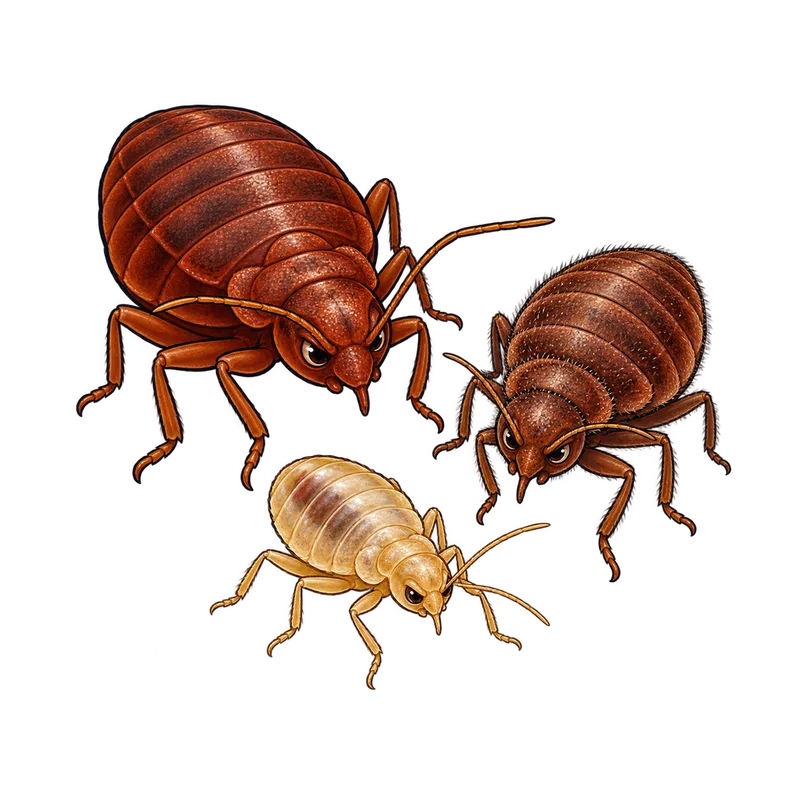
Yes, bed bugs frequently live in couches, recliners, and other upholstered furniture. A plush sofa offers endless dark crevices and reliable access to human hosts who sit motionless for thirty minutes or more. These pests can survive for months without feeding, making a couch a primary hotspot that keeps an infestation going.
What is actually going on
Picture coming home after a long Tuesday, dropping your bag by the door, and collapsing onto the living room sofa to watch the evening news. You are tired, you stay still for an hour, and nearby, hidden inside the deep fabric folds of the cushions, tiny flat insects catch your scent and start crawling out. Yes, bed bugs can and frequently do live in couches, recliners, and other upholstered furniture. While beds get all the attention, a plush sofa acts as an all-inclusive resort for these pests because it provides endless dark crevices and guaranteed late-night room service every time a human sits or sleeps motionless on it for thirty minutes or more.
Bed bugs do not build nests or mounds like ants or wasps. Instead, they gather passively in narrow cracks, known as harborages, where they drop fecal matter, shed skins, and lay eggs. An unfed adult bed bug is paper-thin and oval-shaped, roughly the size of an apple seed or a small lentil, which allows it to squeeze into gaps no wider than a credit card. Couches offer plenty of these spots, including decorative piping, zipper tracks, tufts, the underside dust cover, and the wooden joints of the interior frame. Once an infested item enters a room or insects migrate through wall voids from an adjacent apartment, the couch becomes a secondary population center that can keep an infestation going even after the bedroom has been cleared.
Some people assume they can starve out a couch infestation simply by avoiding the living room for a few weeks. That approach backfires. Bed bugs can survive for months without feeding at normal indoor temperatures, and if you stop sitting on the couch, they will actively crawl across the floor to find you in another room or disperse through the building. Total-release foggers, commonly called bug bombs, will not solve the problem either. Aerosolized pesticides from foggers cannot penetrate deep interior furniture voids, and the chemical fumes often just drive the insects deeper into the frame or out into wall cracks while creating unnecessary fire hazards in your home.
How to tell for sure
Finding out if your couch is hosting these pests usually requires a systematic search rather than a quick glance. Grab a high-lumen flashlight and a thin plastic card, then probe the cushion seams, fabric skirts, and the underside muslin backing. You are usually looking for physical evidence because bed bugs spend the daylight hours tucked away. An unfed adult looks like a brownish-red apple seed, measuring about five to seven millimeters long, while a bug that has just fed looks swollen and cigar-shaped. First-instar nymphs, which are the newly hatched babies, are about the size of a single poppy seed and nearly translucent, making them much harder to spot without a magnifying lens.
You will also want to watch out for the telltale signs they leave behind. Bed bug excrement is composed of digested blood, and on fabric, it typically appears as dark, ink-like spots. If you touch one of these spots with a damp cloth and it smears reddish-brown, you are looking at fecal speckling rather than ordinary household dirt or cockroach frass. You may also find tiny pearly-white eggs glued to fabric fibers and translucent yellowish skins that nymphs leave behind as they grow through their five developmental stages.
One thing you cannot rely on is a bug bite on your skin. Skin reactions vary wildly from person to person, and a significant portion of the population shows no reaction at all to bed bug saliva. A red mark or a welt on your arm does not prove what bit you or where the bugs are hiding. A positive identification usually requires finding a physical bug, a shed skin, or verifiable fecal spotting. If you find a small bug on a sofa near an attic or a chimney, you might actually be dealing with a bat bug rather than a true bed bug. Bat bugs look almost identical to the naked eye, but they specialize in parasites that live on bats and cannot reproduce on human blood alone. Confirming the difference requires looking at the fringe hairs behind the head under a microscope, which is usually a job for a professional pest control technician.
What usually comes next
Once you confirm bed bugs are living in your couch, you have to decide whether to treat the furniture or throw it out. Popular belief says an infested couch must go immediately, but that is rarely true. Throwing it away often just drops bugs into hallways and dumpsters unless you wrap the whole thing tightly in heavy plastic first. If the frame is solid, you can usually clean it up with targeted heat, careful removal, and secure barriers.
Start by washing any removable cushion covers, slipcovers, or blankets, then put them straight into a clothes dryer on medium or high heat for at least thirty minutes. High heat kills every single life stage, even the eggs, right away. For the parts of the couch you cannot wash, a commercial dry steamer run slowly along the seams and joints will kill bugs on contact. Follow that with a thorough vacuuming of all the crevices using a machine fitted with a high-efficiency particulate air filter, and make sure you empty or seal the contents right away so nothing crawls back out.
After the cleaning, you can protect the couch by pulling it a few inches away from the walls and sliding smooth plastic interceptor traps under every leg. These little dishes act like a moat around each foot, catching any wandering bugs trying to climb up or down. If you want to use residual dusts or sprays inside hidden frame spaces, read the product label carefully to make sure it is explicitly approved for indoor upholstered furniture. Throwing household chemicals like rubbing alcohol or bleach at the problem is unsafe, does not work well, and creates serious fire or toxicity risks.
When to get help
Sometimes a do-it-yourself approach on a single piece of furniture is simply not enough, and you need to bring in outside help. If you live in an apartment, a townhouse, or any multi-unit building, treating just your couch rarely works for long because the bugs travel easily through shared wall gaps and pipe chases. In rental situations like these, you usually need to notify building management or your landlord, and the cleanup requires a licensed pest management professional using a coordinated strategy.
You should also call a professional if the infestation is severe, if you cannot find where the bugs are hiding, or if they turn out to be bat bugs coming from an active wildlife nest in your attic or eaves. Animals like bats are protected by law, which means getting them out of a structure has to be done by licensed operators during specific seasonal windows instead of through casual weekend DIY methods.
Regarding health, bed bug bites cause localized itching, skin welts, anxiety, and sleeplessness, and heavy scratching can lead to secondary bacterial skin infections like impetigo. If you or someone in your home develops severe skin irritation, signs of infection, or an unusual whole-body reaction, do not try to diagnose the wound yourself. Visit a clinician or an urgent care center for proper medical treatment.