
Why does reducing bedroom dust differ from treating a parasite infestation?
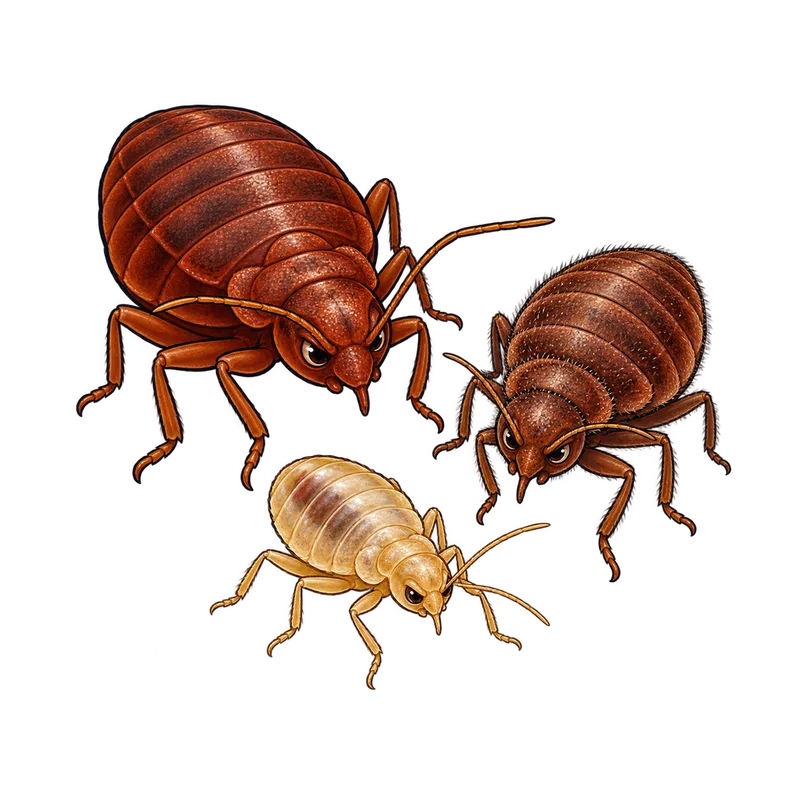
Reducing bedroom dust differs from treating a parasite infestation because house dust mites are harmless arachnids that feed on skin flakes and respond to humidity control, while blood-feeding parasites like bed bugs require warmth and physical proximity to a host. General housekeeping leaves blood-sucking parasites completely unaffected because they do not consume dust or organic debris.
What is actually going on
Picture this. You wake up with itchy bumps on your arm, walk over to your dresser, and notice a faint layer of gray fuzz sitting on the top shelf. Your immediate thought is that your bedroom needs a deep clean. You might grab a vacuum, dust every surface, wash your sheets in hot water, and figure the problem is solved. But when you are dealing with bedroom dust mites versus actual blood-feeding parasites, you are fighting two entirely different battles with opposing rules.
Reducing bedroom dust handles non-parasitic house dust mites. These microscopic arachnids do not bite you or drink your blood. They live quietly in your carpets, mattress seams, and upholstered chairs, surviving on shed human skin scales and organic debris. When you lower the humidity, run a vacuum with a high-efficiency filter, and wash your bedding, you starve them and strip away the allergenic proteins in their waste that make you sneeze.
Parasitic pests like bed bugs, bat bugs, or biting mites do not care about your housekeeping standards. An immaculate, dust-free luxury bedroom with polished hardwood floors is just as appealing to a bed bug as a cluttered apartment, provided there is a warm-blooded host around to provide carbon dioxide and a blood meal. These obligate hematophagous creatures, which means they feed strictly on blood, rely on biological cues and physical proximity to a sleeping human or animal. General sanitation and dust suppression leave them entirely unaffected because they do not eat dirt, dust, or skin flakes.
How to tell for sure
You cannot tell what is bothering you by looking at a skin mark or an itchy red bump. Human immune responses vary wildly, and a large percentage of people show no visible reaction to bites at all, while others develop intense welts. Relying on your skin to diagnose the culprit is usually a fast track to treating the wrong thing.
Instead, you need to look for physical specimens or structural evidence. If you suspect dust mites, you are looking at things you usually cannot see without laboratory tools, though you can judge their presence by humidity levels and allergy symptoms that flare up indoors. If you suspect parasites, you usually have to hunt in narrow physical cracks.
For bed bugs, you want to inspect mattress piping, box spring joints, headboard screw holes, and baseboard channels within eight feet of your bed. Look for live insects, tiny pearl-white eggs, cast skins that look like hollow shells, and dark fecal speckling that smears reddish-brown when you dab it with a damp cloth.
When you find a bug, magnification is usually required to tell closely related species apart. For instance, a common bed bug and an eastern bat bug look identical to the naked eye. Under magnification, you have to measure the tiny hairs on the pronotum, which is the collar-like segment right behind the head. Bat bugs have fringe hairs that are as long as or longer than the width of their eye, while bed bug hairs are noticeably shorter.
What usually comes next
Your next practical step relies entirely on what you found under a magnifying glass or during your close-up check of the room. If you found dust mites, your focus belongs on environmental control, such as keeping indoor humidity below fifty percent and using specialized zippered covers on your mattress and box springs.
If you confirmed a parasitic infestation like bed bugs, drop the idea that cleaning alone will fix it. You need a coordinated management plan that starts with isolating your sleeping area. Pull your bed frame at least six inches away from walls and furniture, make sure your blankets never touch the floor, and place smooth-walled interceptor cups under every bed leg to catch crawling insects before they climb up.
Do not waste time or money on total-release foggers, commonly called bug bombs, or boric acid powder. Foggers fail because their mists cannot penetrate the deep structural cracks where bugs hide, and the chemicals often just push the insects deeper into wall voids or neighboring rooms. Boric acid is a stomach poison meant for grooming insects like cockroaches, but blood-sucking parasites only consume liquid meals and ignore surface dusts entirely.
If your inspection points to bat bugs, bird mites, or rodent mites, treating your bedroom alone will fail every time. These creatures are secondary hitchhikers that rely on wild animals living in your attic, chimney, or wall voids. You have to remove the primary animal host and seal all structural entry points before any indoor treatment can succeed.
When to get help
There are moments when a do-it-yourself approach is simply not enough and you need to bring in qualified professionals. If you confirm an active bed bug infestation, eradication usually requires specialized equipment like commercial thermal remediation heaters that bring whole rooms up to high temperatures for up to ninety minutes, or targeted treatments applied by a licensed pest control operator.
When your pest turns out to be bat bugs or bird mites, you need a licensed wildlife damage management professional. Bats and many migratory birds are protected under federal and state laws, meaning you cannot legally disturb active nests, remove birds during breeding seasons, or exclude bats while flightless young are present in the roost.
On the medical side, watch your skin closely. Intense scratching of bite papules can break the skin barrier and introduce bacteria, leading to secondary infections like impetiginized dermatitis or cellulitis that require a clinician's care. If you notice generalized itching that intensifies at night alongside tiny threadlike burrows between your fingers or wrists, that points toward human scabies mites, which require a medical diagnosis and prescription topical treatments. Chronic, heavy bed bug infestations can even cause clinically significant iron-deficiency anemia in vulnerable individuals, making medical and professional pest intervention an urgent priority.