
Are wolf spiders poisonous to cats or dogs?
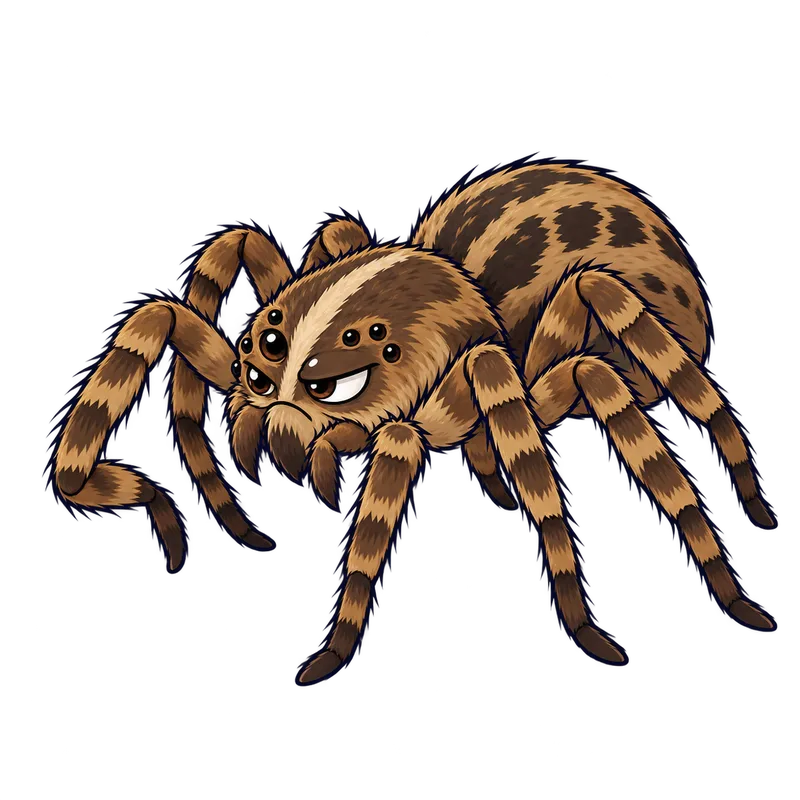
No, wolf spiders are not poisonous to cats or dogs because their venom has very low mammalian toxicity and is not fatal. While a bite can cause a bit of swelling or local redness for a few hours, it will not induce systemic neurotoxicity or flesh eating wounds.
What is actually going on
Picture this: you are sitting on the couch on a quiet Tuesday evening, and your cat suddenly pounces toward the baseboard with flattened ears and a flurry of paws. You lean over to look, and a large, hairy, fast-moving spider is darting across the rug. Your first thought is a minor panic. Will that thing bite your cat, and is the venom going to cause some horrible medical emergency?
The short answer is no. Wolf spiders are venomous rather than poisonous, but their venom has very low mammalian toxicity and is not fatal or medically significant to cats or dogs.
To clear up a common mix-up right away, a venomous creature uses a tiny natural syringe to inject its payload directly during a bite, whereas a poisonous creature acts like a soaked sponge that causes harm only if swallowed or touched. Spiders are universally venomous, not poisonous. When a curious dog or a playful cat corners one of these ground-hunting spiders in the basement or yard, the animal usually gets a defensive bite on the nose, lip, or paw pad.
You might worry that a bite from such a large spider means automatic tissue destruction or a toxic meltdown, but medical and veterinary science has largely cleared wolf spiders of their old, terrifying reputations. Their venom contains peptides tailored for shutting down insect nervous systems, not for wrecking the physiology of mammals. While the fang puncture can hurt, and your pet might experience a bit of swelling or local redness for a few hours, it will not induce systemic neurotoxicity or flesh-eating wounds.
How to tell for sure
If you find your pet staring down a large, scurrying arachnid, you usually want to confirm what you are dealing with before panicking. North American wolf spiders typically measure anywhere from 10 to 35 mm in body length, which is roughly the size of a large paperclip or a postage stamp, and they usually sport earthy browns and grays with distinct stripes. They do not spin webs to catch meals, so you usually spot them running across open floors or hiding under leaf litter and stones.
When trying to identify whether your pet has actually suffered a spider bite, remember that visual confirmation is tricky. A red mark, a bump, or a skin lesion on a cat or dog usually does not prove a spider bite at all. In fact, medical and veterinary consensus establishes that unexplained dermatological wounds are overwhelmingly caused by bacterial infections, such as staph or MRSA, rather than arachnid attacks.
You usually can only confirm a wolf spider encounter if you actually witness the pet interacting with the spider and find the specimen. Wolf spiders usually have a very distinct eye arrangement featuring two large eyes staring forward above a row of four smaller eyes, which sets them apart from other house spiders.
What usually comes next
If you suspect your dog or cat just tangled with a wolf spider, you need to make one practical decision about immediate care. Do not rush out to buy harsh chemical sprays or dump household insecticides around your baseboards, because chemical pest treatments applied improperly around pets pose severe toxicity risks. Wet permethrin treatments, for instance, are acutely toxic to cats and can cause severe neurological distress if the animal walks through treated areas before the product dries.
Instead, focus on basic first aid and environmental management. If you see the spider and your pet is safe, gently move your animal away to prevent further defensive biting. Wash the suspected bite area with clean water and a mild pet-safe soap, then hold a cool, damp cloth against the spot for 10 to 15 minutes to take down any local swelling and ease the discomfort.
Never try to cut the skin, suck out the venom, or splash harsh chemicals like rubbing alcohol onto the wound. If you managed to trap the spider safely under a clear glass without getting bitten, keep it around just in case your veterinarian needs to see it to rule out other more dangerous species, such as a black widow or brown recluse. Otherwise, seal up foundation cracks, clear away outdoor woodpiles, and vacuum your baseboards regularly to reduce future indoor encounters without relying on risky chemical shortcuts.
When to get help
Even though wolf spider venom is generally mild, certain situations require immediate professional intervention. You should contact a veterinarian right away if your pet shows signs of an acute allergic reaction, which can happen with any insect or spider encounter. Watch for facial swelling around the lips and tongue, widespread hives, sudden and extreme lethargy, or collapse.
You also need to seek veterinary care if your pet displays severe neuromotor symptoms, such as uncontrollable muscle tremors, a staggering uncoordinated gait, profuse drooling, or severe difficulty breathing. Those signs do not point to a harmless wolf spider, but rather suggest an entirely different species or a severe secondary issue.
Finally, keep a close eye on the puncture site over the next couple of days. If you notice rapidly spreading redness, extreme heat radiating from the wound, increasing swelling, or pus draining from the spot, a secondary bacterial infection has likely taken hold. Bacterial skin issues require proper diagnosis and treatment from a clinician, so let a professional handle the antibiotics rather than trying to treat a worsening infection at home.