
Can you do bed bug heat treatment yourself?
Yes, you can do bed bug heat treatment yourself, but only for clothes and small belongings like shoes or books. Attempting to heat an entire room or house on your own will not work because consumer heaters cannot push enough thermal energy into structural voids. This uneven heat causes bed bugs to panic and scatter deeper into the walls.
What is actually going on
You pull back the sheets on a quiet Tuesday evening and spot a tiny, flat, mahogany speck crawling along your mattress seam. Panic sets in immediately. Before you rent industrial heaters or crank your home thermostat up to ninety degrees, you want to know if you can just handle this yourself with heat. The short answer is yes, but only for your clothes and small belongings. When trying to heat an entire room or your whole house on your own, attempting a DIY thermal treatment is simply not going to work, and it can actually make your bed bug problem much worse.
Bed bugs are remarkably tough little pests, but they have a strict physical limit on temperature. Sustained core heat between one hundred eighteen and one hundred twenty-two degrees Fahrenheit will kill every single life stage, including their eggs, if you keep them there for an hour or so. Hitting that exact target inside a pile of laundry or inside a dedicated heating chamber is straightforward. Your home clothes dryer gets easily hot enough to wipe them out completely in thirty minutes.
The trouble starts when you try scaling that up to a living room or a bedroom. A residential furnace or a few consumer space heaters cannot push enough thermal energy into deep structural voids, wall cavities, and the thick wooden frames of your furniture. Heat naturally rises, creating cool pockets near the floor and under baseboards where bed bugs happily survive. Worse yet, when these insects sense a slow, uneven rise in temperature, they do not just sit there and cook. They panic, scatter, and crawl right through electrical outlets and wall chases into your hallway or your neighbor's apartment.
Professional thermal remediation requires heavy industrial equipment, massive diesel or electric generators, high-volume fans to keep the air moving, and real-time wireless temperature probes planted in every conceivable cold spot. That is why pest control authorities strongly advise against trying to roast an infestation out of a room yourself. You end up with a house that feels like a sauna, a massive electricity bill, and bugs that have simply moved deeper into the walls.
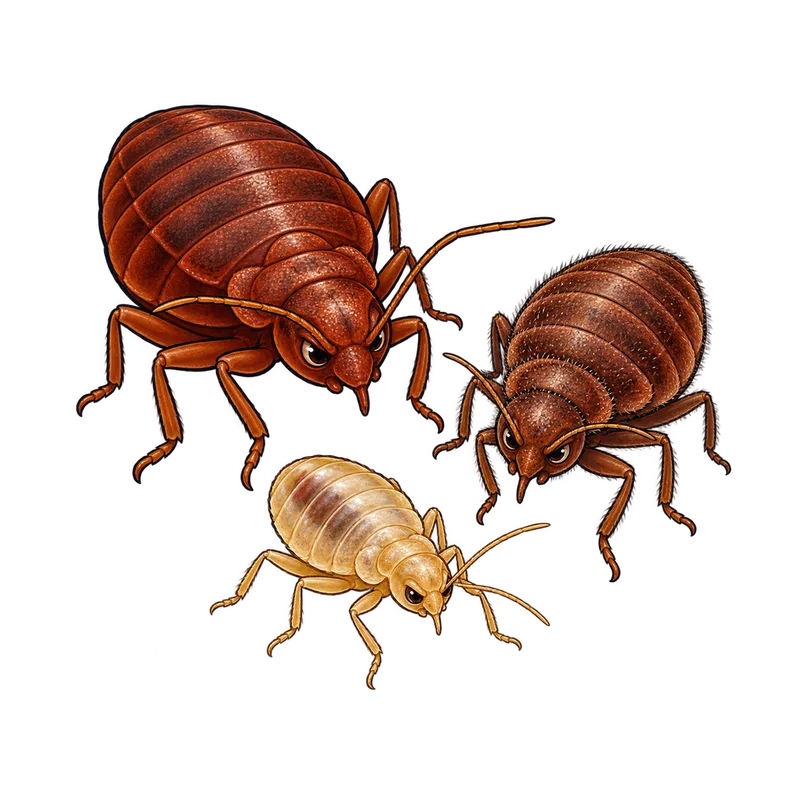
Before you start tossing things into dryers or buying mattress covers, you usually need to confirm what you are actually looking at. Misidentifying your pest leads to wasted time and money. An unfed adult bed bug is typically about the size of an apple seed, flat, oval, and mahogany brown. Once they feed, they swell up and turn into a reddish, elongated shape that looks a bit like a miniature cigar. The tiny, newborn nymphs are smaller, closer to a poppy seed, while their eggs look like minuscule grains of white salt glued firmly into fabric seams.
You might also notice dark, ink-like spots on your mattress piping or box spring corners, which are the digested blood fecal deposits they leave behind. If you press a damp white paper towel against one of these dark dots, it usually bleeds and smears like liquid ink. Another classic sign is tiny, translucent shed skins left behind as the bugs grow through their various life stages.
If you find a bug that looks suspiciously like a bed bug but you live near an attic, a chimney, or have visible wildlife around the house, you could be dealing with bat bugs instead. To the naked eye, they look almost identical. Making that distinction usually requires looking at the insect under a ten to fifty times magnification lens to check the tiny hairs along the pronotum, which is the collar-like segment right behind the head. On a common bed bug, those hairs are shorter than the width of its eye, whereas bat bugs have noticeably longer, hairier fringes. If you cannot check this yourself, saving a physical specimen in a small, sealed container helps a professional make the correct call right away.
How to tell for sure
Your most practical decision right now is to divide your approach strictly between what you can safely treat with heat at home and what requires physical barriers. Start with your fabrics, bed linens, curtains, and washable clothing by gathering them up in sealed plastic bags so you do not scatter bugs along the hallway. Toss those items into your laundry on a hot wash cycle, followed by at least thirty minutes in the dryer on its highest heat setting. That single step destroys every bug and egg hiding in the cloth.
For items that cannot go in the washing machine, such as heavy luggage, shoes, or books, you can use portable, insulated heating chambers designed for home use, or apply a commercial steamer very slowly along mattress seams and bed frame joints. Once your bed frame and mattress are clear of active bugs, your next move is to make the bed an island. Encase your mattress and box spring in certified, bite-proof zippered covers, and place smooth plastic interceptor cups underneath every leg of the bed frame.
This combination leaves you with a clean sleeping space, but keep in mind that heat leaves no lingering chemical residue behind. If a single stray bug wanders in from an untreated chair or a neighboring unit, the infestation can start all over again. Keeping your bed isolated and checking those interceptor cups regularly gives you an early warning system if the problem persists.
What usually comes next
There are moments when DIY measures are no longer enough, and calling in outside help becomes mandatory. You should contact a licensed pest management professional immediately if the infestation has spread beyond your bed and sofa into baseboards, electrical outlets, wall voids, or multiple rooms in your home. Whole-building heat remediation or specialized structural treatments require commercial gear and trained technicians to execute safely without risking property damage or causing the insects to disperse across an entire building.
If you live in a multi-family apartment building, a duplex, or a commercial dormitory, treating your own unit in isolation rarely solves the root problem. Property management or a landlord needs to coordinate a building-wide inspection and treatment strategy so that bugs driven out of one space do not simply migrate next door and return a week later.
When to get help
On the health side, do not try to diagnose a bed bug problem solely from skin marks or itchy bumps. Roughly twenty to thirty percent of people show no visible skin reaction to bed bug bites at all, while others develop delayed welts days later. If you are experiencing severe skin inflammation, widespread rashes, or signs of a secondary bacterial infection from scratching, you need to consult a licensed clinician or visit an urgent care clinic for proper medical treatment.