
What are tiny black bugs on walls?
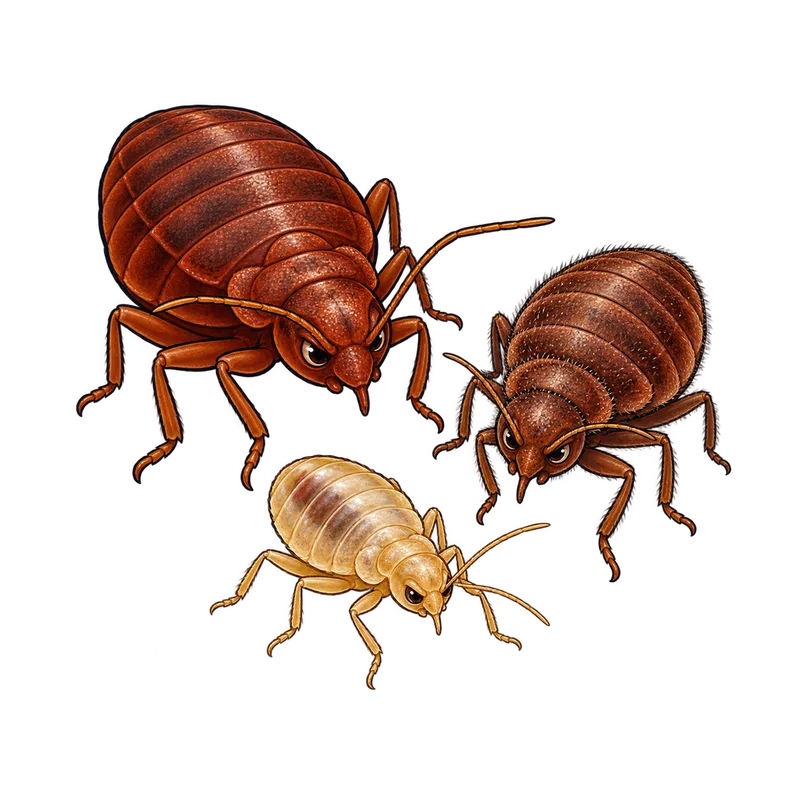
Tiny black bugs on walls are usually bed bugs, carpet beetles, springtails, clover mites, or termite swarmers. Figuring out what they are depends completely on their exact appearance up close, such as their size, shape, and how they move.
What is actually going on
You walk into the living room on a quiet Saturday morning, glance over at the pale wall near the bookshelf, and notice a collection of tiny black specks that were definitely not there last week. Your first thought might be that someone splashed coffee, or maybe a stray marker bled through a drawing project. But when you look closer, a few of those specks start crawling, or you realize they are actually microscopic bugs holding a convention right above your baseboards. It is an unsettling discovery, mainly because indoor walls are supposed to be barren, uninteresting vertical plains.
So, what are you actually looking at? The short answer is that tiny black bugs or marks on walls usually point to one of a few common culprits, and figuring out which one depends entirely on what they look like up close. Those specks might be bed bugs hiding out near their favorite hosts, adult carpet beetles wandering toward a sunny window, tiny springtails enjoying a patch of high humidity, or even the dark fecal spots that bed bugs and predatory spiders leave behind on plaster and paint.
It is easy to assume that any bug on a wall just wandered in from the garden through an open door, but most of these creatures are already living inside the structural micro-environments of your home. They set up shop in hollow baseboards, behind loose wallpaper seams, inside electrical switch plates, or tucked away in ceiling crown molding. Walls provide dark, protected highways that let them move around unseen, which is why you tend to notice them only when their populations grow or when they start shifting locations to feed, mate, or seek warmth.
Before you start spraying chemicals or tearing off trim, you need to understand that treating a wall based on a vague guess usually backfires. Applying the wrong product to a vertical surface wastes your time and money, and it can break the law if the pesticide label does not explicitly cover that specific site. The real work begins with a closer look at the bugs themselves, matching their size, shape, and habits to what is actually happening in your walls.
How to tell for sure
Spotting tiny black insects on a vertical surface means you need to get closer than you probably want to. With the naked eye, you can usually check the general silhouette and how the creature moves. Are they jumping like tiny fleas, crawling slowly like a beetle, or sitting completely still like a stain? If you have a simple hand lens or a magnifying glass with 10x magnification, you can look for more specific details, such as wing venation, antennae shape, or tiny bristles.
Bed bug nymphs usually measure anywhere from one-twenty-fifth to a quarter of an inch long. Unfed nymphs look beige or light translucent brown, but they turn a stark dark red or black after a blood meal because their gut contents show right through their skin. Adult bed bugs are oval, flat, and reddish-brown to dark brown. If you see tiny, flat, black ink-like spots plastered on the wall near a baseboard, that is usually digested blood expelled by bed bugs rather than a live insect. If you dab those spots with a damp cotton swab, the dried blood re-hydrates and smears reddish-black, which separates them from ordinary house dust or graphite marks.
Carpet beetles are another frequent visitor. Adult black carpet beetles measure between an eighth and a quarter of an inch long, and they appear solid black with brown legs. Other varieties feature speckled patterns of yellow, orange, white, and black. These adults are attracted to light, which explains why you usually spot them climbing up walls directly toward windows. Their larvae look entirely different, being carrot-shaped, about three-eighths of an inch long, and covered in dark bristles. Those larvae feed on hair, pet fur, wool, books, and organic lint inside your wall voids and baseboard crevices.
You might also encounter tiny springtails, which measure roughly one-sixteenth to one-eighth of an inch long. These are dark or black jumping insects that inhabit damp wall voids, plaster, or window sills fed by high moisture or decaying organic matter. If you see dark brown, olive-green, or reddish arachnids with an elongated front pair of legs clustering on sunny exterior siding and creeping indoors during spring or autumn, those are usually clover mites. When you crush a clover mite against a wall, it leaves a prominent reddish-brown streak.
Termite swarmers also show up on walls and window sills after mating flights. Subterranean termite reproductives are dark brown to black, measuring an eighth to three-sixteenths of an inch long, featuring 4 equal-sized wings with 2 thickened veins along the leading edge and straight antennae. They often leave behind irregular earthen mud shelter tubes across foundation walls and plaster. If you cannot find a live bug and suspect a stain is just biological debris, remember that predatory spiders also leave dark liquid fecal drops on walls and ceilings as they hunt.
What usually comes next
Once you have a fairly solid idea of what is crawling on your wall, your next practical decision is how to handle the physical removal without scattering the insects or making the situation worse. If you are dealing with a handful of wandering beetles, mites, or springtails, reaching for a dry vacuum equipped with a high-efficiency particulate air filter is usually the cleanest and most direct starting point. A high-efficiency particulate air vacuum traps tiny allergens, dust, and insects inside the canister instead of blowing them back out into the room air.
At this point, you also need to decide whether you are treating an isolated visitor or a hidden infestation. If you find a few carpet beetles climbing a sunny wall near a window, vacuuming them up and inspecting nearby woolens or pet beds is often enough to solve the immediate problem. But if you are uncovering clusters of bed bugs, fresh black fecal spotting along baseboards, or mud shelter tubes coming up from the floor, simply vacuuming the visible insects will not stop the colony living inside the wall voids.
When you decide to use a pesticide powder, such as a desiccant dust like amorphous silica or diatomaceous earth, you have to follow a strict set of safety rules. These powders kill insects through a physical mechanism rather than a chemical poison. They absorb the protective waxy layer on the outer shell of the insect, causing rapid and irreversible fluid loss through dehydration. Think of it like touching dry flour or cornstarch with wet hands, where the powder immediately pulls moisture away from your skin.
However, you must use only an Environmental Protection Agency registered or Australian Pesticides and Veterinary Medicines Authority registered desiccant dust specifically labeled for indoor crack and crevice or wall void use. Never use pool-filter grade diatomaceous earth indoors, because high-heat processing turns amorphous silica into crystalline silica, which can cause severe lung damage if inhaled. Always wear a certified N95 filtering facepiece respirator and protective eye goggles, and apply the dust sparingly using a bulb duster into hidden wall voids or behind switch plates. Never broadcast dust openly across visible wall faces, flooring, or bedding, and keep in mind that liquid sprays must never be applied near electrical outlets or inside junction boxes due to severe short-circuit and electrocution hazards.
When to get help
There are moments when a do-it-yourself approach is completely inappropriate, and trying to handle the problem on your own can lead to property damage or personal risk. If you spot mud shelter tubes extending up foundation walls or plasterboard, or if you notice 6-sided fecal pellets accumulating beneath tiny holes in timber wall framing, you are looking at signs of termites or wood-boring beetles. Subterranean and drywood termite infestations require professional inspection and treatment by a licensed pest management firm. If you are selling a home, real estate property transfers require certified structural pest inspections using standardized forms or your regional equivalent.
Active powderpost beetle infestations also require professional assessment, as technicians use specialized wood moisture meters to verify whether the wood moisture content is high enough to sustain the insects. If you are dealing with restricted-use pesticides that require high-potency chemical formulations, you must leave the job to a certified commercial pesticide applicator who operates under strict regulatory oversight.
You also need to draw a hard line regarding health concerns and physical symptoms. Never attempt to diagnose skin lesions, rashes, or medical conditions based on the presence of bugs on a wall. Cutaneous bite reactions cannot identify a pest species, and trying to guess what bit you is a losing game. If you or someone in your household presents unexplained bites, severe skin irritation, or respiratory distress, you must step away from pest control entirely and consult a licensed clinician, urgent care facility, or your local poison control center immediately.