
What do bed bugs on a mattress look like?
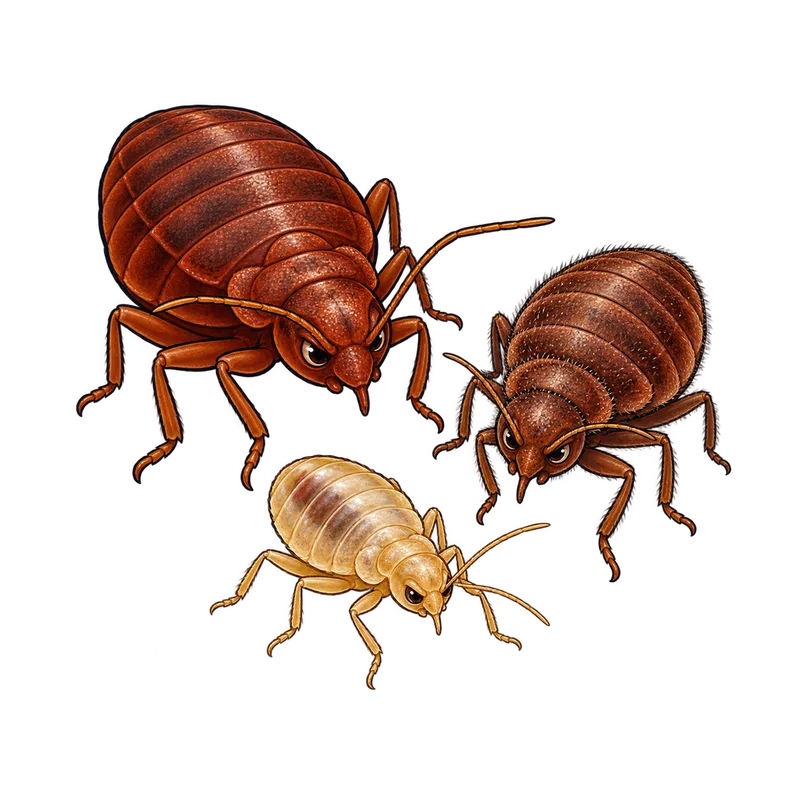
Unfed adult bed bugs on a mattress look remarkably like an apple seed, measuring 5 to 7 mm with flat, oval, reddish-brown bodies. Their appearance depends on whether they have fed recently, since a fully fed adult expands up to 9 mm and turns dark red. You might also spot tiny white eggs, translucent nymphs, or dark fecal spots along the seams.
What is actually going on
You strip the sheets off the bed on laundry day, ready to toss them in the wash, and notice a small, dark speck right there on the mattress piping. You lean in closer, squinting against the bedroom light, and wonder if it is just a bit of lint or something much worse. If you are asking what bed bugs on a mattress actually look like, you are likely looking for answers before a mild worry turns into a full panic.
Unfed adult bed bugs on a mattress look remarkably like an apple seed. They measure 5 to 7 mm, and their bodies are flat, oval, wingless, and colored a deep mahogany or reddish-brown. They do not have wings, so you will not see them flutter away, but they do crawl with surprising speed across fabric. If they have fed recently, their appearance changes quite a bit. A fully fed adult expands up to 9 mm, becoming swollen, elongated, and dark red.
Of course, adults are only part of the picture because an infestation brings a whole cast of characters across different life stages. You might spot tiny pearlescent white eggs tucked tightly into fabric seams, each one about 1 mm and glued in place, which develop tiny red eye-spots around five days. Younger bugs, called nymphs, start out translucent or pale straw-colored starting at 1.5 mm, making them terribly easy to miss against a light-colored mattress. Once those tiny nymphs take a blood meal, a bright red spot of blood shines right through their clear bodies.
Beyond the bugs themselves, you will usually find the messy evidence they leave behind. They shed their rigid outer skeletons as they grow, leaving behind delicate, straw-colored ghost skins in the deepest folds of the mattress. You might also spot dark, ink-like fecal spots peppered along the seams. People often ask if those dark dots are just dirt, but a simple test clears that up right away.
How to tell for sure
Telling for sure whether you are dealing with bed bugs usually comes down to a few distinct physical clues that other household pests do not leave behind. Take one of those dark fecal spots on the mattress seam and touch it with a damp cloth or a drop of water. Because bed bug waste is made of digested blood, the spot will dissolve and bleed a reddish-brown color, much like old ink. Cockroach droppings do not run red when moistened, which makes this a handy field test when you are inspecting the bed.
Another detail to keep in mind involves the shape of the insect. Bed bugs are flattened from top to bottom, which allows them to slip into cracks as thin as a credit card. If you happen to find similar-looking bugs crawling near an upper wall, a ceiling corner, or an attic door, you usually are not looking at standard bed bugs. Those are often bat bugs, which wander down into living spaces when bats abandon a roost. Confirming the difference usually requires professional assistance to check the tiny fringe hairs on the insect's body under high magnification, which separates true bed bugs from their lookalikes.
Many people make the mistake of trying to diagnose an infestation based entirely on skin bites. That approach usually leads you astray. A significant portion of people, roughly 20% to 30%, show zero skin reaction when bitten, meaning you could have a thriving population on your mattress while your sleeping partner wakes up covered in itchy welts. Bite marks cannot date an infestation or prove what caused them, since fleas, mites, and dry indoor air can produce identical skin irritation. Physical evidence on the mattress remains the only reliable confirmation.
What usually comes next
Once you spot definite signs of bed bugs on the mattress, you need to make one immediate, practical decision about containment before you do anything else. Do not haul the mattress out to the curb just yet. Throwing away a mattress is expensive, and it rarely solves the problem because the bugs are usually hiding in the bed frame, headboard, and baseboards as well. Dragging an untreated mattress down the hallway also risks dropping insects and spreading the infestation to other rooms.
Instead, your best immediate move is to install a certified, high-quality zippered mattress encasement. A proper encasement traps any existing bugs and eggs safely inside, where they eventually starve, while sealing off their favorite hiding spots along the seams and piping. Look for an encasement with a secure, escape-proof zipper stop so the tiny first-stage nymphs cannot slip through the teeth. Once you zip that cover on, it must stay sealed and undamaged for a minimum of 18 months, which cuts off their food supply and makes future visual inspections much simpler.
When to get help
There are moments when do-it-yourself containment is simply not enough and you need to hand the problem over to someone else. If your inspection reveals bat bugs or swallow bugs instead of standard bed bugs, you must contact a licensed wildlife control operator or the local vector control agency. Bats and migratory birds are protected by strict wildlife laws, meaning you cannot legally harm them or tamper with their roosts on your own.
You should also call in a licensed pest management professional if you live in a multi-unit apartment building. Bed bugs travel easily through shared walls, electrical conduits, and plumbing chases, so treating a single apartment mattress while ignoring the units above and below you is a waste of time. Professionals also need to step in when an infestation is widespread or when chemical treatments are required, since widespread resistance makes store-bought sprays largely ineffective. Total-release aerosol foggers or bug bombs must never be used because they fail to reach deep harborages and create severe explosion hazards.
On the health side, if you or someone in your household experiences severe itching, large inflammatory welts, or signs of a secondary skin infection from scratching bite sites, reach out to a clinician or an urgent care center right away. In rare cases, chronic exposure to heavy infestations can lead to clinical anemia, particularly in vulnerable individuals. If you ever suspect a severe systemic reaction or accidental exposure to pesticide chemicals, contact your local poison control center immediately for guidance.