
How big is a bed bug nymph at each stage?
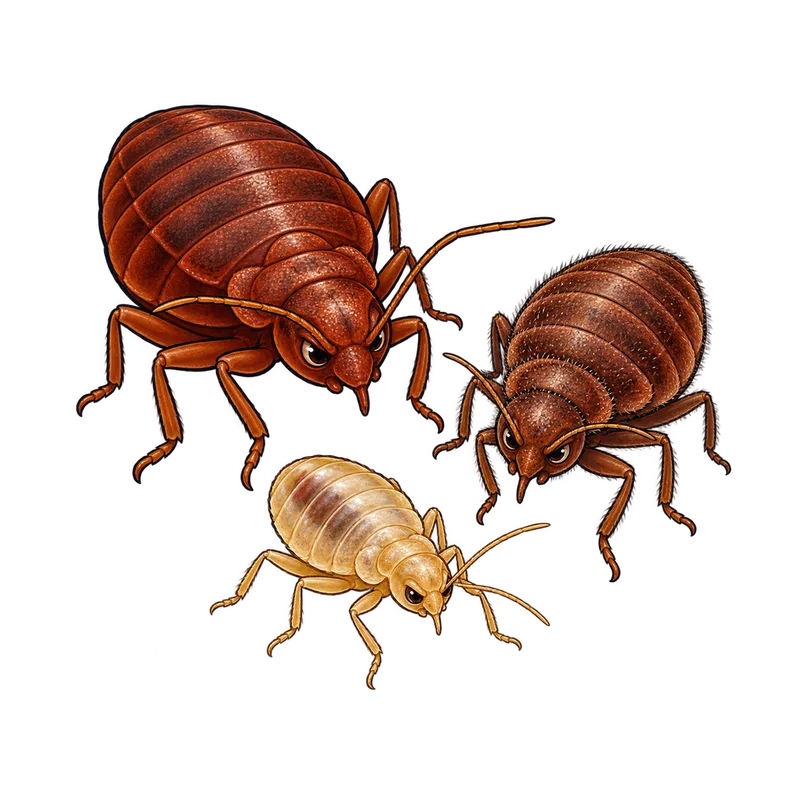
A bed bug nymph starts at about 1.5 millimetres long at its first stage and grows to about 4.5 millimetres by its fifth stage. The exact size of a bed bug nymph depends on its specific developmental stage and whether it has recently consumed a blood meal, since a heavy meal can make a younger nymph temporarily appear larger.
What is actually going on
You flip open a mattress seam, squint under your smartphone light, and spot something minuscule moving. Is it a speck of dirt, a crumb, or something far worse? If you are trying to figure out how big a bed bug nymph is, you are probably staring at a tiny translucent crawler right now and wondering just how far along it is.
A common bed bug nymph grows through five distinct stages, known as instars, before it finally becomes an adult. At its very first stage upon hatching, a nymph measures about 1.5 millimetres long, which is roughly the size of a single poppy seed. By the time it reaches the fifth and final juvenile stage, it stretches to about 4.5 millimetres, roughly the size of a split lentil.
Between those two extremes, the bug scales up step by step. A second-instar nymph hits about 2 millimetres, or the size of a sesame seed. The third stage sits at 2.5 millimetres, matching a grain of coarse sea salt. The fourth stage reaches 3 millimetres, comparable to a flax seed. Once it crosses that final juvenile hurdle, an unfed adult measures between 5 and 7 millimetres, looking much like an apple seed.
There is a catch, though, that usually throws people off. Nymphs cannot grow or move from one stage to the next without a blood meal. Shedding their rigid outer skin requires a fresh meal of blood every single time. If a nymph has not fed, it stays put in its current size category.
How to tell for sure
People often assume these bugs are microscopic and totally invisible to the naked eye. They are not. Even a newly hatched first-instar nymph at 1.5 millimetres can be seen if you have decent lighting and know where to look. The real reason they slip past notice is their color, or rather, the lack of it.
When a nymph first pops out of its pear-shaped egg, which measures about 1 millimetre and looks like a tiny pinhead, it is usually clear to pale straw-colored. On a white mattress sheet, a hungry first-instar nymph is nearly invisible except for its tiny, distinct red eyes. Once it drinks its fill, however, its body wall stretches like an elastic balloon, and the bright red blood shows right through its translucent abdomen.
This leads to a common point of confusion. A third-instar nymph that just finished a heavy blood meal can temporarily appear larger and plumper than a starved fourth-instar nymph. You usually cannot rely on size alone to tell which stage you are looking at because a well-fed bug punches above its weight class.
You also want to look for the shed skins, which scientists call exuviae. As nymphs grow, they leave behind hollow, paper-thin husks that keep the exact shape of the bug that wore them. Finding these tan, translucent shells tucked into mattress piping or box spring seams is usually a much better sign of an active infestation than spotting a single live bug.
One thing worth keeping in mind is that neither nymphs nor adults can fly or jump. If the insect you caught has wings, it is definitely not a bed bug. And if you find tiny bugs clustering near an attic hatch or crown molding rather than your bed frame, you might actually be looking at bat bugs instead of true bed bugs, which usually requires a close look under high magnification to check the length of tiny hairs on the thorax.
What usually comes next
Spotting a nymph of any size means you have to decide how to check your space without tearing the whole house apart. Because these pests stay close to where people sleep or sit for hours, you generally want to focus your search within an 8-foot radius of your bed or favorite sofa.
Grab a bright flashlight and a thin plastic card, like an old hotel key. Slide that card gently along mattress seams, headboard joints, and the fabric folds of your box spring. If a space is wide enough for your card to slip in, a bed bug nymph can use it as a hiding spot.
For items that can take the heat, a run through the clothes dryer is often the most straightforward move. Throwing dry bedding, pillows, or washable clothes into a dryer on medium-to-high heat for 20 to 30 minutes generates enough thermal energy to kill eggs, nymphs, and adults instantly. All bed bug stages are killed rapidly when exposed to temperatures between 120 and 122 degrees Fahrenheit.
You might also consider putting smooth, zippered encasements over your mattress and box spring. These covers do not cure an infestation on their own, but they seal off old hiding spots and make it much easier to spot any new activity on the surface.
When to get help
While finding a single tiny bug can send anyone into a panic, it pays to know when a do-it-yourself approach stops making sense. If you keep finding bugs across multiple rooms, or if your mattress inspection reveals hundreds of eggs, shed skins, and live nymphs in every crevice, you usually need to bring in a licensed professional pest management company.
Chemical treatments require state-certified applicators who understand how to use products strictly according to label directions. Trying to solve a heavy infestation with random store sprays often just scatters the bugs deeper into wall voids and makes the problem harder to manage.
If you or anyone in your household develops severe itching, widespread hives, or signs of a secondary skin infection from scratching, consult a licensed clinician right away. Medical professionals and pest experts agree that skin bites alone cannot confirm a bed bug infestation because human reactions vary wildly, with some people showing no reaction at all while others break out days later. If you suspect chemical exposure from an accidental spill, contact your local poison control center immediately. Finally, if a professional inspection reveals that your visitors are actually bat bugs living in the attic, remember that bats are protected wildlife in many regions, meaning structural exclusion work must be handled by trained wildlife specialists during the proper season.