
Can bed bug nymphs bite before they become adults?
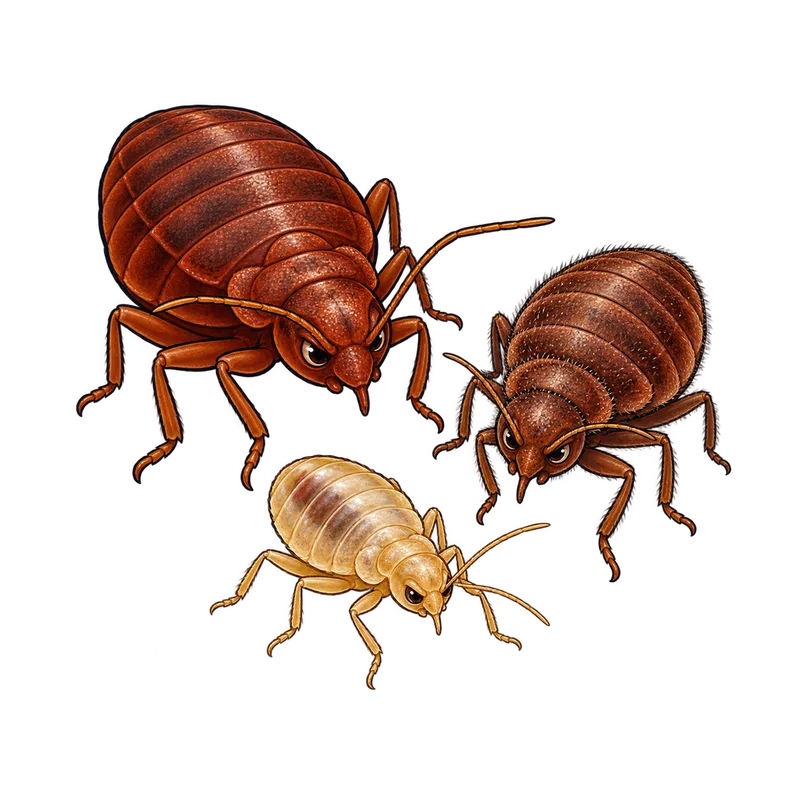
Yes, bed bug nymphs can bite right away. Right out of the egg, a first-stage nymph has a three-part mouthpart and must take a blood meal in every one of its five immature developmental stages before it can molt into an adult.
What is actually going on
You are making the bed on a quiet Tuesday morning, stripping the sheets back, and you notice a tiny, pale speck crawling near the piping of the mattress. It looks almost too small to be real, like a poppy seed that wandered off your morning bagel. Naturally, your mind races. Can something that microscopic actually bite you, or do you have to wait until it grows up to become a nuisance?
The short answer is yes, they bite right away. Bed bug nymphs can and must bite to take a blood meal in every single one of their five immature developmental stages before they can molt and progress toward adulthood. Right out of the egg, a first-stage nymph is fully equipped with an elongated, three-part mouthpart. It does not wait around for a growth spurt. It needs that blood meal to shed its old exoskeleton, grow a size larger, and move on to the next phase of life.
This creates a rather unsettling visual once feeding actually happens. An unfed first-stage nymph is nearly colorless, straw-yellow, and completely flat, making it remarkably easy to miss against a pale sheet. Because its body wall is translucent, a single blood meal turns its entire digestive tract bright or dark red and causes its abdomen to swell like a tiny, filling water balloon. Suddenly, that nearly invisible speck becomes a conspicuous, reddish bug sitting right where you rest your head.
How to tell for sure
People usually try to diagnose a bed bug problem by looking at itchy red marks on their skin the morning after sleeping. That approach usually fails. Medical and entomological consensus shows that bug bites or skin welts can never confirm the pest responsible, because fleas, mites, mosquitoes, and plain old contact dermatitis produce identical lesions. Furthermore, a significant portion of the human population experiences zero visible skin reaction or itching when bitten.
Instead of guessing from skin reactions, you have to look for physical evidence. You are searching for live specimens, tiny pearl-white eggs, papery cast skins that look like hollow golden ghost husks left behind in mattress seams, or dark fecal spots. If you spot ink-like specks on your mattress fabric, dab them with a damp paper towel. Genuine bed bug frass dissolves and smears into a reddish-brown streak, unlike cockroach droppings.
You also want to make sure you are not confusing true bed bugs with their wild relatives, such as bat bugs or swallow bugs that occasionally wander down from an attic or wall void when their original animal hosts leave. Telling them apart usually requires close magnification to check the length of tiny hairs on their thoracic shield. If you find small biting insects near ceiling lines or unsealed wall voids where wildlife roosts, a professional identification is usually required before you take any action.
What usually comes next
Once you confirm you are dealing with bed bugs instead of stray wildlife or random carpet beetles, you need to make a practical choice about how to handle things without making the situation worse. Try to resist the urge to grab a total release fogger or bug bomb off the hardware store shelf. Those contraptions fail to reach deep hiding spots and usually just scatter surviving nymphs into neighboring rooms, turning a localized nuisance into an entire house problem. In the same way, splashing rubbing alcohol all over your furniture creates an unnecessary fire hazard while giving you zero lasting protection.
Instead, lean on straightforward physical control methods based on smart pest management. Strip your sheets, pillowcases, and washable clothing, and toss them into the dryer on medium to high heat for at least twenty minutes, because dry heat quickly kills every stage from eggs to early nymphs. Put certified bed bug-proof protective covers on your mattress and box spring to trap whatever is already inside and make any newcomers stand out clearly against the fabric. Pull your bed a few inches away from the walls, keep your blankets from dragging on the floor, and slide intercept traps under every leg. This sets up a physical barrier that stops hungry nymphs from climbing up to feed while you rest.
When to get help
There comes a point when tackling the problem yourself stops being realistic and safety has to take the wheel. If you live in an apartment building, condo, or any other multi-family housing, trying to fix it alone is usually a mistake because it drives panicked nymphs through electrical outlets and wall voids straight into your neighbors' spaces. Situations like that require building management to step in and hire licensed pest control professionals who can check and treat connected units all at once.
You should also call in the pros if the bugs have spread past the bed and onto baseboards, electrical plates, and other furniture, or if you suspect you are dealing with bat bugs tied to animals living in your roof space. If you or anyone in your household runs into severe itching, spreading redness, pain, or signs of a skin infection from scratching, talk to a doctor or visit an urgent care clinic without delay. Bed bugs do not spread diseases to humans, but the secondary infections and mental strain they bring along are very real and deserve proper medical care.