
What are little white bugs that bite?
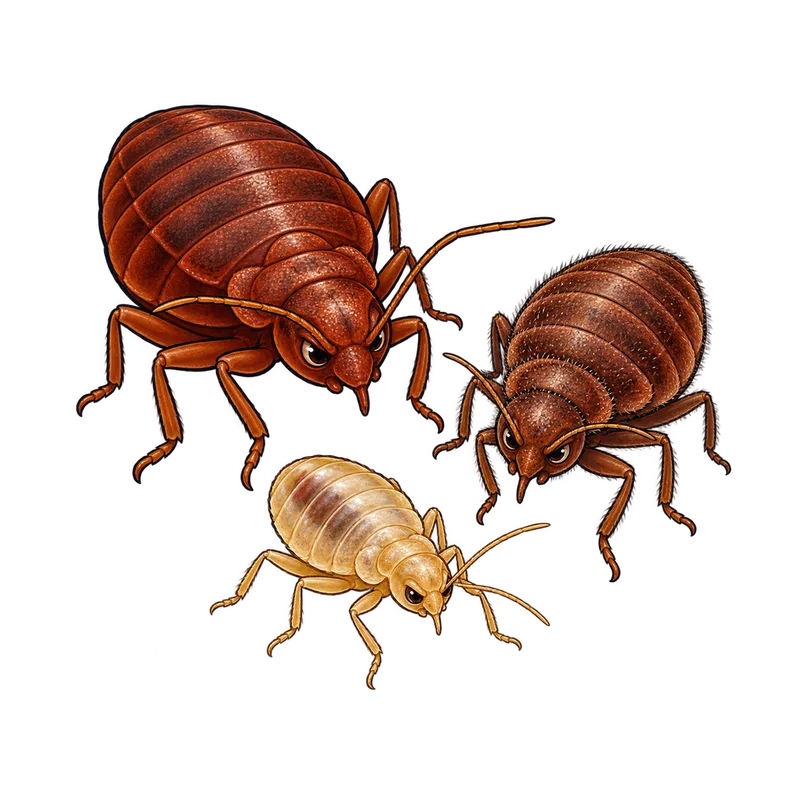
Little white bugs that bite indoors are usually first-stage nymphs of the common bed bug. These newly hatched insects measure roughly 1 to 1.5 mm, which is about the size of a pinhead. Because they have just emerged from their eggs, their outer skin is clear or cream-colored, making them look almost white against a dark fabric background.
What is actually going on
You pull back the sheet on the guest bed, grab your phone to use the flashlight, and spot something tiny moving across the mattress piping. It is so pale and translucent that it looks like a speck of dust until it starts walking. Then you wake up the next morning with an itchy red welt, and naturally, you want to know what you are looking at.
When people spot tiny white bugs that bite indoors, they are usually looking at the first-stage nymphs of the common bed bug. These newly hatched insects measure roughly 1 to 1.5 mm, which is about the size of a pinhead. Because they have just emerged from their eggs, their outer skin is clear or cream-colored, making them look almost white against a dark fabric background.
As creatures that require blood to grow, these tiny translucent insects need a meal to develop. Once they feed on a human host, their abdominal contents become visible right through their thin skin, shifting their color to a bright red or dark reddish-brown. That sudden transformation often confuses homeowners who assume a pale bug and a darker bug must be two entirely different species.
At the same time, your house might harbor other tiny, pale organisms that do not bite at all. Book lice and subterranean termite workers are also soft-bodied and light-colored, and they frequently show up in damp spaces. People often accuse them of biting simply because they happen to be crawling around the bedroom or bathroom at the same time skin irritation occurs.
How to tell for sure
You usually need magnification to sort out what is actually crawling around your bedroom, because the naked eye can only tell you so much about creatures that measure a fraction of a millimeter. First-stage bed bug nymphs and book lice can usually be seen without lenses under direct light, but you will usually need a hand lens to inspect fine details like body shape or mouthparts.
One common belief is that you can identify an insect by the shape or itchiness of the bite it leaves behind. Unfortunately, skin reactions are completely idiosyncratic, meaning they depend entirely on your personal immune response rather than the anatomy of the bug. A red bump on your arm cannot tell you whether you were bitten by a bed bug or a bird mite, and it might even stem from a non-entomological cause like low humidity or a mild skin allergy.
To make a reliable identification, you usually need to look at the creature itself rather than the mark on your skin. Bed bug nymphs have oval, flattened bodies and piercing mouthparts designed for feeding on blood. Book lice are fast-moving insects that feed exclusively on microscopic mold and paper starches in humid conditions, lacking any mechanism to pierce human skin. Termite workers have pale, soft bodies and spend their time chewing on structural wood rather than hunting for human hosts.
If you find tiny pale arthropods near windowsills or air conditioning units where birds nest, they are usually bird or rodent mites that have wandered indoors after losing their primary hosts. Capturing an intact specimen on a piece of clear tape or inside a small sealed container is usually the safest way to get a definitive answer from a local extension service or a pest professional.
What usually comes next
Your smartest first move is to stop spraying random household chemicals and figure out what you are actually dealing with. Treating a bedroom blindly with store-bought cans often just wastes money and leaves unnecessary pesticide residue on your surfaces, especially if those pale little bugs turn out to be harmless book lice that only need a drier room.
If you actually spot live bed bugs, their shed skins, or tiny dark ink-like spots along your mattress seams, focus your energy on physical containment instead of setting off bug bombs. Zip your mattresses and box springs into certified bed bug covers, and slide smooth plastic interceptor traps under your bed frame legs to catch anything trying to climb up or down. Wash all your bedding in hot water and run it through a high-heat dryer for at least 30 minutes, because heat is the most reliable way to kill every stage of the insect without juggling complicated chemicals.
If you find out your visitors are just moisture-loving pests, your main job is drying out the house instead of trying to poison the bugs. Dropping your indoor humidity below 50% with an air conditioner or a dehumidifier, fixing that slow plumbing leak under the sink, and pulling wet mulch away from your foundation will usually make book lice and springtails pack up and leave on their own.
When to get help
Some household pests go well beyond what you can fix with a dehumidifier and a few mattress covers. If you end up with severe skin reactions, raw sores from scratching, secondary infections, or any signs of a widespread allergic response, you need to talk to a doctor or head to an urgent care clinic right away.
You should also call a licensed pest professional if a bed bug problem keeps coming back, or if you suspect your biters are actually bat bugs that wandered down from a colony roosting in your attic. Standard bed bug treatments will completely fail in those situations unless the bats are safely and legally removed and the roosting area is cleaned out.
Finding pale, soft-bodied insects chewing through structural wood points straight to subterranean termites, which means you need an immediate evaluation from a pest operator and proper documentation like a wood destroying insect report. Always read and follow every word on the product label if you do decide to use registered insecticides, and remember that when a problem involves tricky structural issues or regulated commercial products, a licensed applicator needs to take over the job.